

Grand Central Market: A Century Inside Los Angeles
By LA VÉTTED
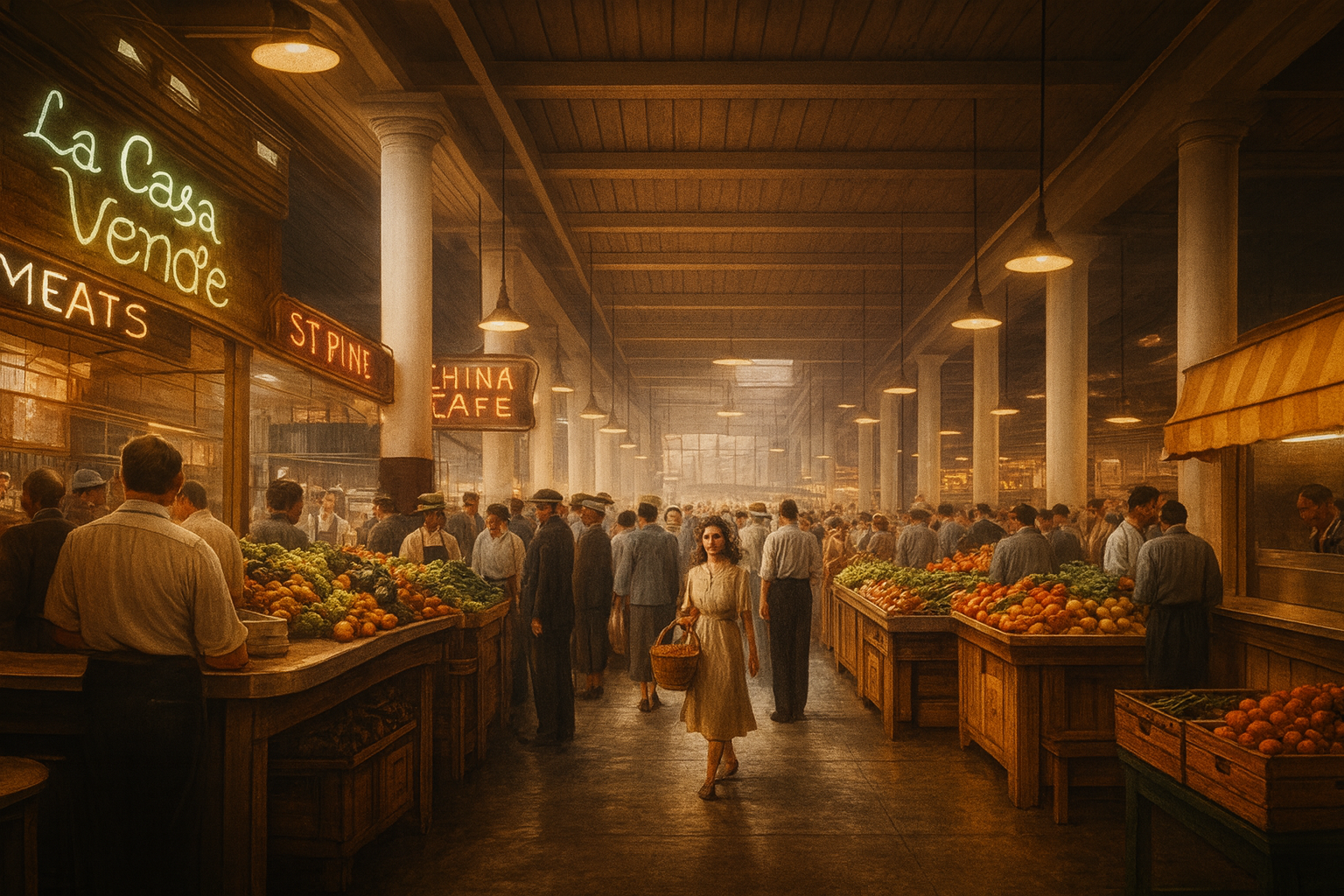
For more than a hundred years, Grand Central Market has been the place where Los Angels meets itself.
Cultures cross. Taste shift. Generations come and go - but the ritual of walking into this market never changes.
Built in the Homer Laughlin Building and opened in 1917, the market arrived when Los Angeles was transforming from a frontier town into a modern Western city.
At the time, “modern” meant something different: electric signage was new, food lived in the openair, and prices were written in chalk. Fresh chickens, lard, mixed nuts, and Lebanon bologna filled the aisles - all for a few cents a pound.
before supermarkets… before anyone coined the term food hall… people came here.
The First Modern Market in the West
In its early decades, Grand Central Market wasn’t just convenient - it was revolutionary.
Light poured in through iron-supported skylights, illuminating long rows of produce and counters staffed by butchers, bakers, fishermen, and grocers. The layout rejected the future supermarket model entirely.
You didn’t grab a cart and disappear. You walked. You talked. You participated in the public rhythm of Los Angeles.
A Living Timeline
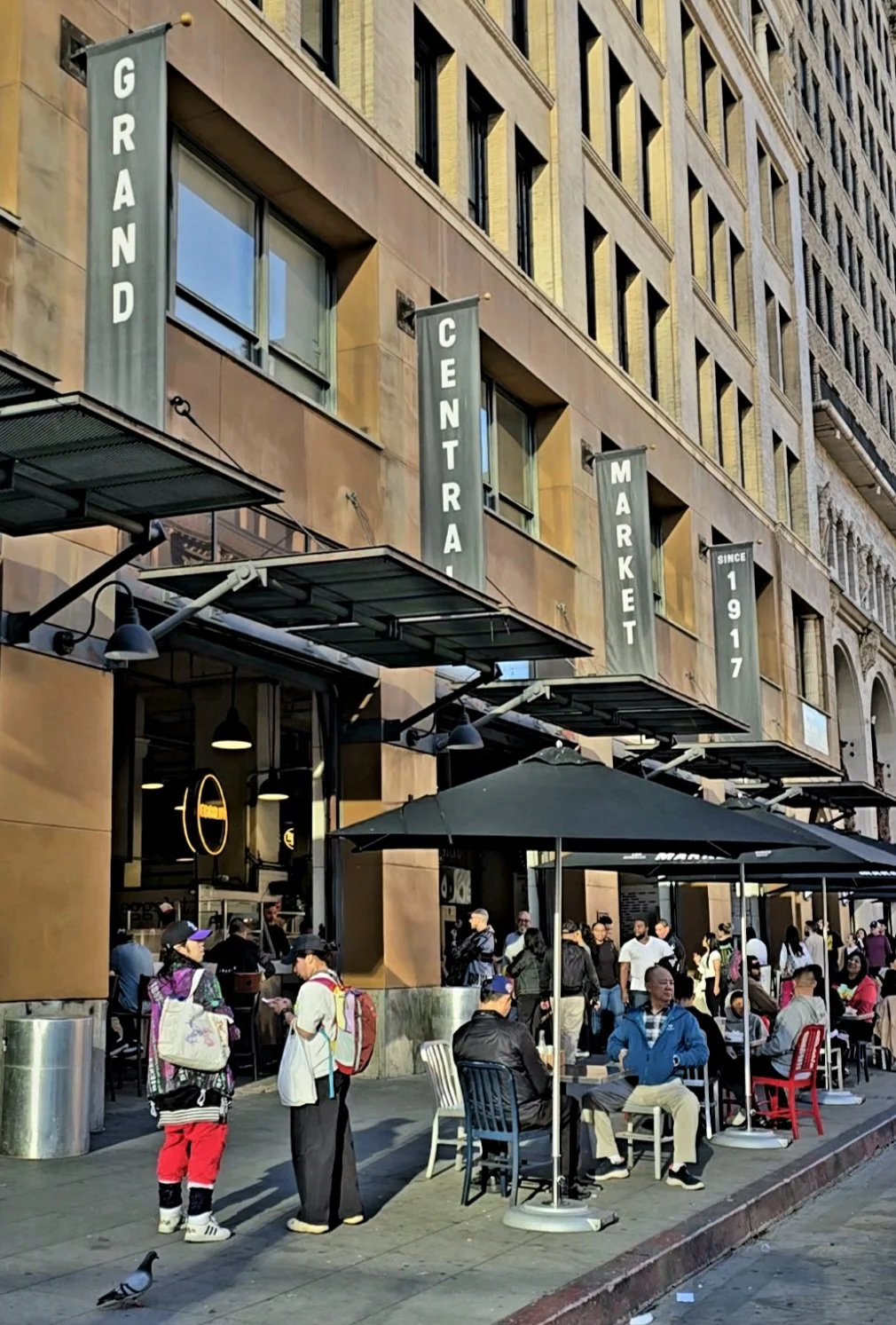
Walk the central aisle today and you’ll feel it instantly - the market is aging and moderation at the same time.
The vendors have changed, now representing cuisines from around the globe, but the bones of the place remain identical.
The skyline above you are the same ones that lit the aisles in 1917. The cadence of footsteps is familiar. The bustle, the crowds, the clashing aromas - they echo a century of motion.
More than 50 vendors now call the market home, forming one of ciyt’s most democratic culinary spaces. Wealth dissolves here. People still crowd the aisled. Tourist still takes their pictures. Culture still meet at every counter.
Grand Central Market doesn’t survive because people romanticize it. It survives because Los Angeles still needs it.
Angels Flight: A Companion to the Market
Across Hill Street, Angeles Flight rises and descends the slope of Bunker Hill with the same orange-and-black charm it carried when it opened. It was once the hillside elevator for market shoppers. Today, it stands as a symbolic bridge connecting the city’s past and present.
A century apart - yet part of the same ongoing story.
A Place the City Never Outgrows
Grand Central Market is more than a landmark. More than a food hall. More than a historic building.
It is a living archive - a place Los Angeles returns to in order to remember what it is, and imagine what it might become next.
This is a special place. A place the city never outgrows.
Curated by LA VÉTTED
Los Angeles’ High Culture Studio - capturing the past, present, and future of the world’s Super City.