

Los Angeles City Hall: Where the City Learned How to Grow
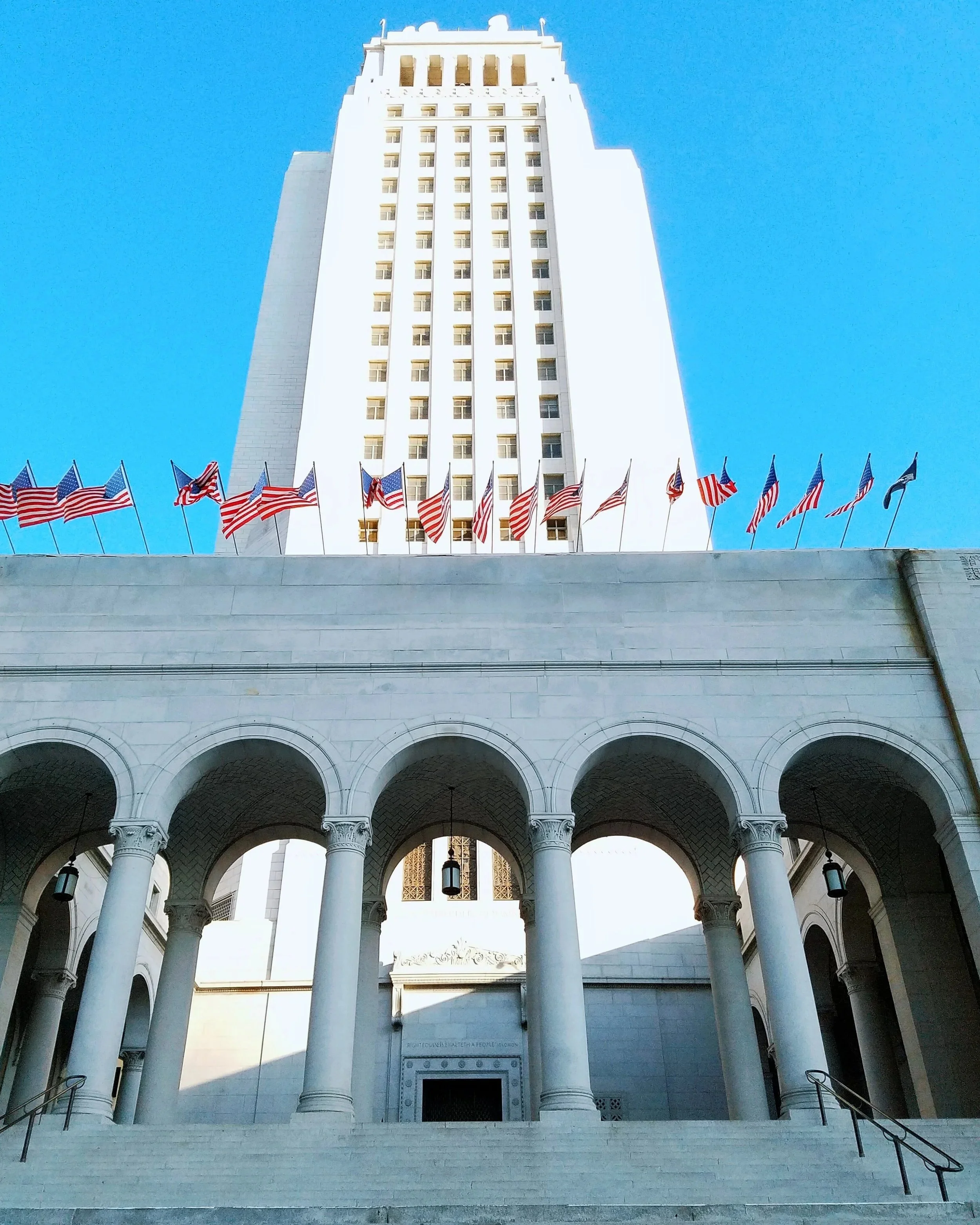
Los Angeles City Hall opened in 1928 as the civic anchor of a city in the midst of defining itself. Designed by John Parkinson, John C. Austin, and Albert C. Martin, the building was constructed with materials sourced from all 58 California counties, including sand from each—an intentional gesture of statewide unity set into its foundations. Rising 454 feet, City Hall was made deliberately taller than any structure in Los Angeles at the time, not as a commercial statement but as an act of civic reverence, reinforced by early height limits that preserved its dominance for decades. Its first mayoral occupant, George E. Cryer, governed from these halls as Los Angeles began its transformation from a regional city into a global one.
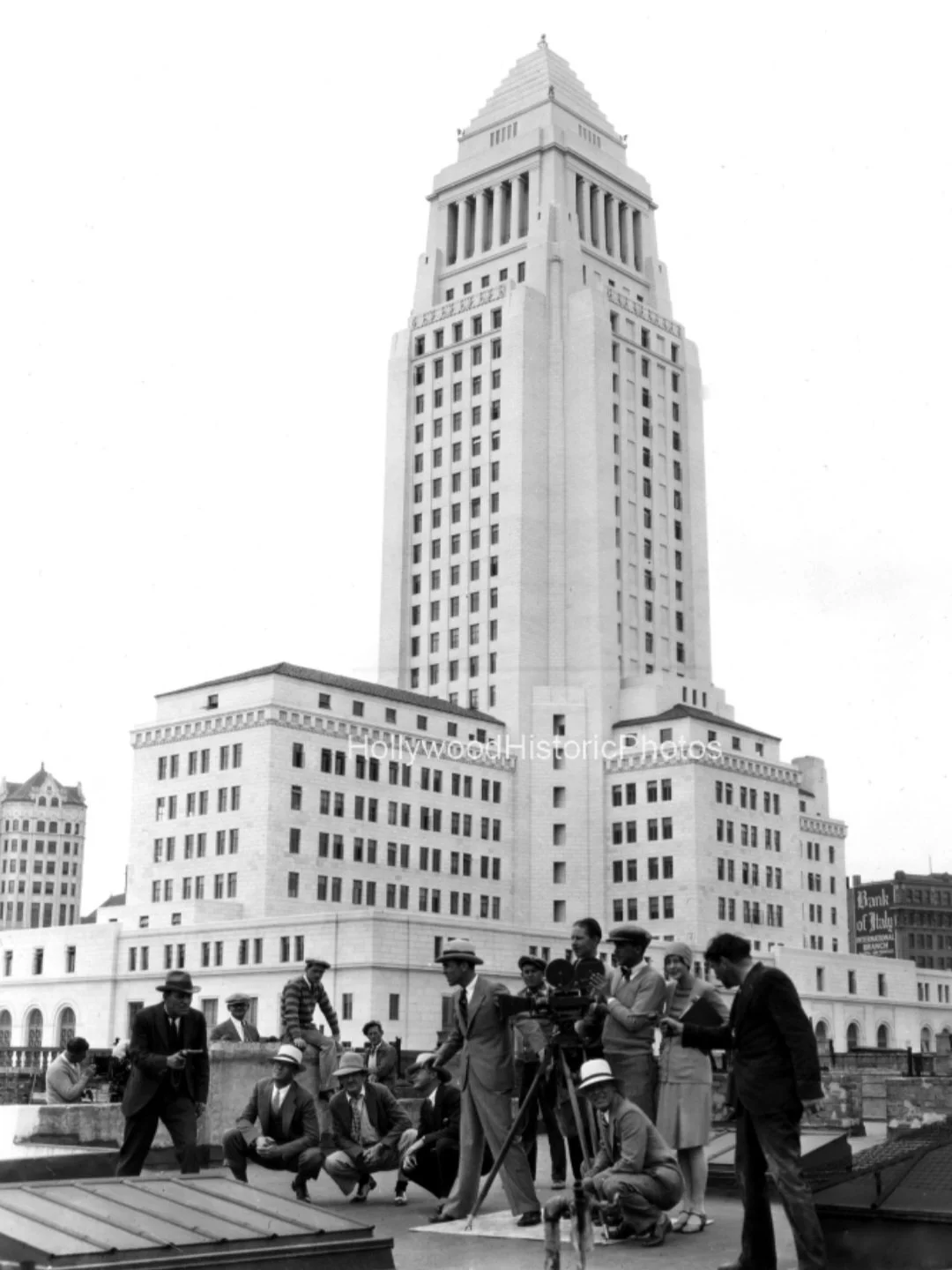
City Hall’s design was not merely architectural—it was philosophical. At a time when American cities like New York and Chicago were consolidating power through density and verticality, Los Angeles chose a different expression. The tower rose as a singular civic marker governing a city that would expand outward rather than stack upward. This contrast—vertical authority overseeing horizontal growth—quietly encoded a planning ethos that favored reach over compression, movement over proximity. From its earliest years, the building signaled that Los Angeles would not organize itself around a single, compact center, but around a constellation of districts bound together by infrastructure, zoning, and scale.
In the decades following its opening, City Hall became the administrative center where Los Angeles’s growth was formalized through zoning, land-use codes, and municipal governance. Rather than announcing a singular vision, the city implemented a framework that prioritized separation of uses, low-rise neighborhoods, and expansive districts—decisions that would shape everything from housing patterns to transportation networks. It was here that areas such as Hollywood, Downtown, and Culver City were not invented, but institutionally defined and governed as distinct parts of a larger system. Through ordinance, planning, and enforcement, Los Angeles was quietly structured to grow outward, embedding scale and distance into the city’s daily life.
City Hall remains an active site of power rather than a preserved relic. Mayoral addresses, council sessions, and civic decisions continue to unfold within its chambers, while its steps and corridors have long served as a public forum for protest, dissent, and collective voice. The same building that once structured the city’s early growth now absorbs its pressures, negotiations, and demands for change. In this way, City Hall operates as a living institution—one where governance, public expression, and the shaping of Los Angeles’s future continue to intersect in real time.
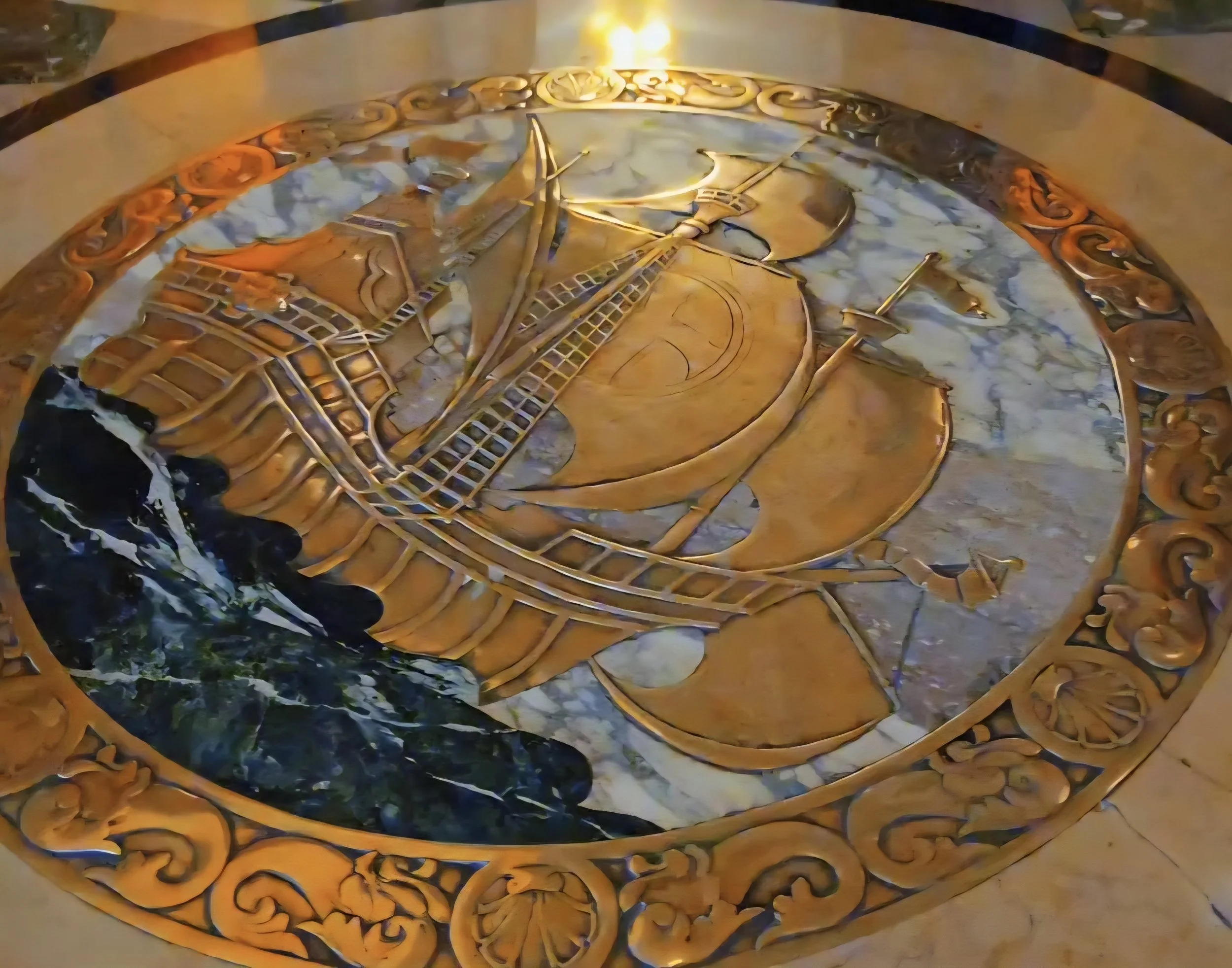
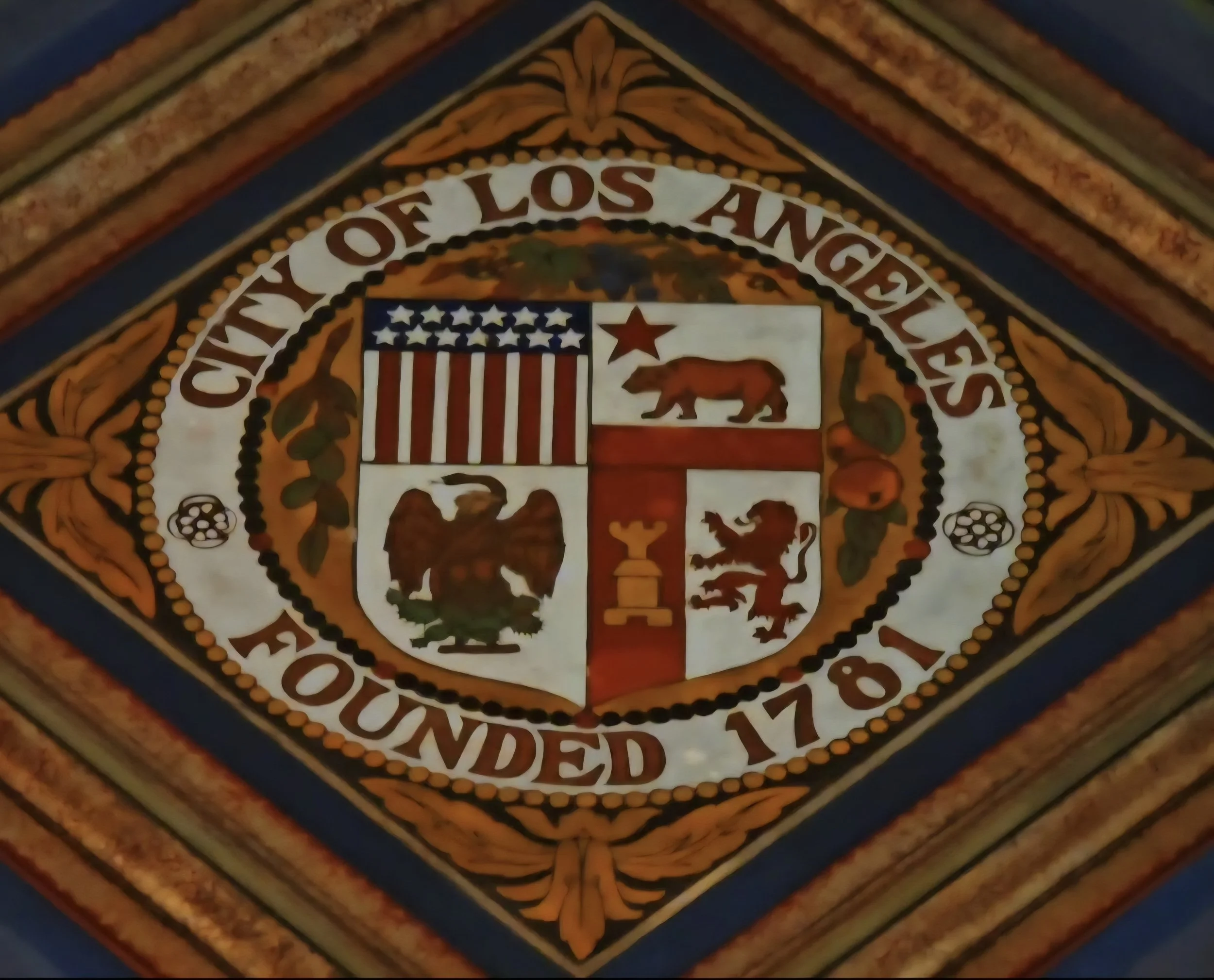
At the center of City Hall, the city’s seal is set into stone, not displayed above it. The placement is deliberate: governance stands on history, not above it. Administrations change, policies evolve, and the city continues to expand and adapt, but the foundation remains. Nearly a century after it opened, Los Angeles City Hall endures as both witness and instrument—anchoring a city that moves outward, forward, and continuously rewrites itself, from the same halls where it first learned how to grow.