

The Doheny Memorial Library:
Before you encounter a single book at the Doheny Memorial Library, the building begins its work on you.
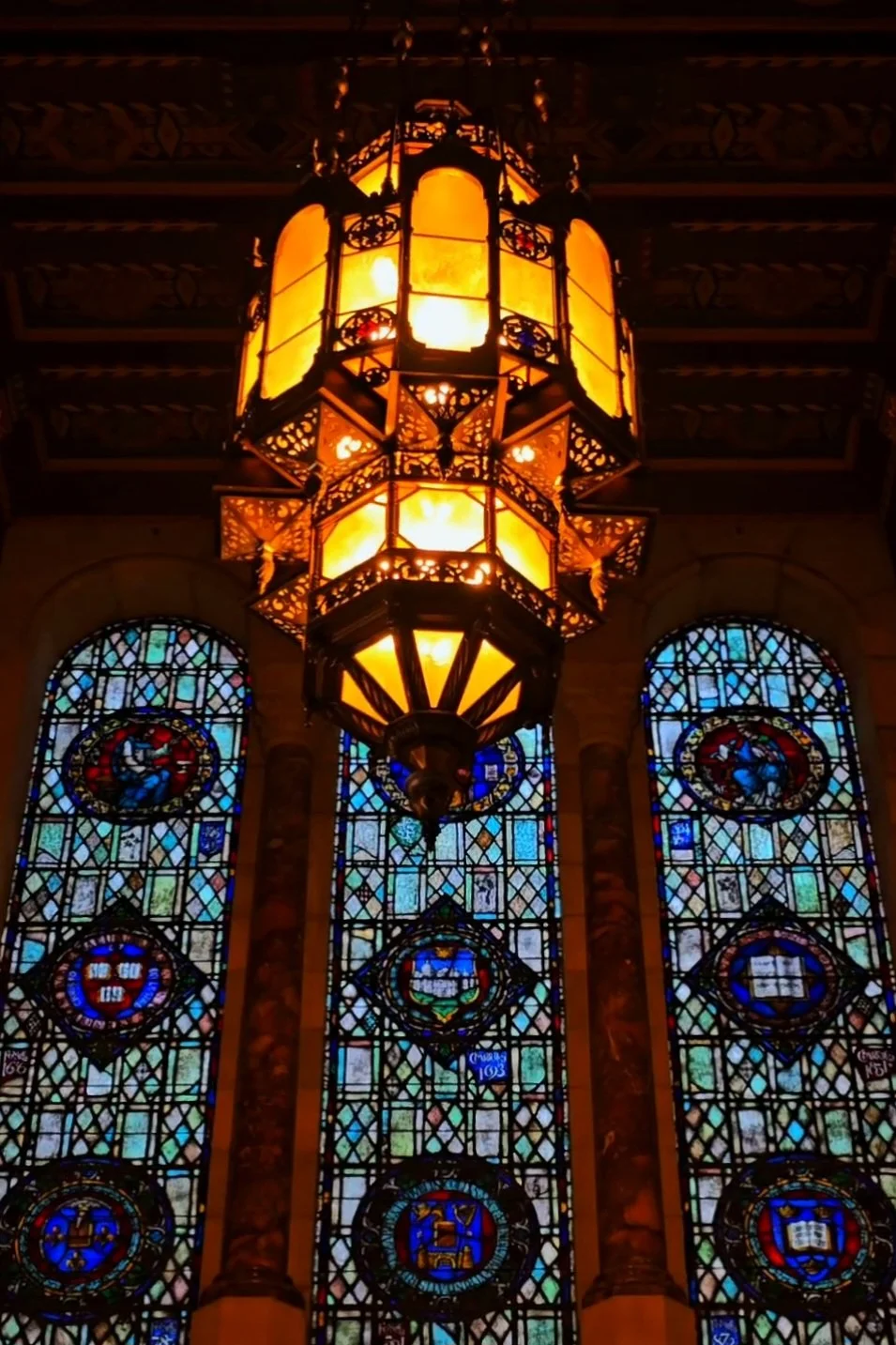
Stepping through its Romanesque arches, I wasn't thinking about architecture. I was wondering why a university library felt so much like entering a cathedral. Stained-glass windows filtered the California light. Bronze lanterns glowed overhead. Massive stone walls muted the noise of Los Angeles beyond the doors.
Almost instinctively, I slowed my pace.
At first, the comparison seemed unusual. Libraries are places to store books, not spaces that resemble houses of worship. Yet the feeling was unmistakable. The architecture seemed designed to quiet the mind before inviting it to learn.
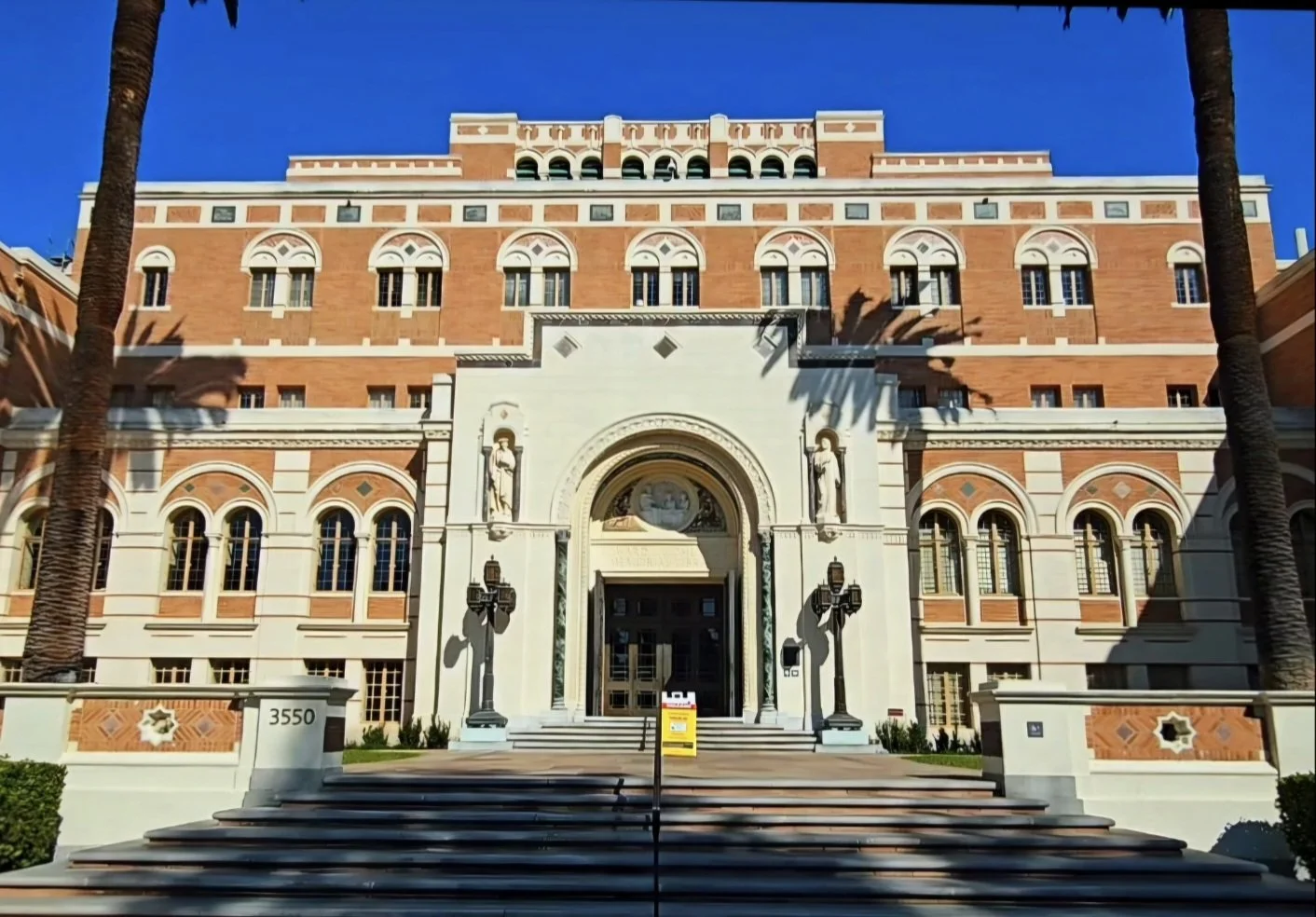
Later, the reason became clear.
The building's exterior was designed by Ralph Adams Cram, America's foremost Gothic church architect. Rather than borrowing sacred architecture for religious purposes, Doheny Memorial Library adapts its language to honor another pursuit: knowledge itself.
Suddenly, every detail made sense.
The stained-glass windows don't depict saints. They celebrate universities and scholars. At the entrance, visitors are welcomed not by religious figures but by William Shakespeare and Dante Alighieri. Above the doorway, sculpted reliefs celebrate teachers, students, and the enduring pursuit of wisdom.
The building asks for reverence—but not toward a creed.
Toward learning.
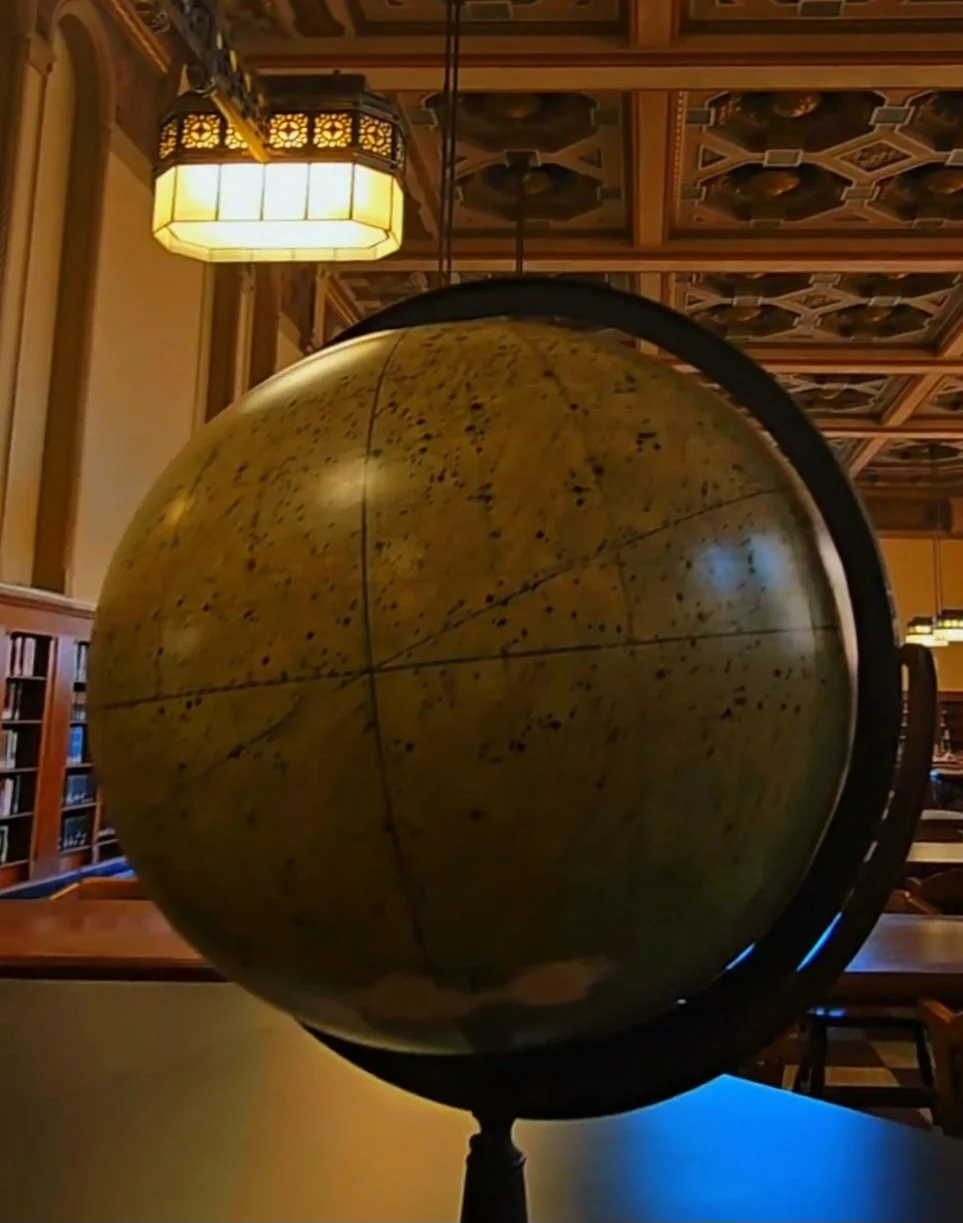
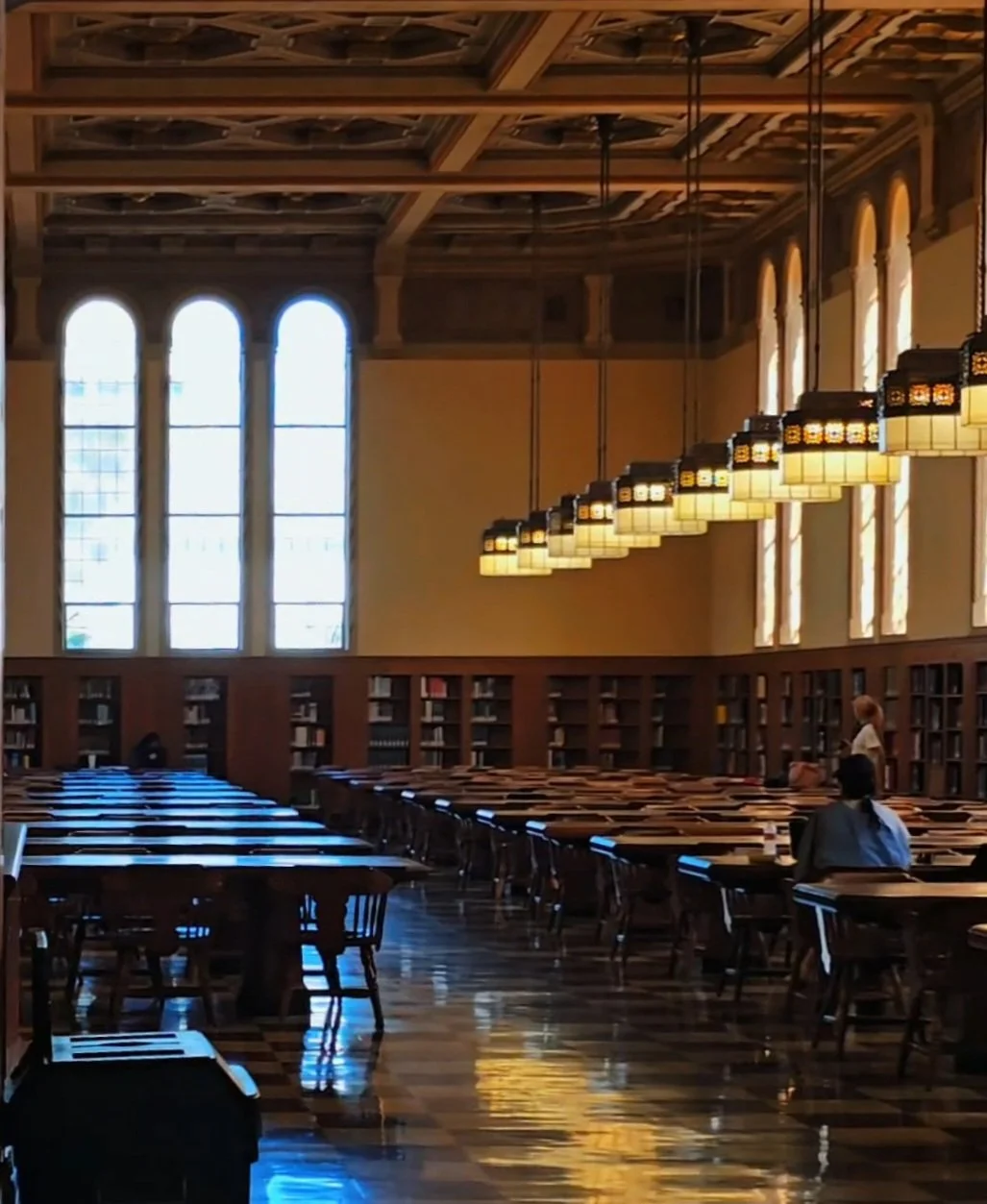
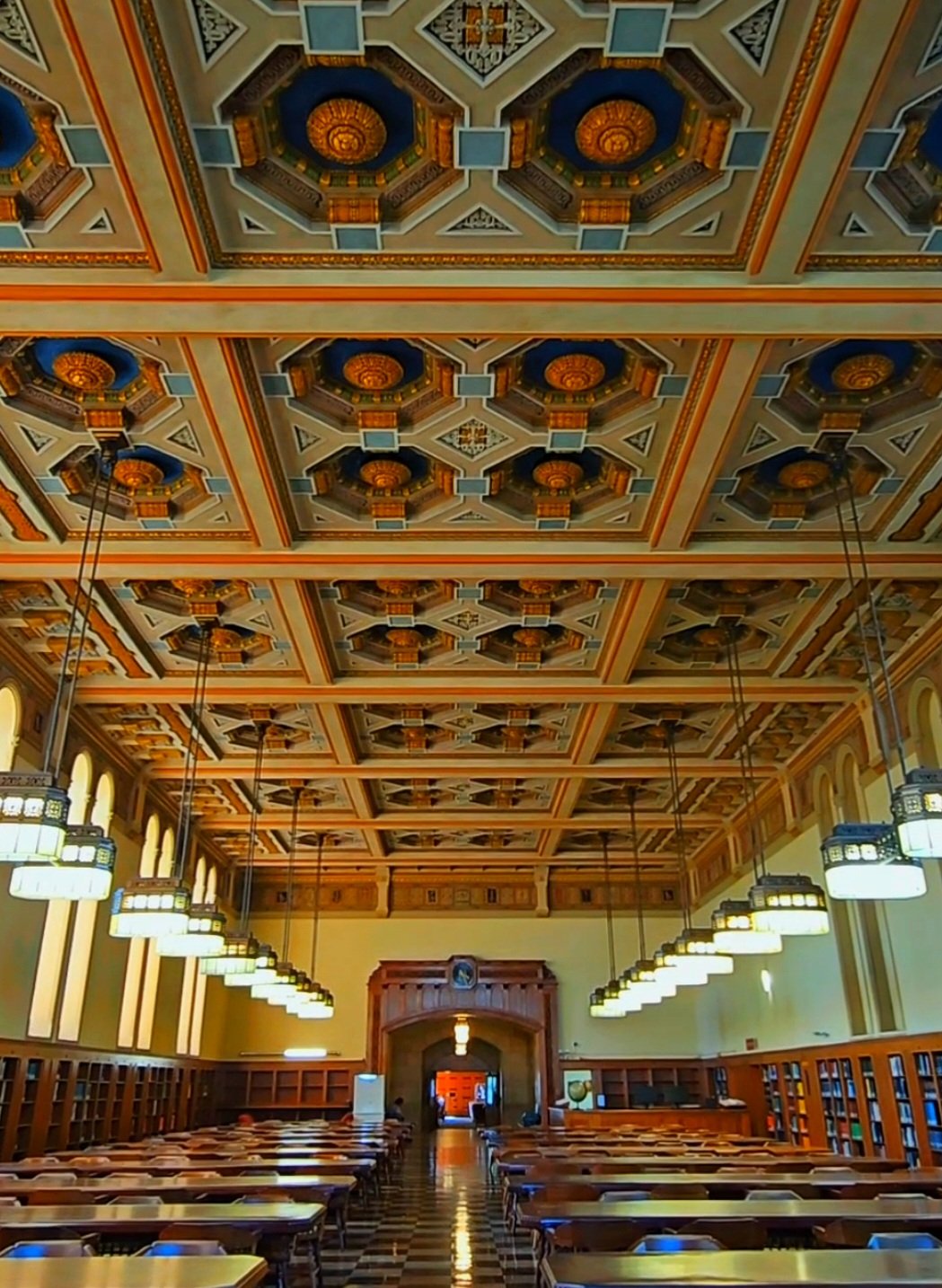
That philosophy reaches its highest expression in the Los Angeles Times Mirror Reference Room. Beneath Giovanni Smeraldi's extraordinary gold-and-blue coffered ceiling, rows of reading tables stretch quietly into the distance beneath a procession of suspended lanterns. There is no grand focal point demanding your attention. The destination is the empty chair waiting for the next reader.
Perhaps that is the library's greatest lesson.
Great architecture doesn't simply shelter an activity; it prepares us for it. Before a single page is turned, the Doheny Memorial Library gently asks visitors to leave distraction behind and enter a state of curiosity.
In a city celebrated for movement, ambition, and reinvention, this remarkable library offers something increasingly rare.
Permission to become still.
And in that stillness, to discover that knowledge is not merely collected—it is experienced.