

The Bradbury Building
The City Within
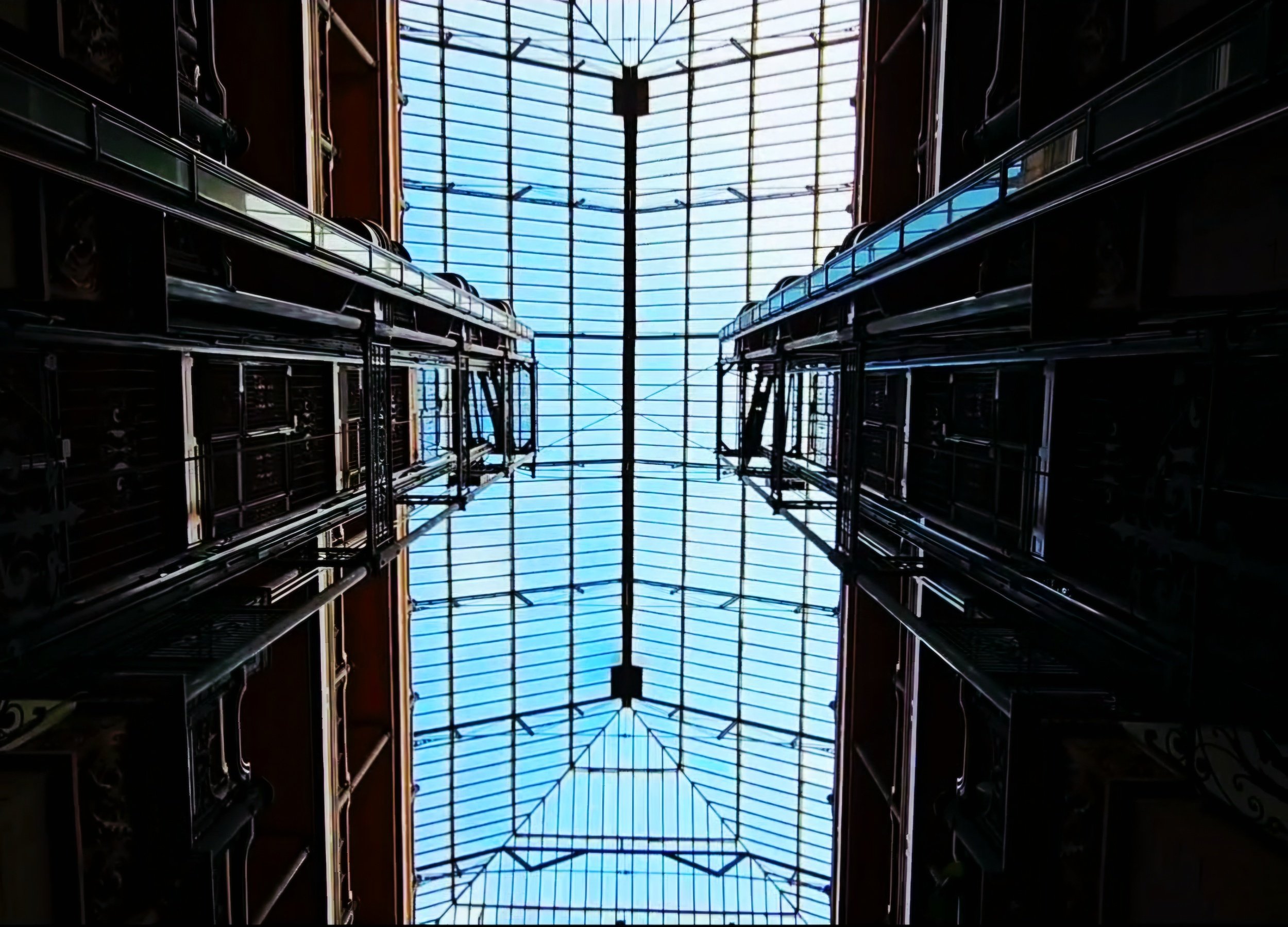
Standing on the corner of Third Street and Broadway, the Bradbury Building gives little indication of what waits beyond its front doors. Its sandstone façade is restrained, almost anonymous among the historic architecture of Downtown Los Angeles.
Then you step inside.
The city disappears.
Or rather, it reveals itself in another form.
The Bradbury Building was never conceived as a collection of offices connected by corridors. It was imagined as something far more ambitious—a vertical civic space where commerce, conversation, movement, and daylight could coexist beneath a single roof. More than a building, it was an experiment in creating a city within a building.
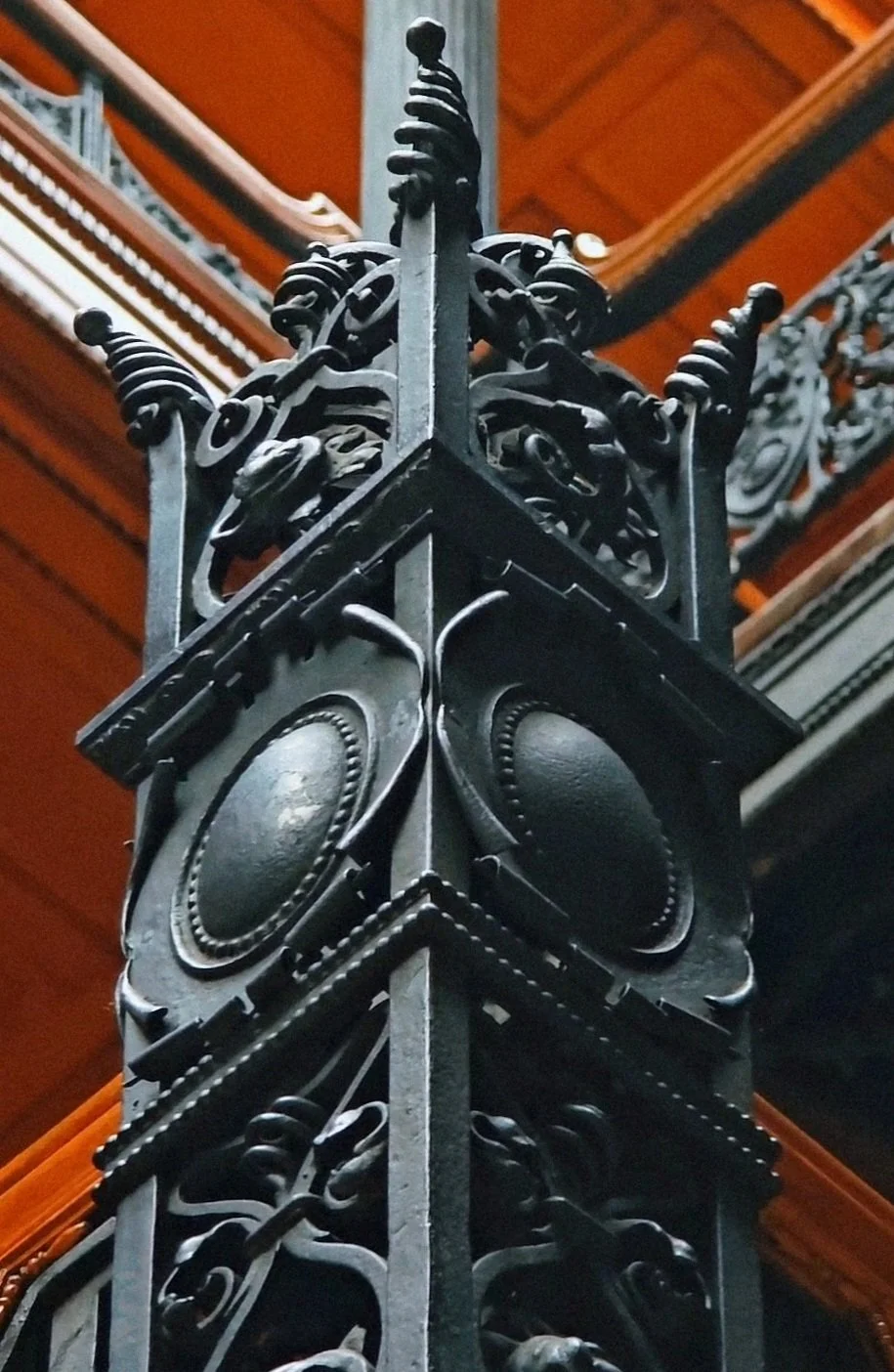
The building's genius lies not simply in its beauty, but in the way it organizes human life.
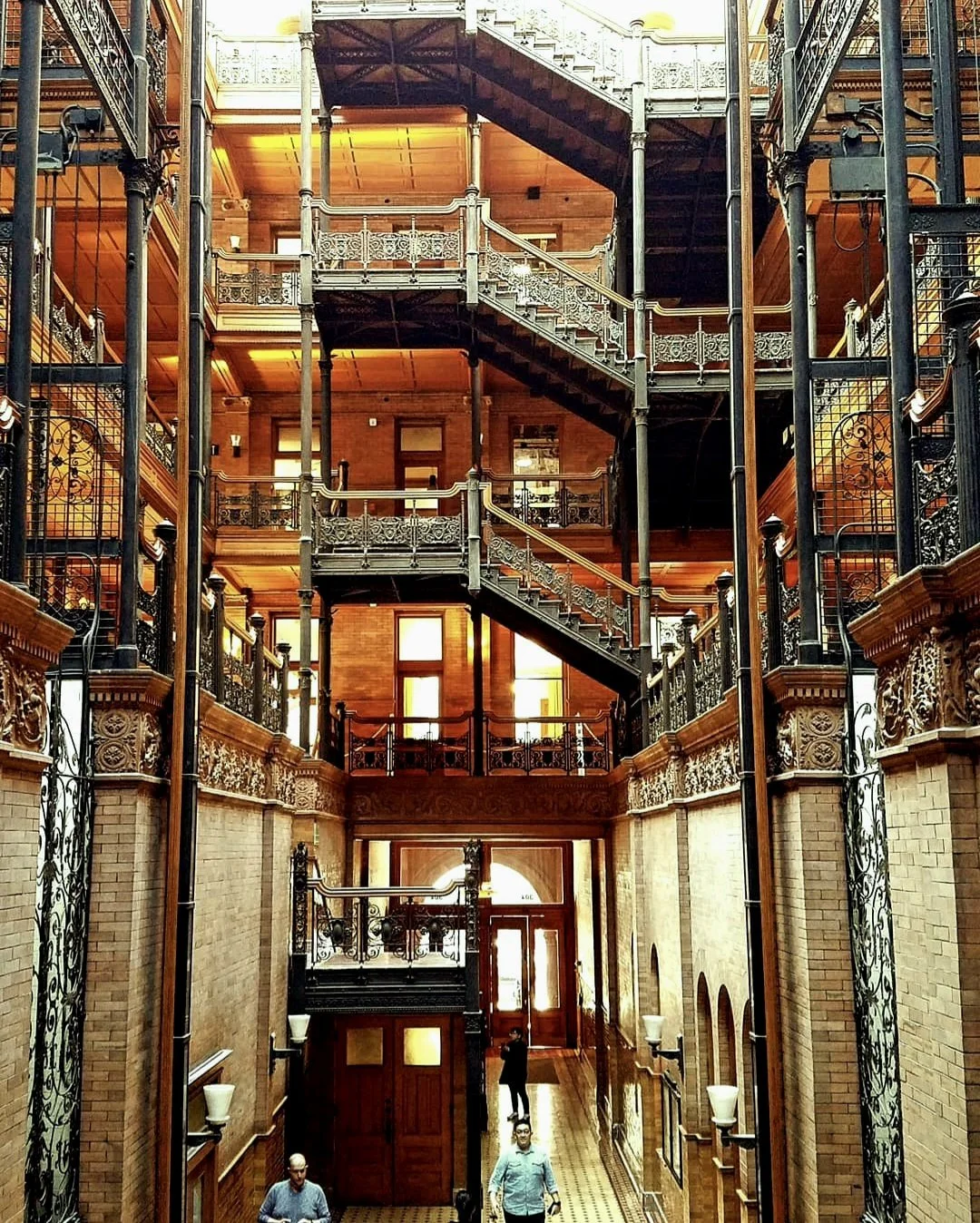
Rather than arranging offices along enclosed hallways, architect George Wyman conceived a soaring central atrium where every destination remained visually connected to every other. Wrought-iron staircases crisscross the open space. Suspended walkways stitch together five levels. Twin hydraulic elevators rise slowly through the center like the heartbeat of the building itself.
Nothing feels hidden.
From almost any vantage point, you can see people arriving, ascending, descending, pausing in conversation, or crossing one of the iron bridges overhead. Daylight pours through the immense glass skylight, binding every floor into a single civic room.
It is an extraordinary idea, especially for 1893.
The Bradbury was designed not merely as a place to work, but as a place where the life of a city could unfold beneath one roof.
A Vision Before Its Time
Buildings like the Bradbury do not emerge by accident. They begin as ideas long before they become stone, iron, and glass.
George Wyman found inspiration in an unlikely place: Edward Bellamy's 1888 novel Looking Backward. The enormously popular book imagined a future society where architecture encouraged openness, dignity, and shared civic life rather than isolation and hierarchy.
Whether or not every detail of Bellamy's vision found its way into the Bradbury, its spirit unmistakably did.
The building rejects the dark, compartmentalized office blocks of the nineteenth century. Instead, it celebrates visibility. Light replaces shadow. Movement replaces confinement. Every staircase, balcony, and elevator participates in a single architectural conversation.
More than a workplace, the Bradbury became a physical expression of optimism—an argument that the places where we work could also elevate the human spirit.
A Living City
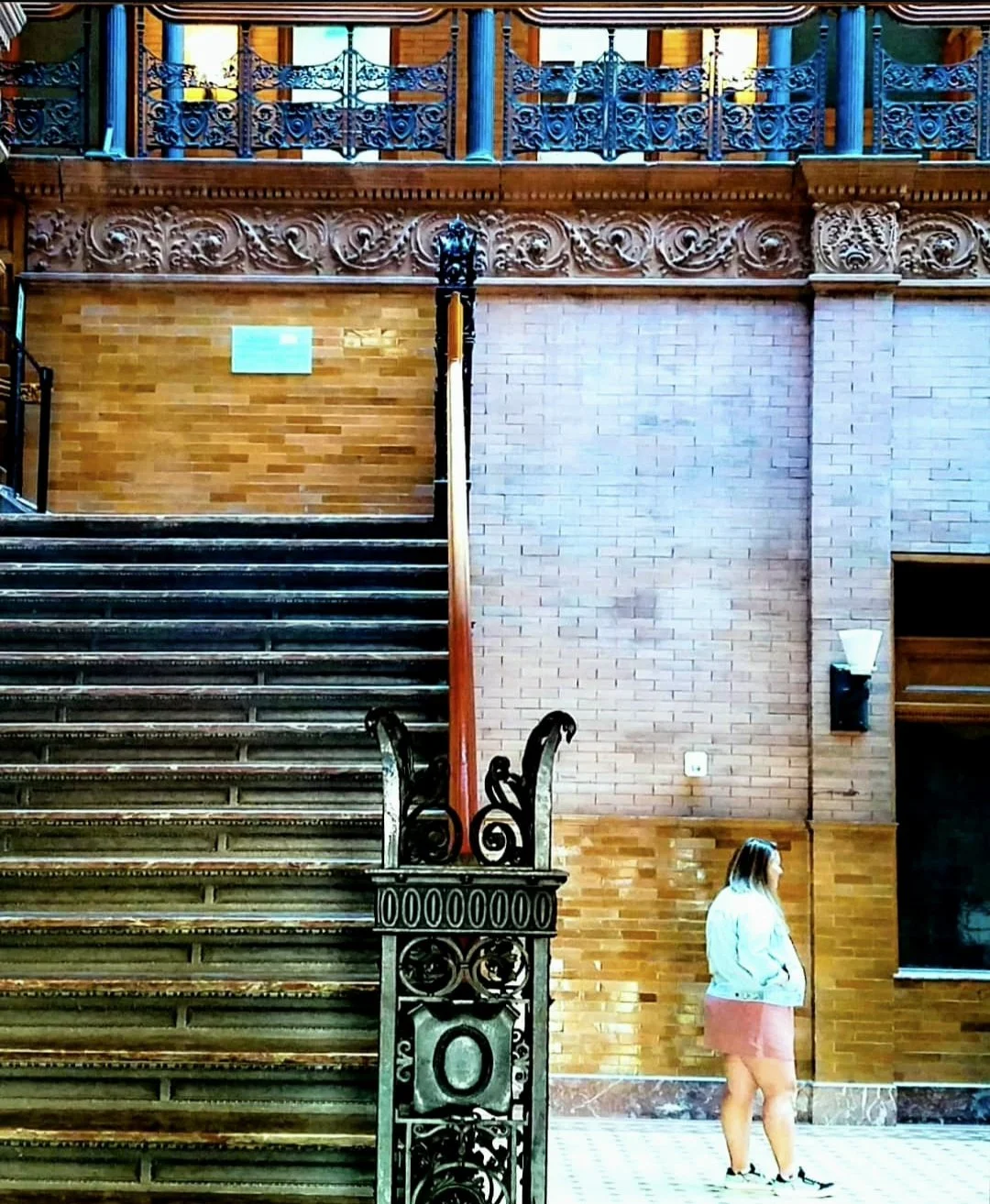
More than a century after it opened, the Bradbury Building continues to fulfill the purpose for which it was imagined.
Its elevators still climb. Its staircases still connect. Architects, desianers, artists filmmakers, and entrepreneurs still pass beneath the same glass roof that first transformed daylight into architecture in 1893
Perhaps that is the building's greatest achievement.
It has survived changing fashions, changing technologies, and changing cities without surrendering the idea that inspired it. The Bradbury was never simply an office building. It was-and remains-a place where architecture encourages people to see one another, to move together, and to participate in a shared civic life.
For Los Angeles, that idea has become one of its quietest masterpieces.
The Bradbury Building is not merely a landmark.
It's a city within a city.