

United States Postal Service: Terminal Annex
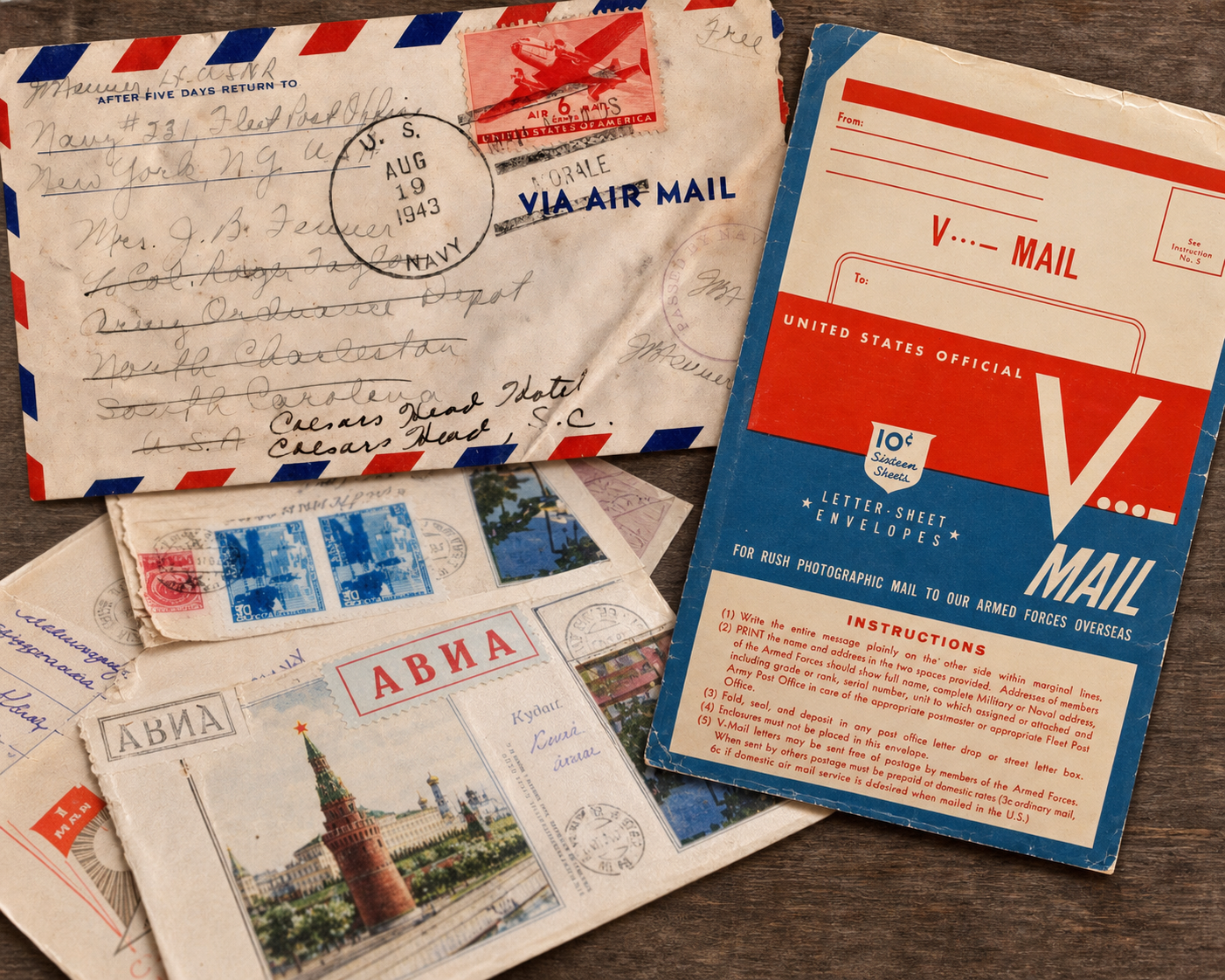
Before email.
Before text.
Before anything instant—
Messages didn’t move invisibly.
They moved physically.
Written by hand.
Stamped.
Carried across distance.
Every letter was time, effort, and intent—sent from one place to another, one person to another, one city to the world.
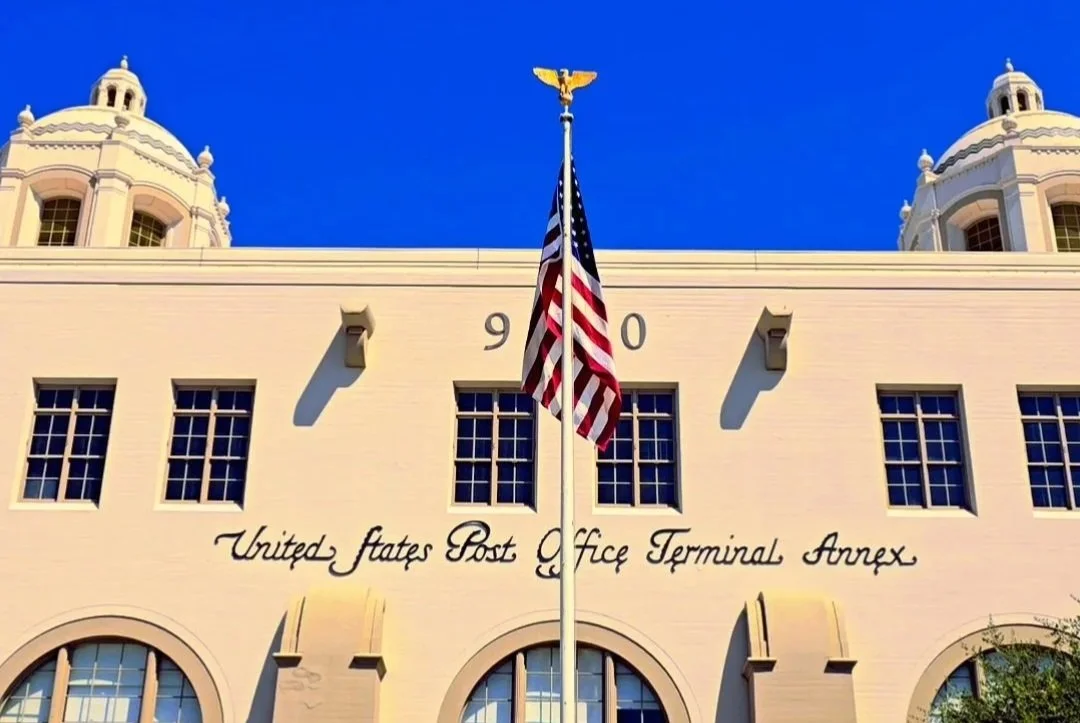
In Los Angeles, that movement was centralized at one place:
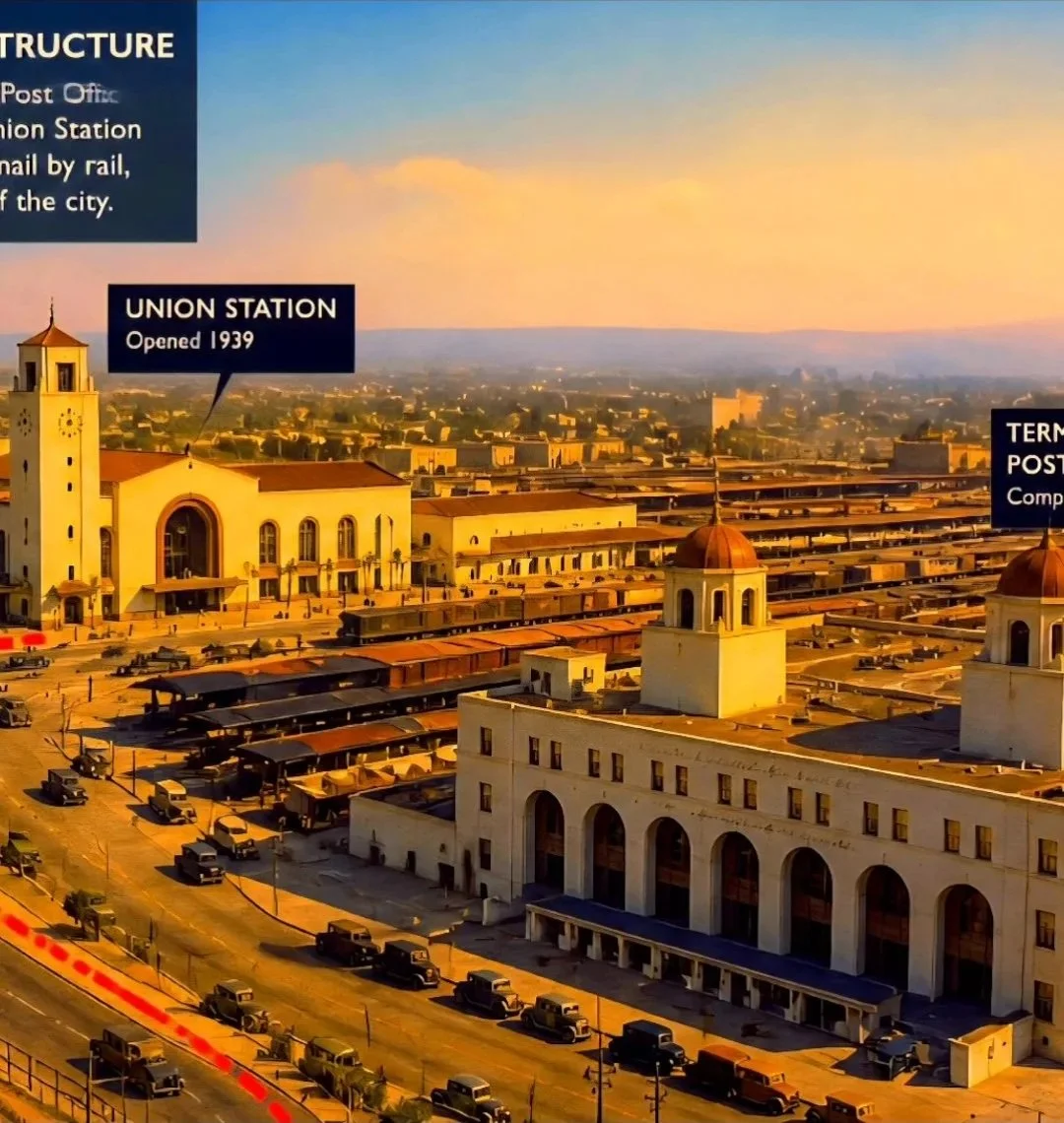
The United States Postal Service Terminal Annex.
Opened in 1939 beside Union Station, it wasn’t just a post office—it was a communications hub designed to serve a rapidly expanding city.
This is where Los Angeles connected outward.
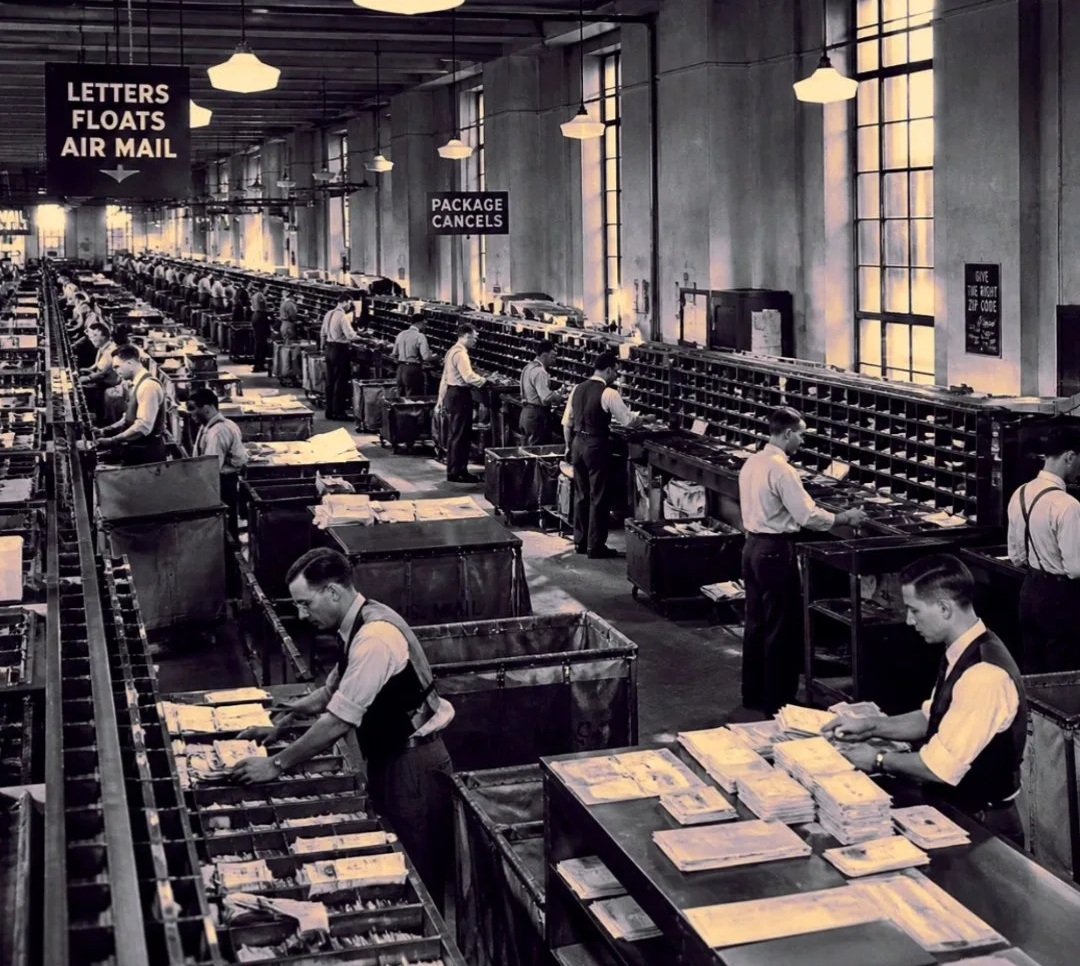
Inside, the Terminal Annex functioned as a coordinated system.
Mail arrived in volume.
Workers sorted with precision.
Lines of desks, bins, and conveyors moved letters through the building in constant rhythm.
It replaced smaller neighborhood stations with a centralized network—one system capable of keeping Los Angeles connected as it grew.
Before digital infrastructure existed, this was infrastructure.
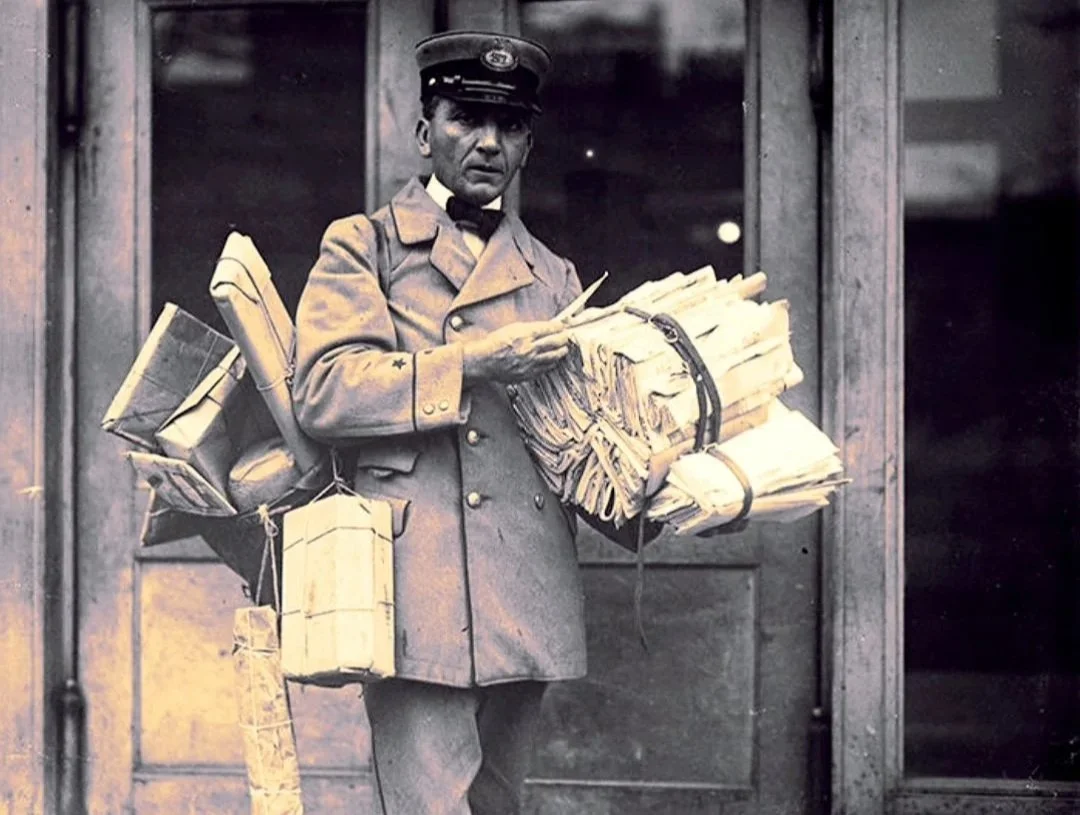
The Terminal Annex didn’t just move mail—it moved life.
Business transactions passed through here.
Government communication depended on it.
Families stayed connected because of it.
Every letter carried something forward—information, decisions, relationships.
Los Angeles wasn’t just expanding outward.
It was staying connected.
By the late 20th century, communication began to shift.
Digital networks replaced physical ones.
Speed replaced distance.
Centralized systems gave way to distributed technology.
The Terminal Annex didn’t stop working—
The world simply moved beyond the system it was built to support.

In 1985, the Terminal Annex was added to the National Register of Historic Places.
Not for decoration—but for function.
It was recognized for what it enabled:
A city operating at scale.
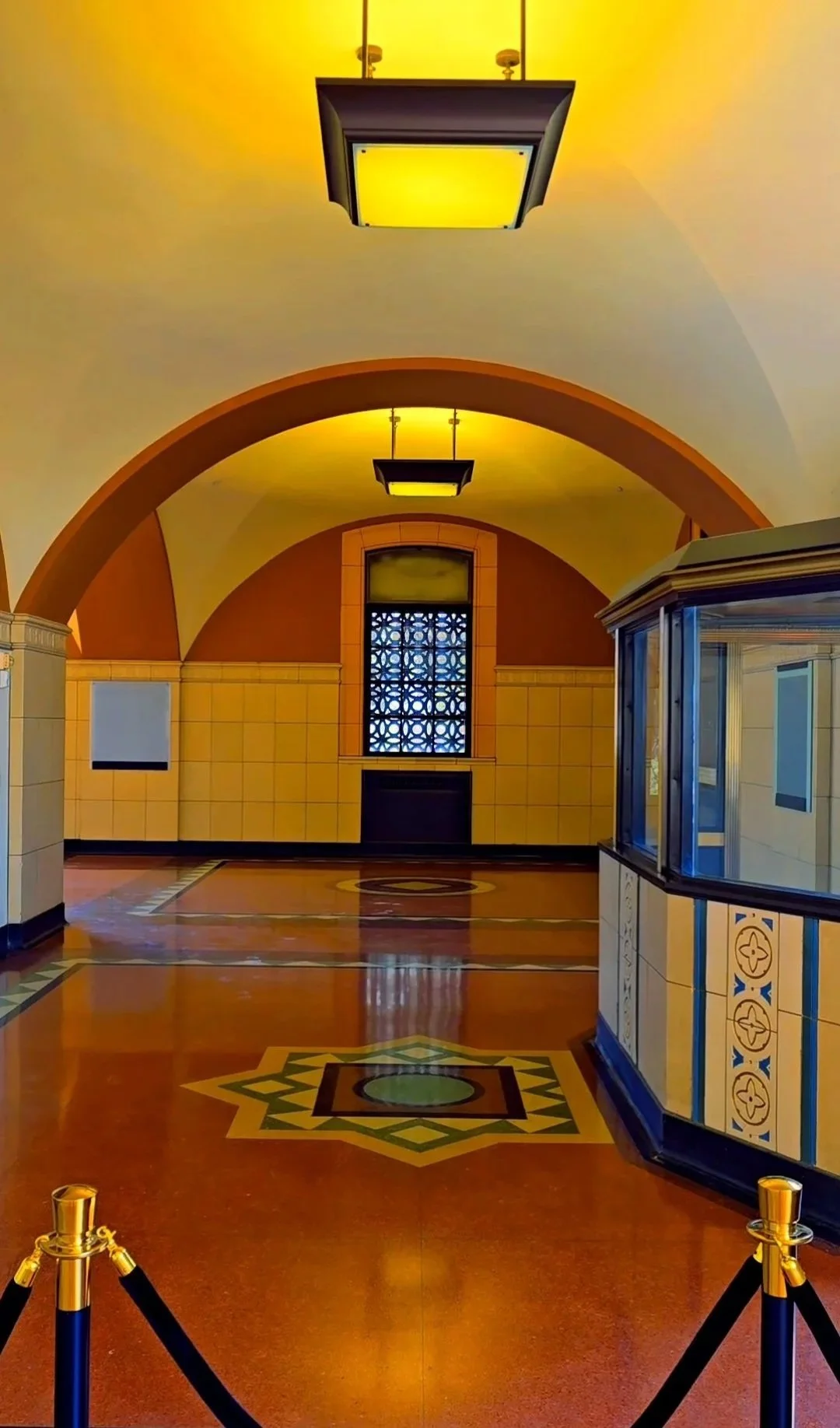
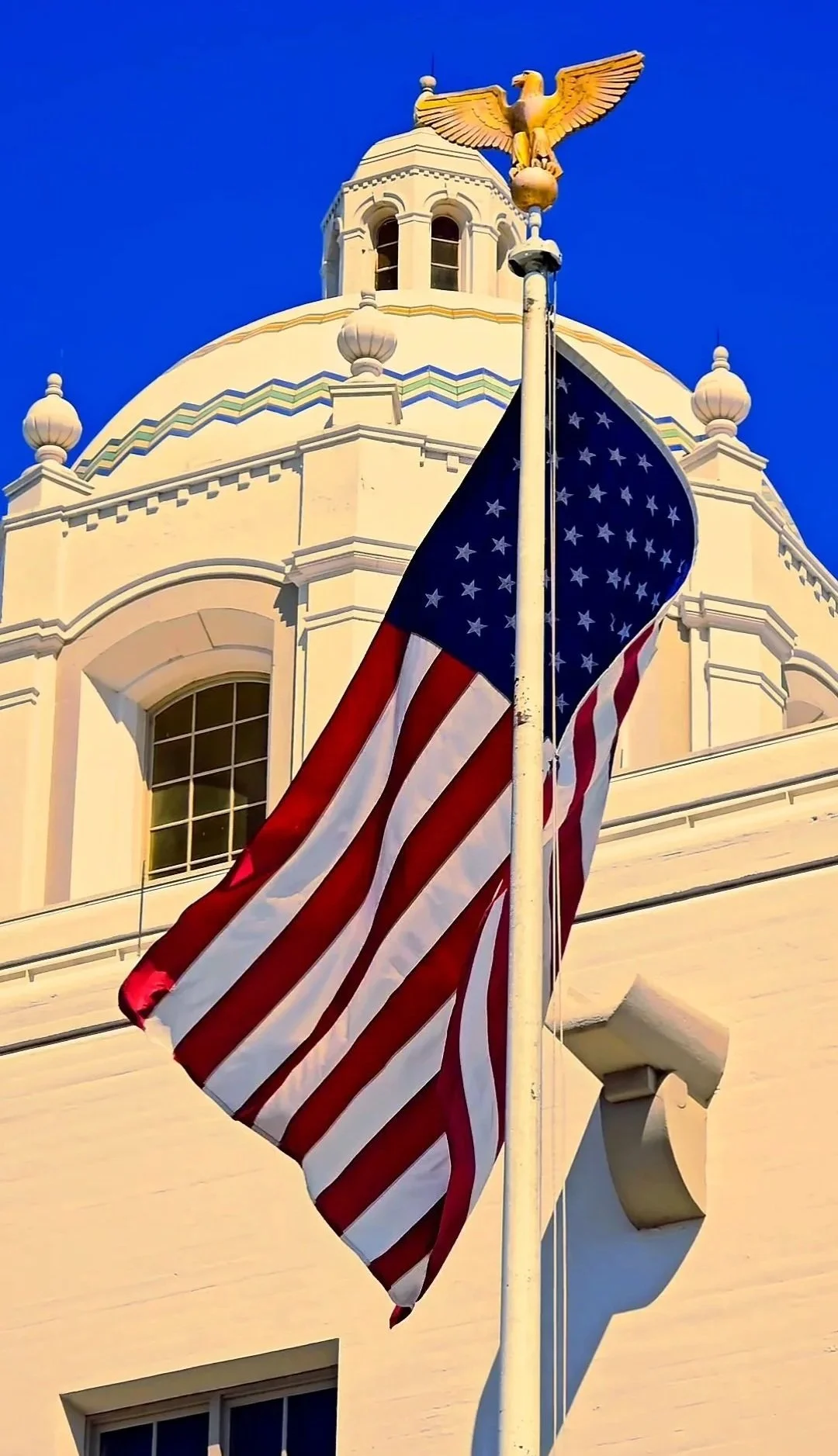
This is what Authority looks like.
Not trend.
Not surface.
System. Function. Coordination.
The Terminal Annex reveals something essential about Los Angeles:
The city has always been engineered—designed to handle movement, growth, and complexity long before it was visible on the surface.
Los Angeles is not accidental.
It is constructed.
Every institution—every system—every building like this exists to solve a problem at scale.
Before the internet connected the world,
Los Angeles built its own network.
And it ran through here.
Monuments: The Afterlife of Power in Los Angeles
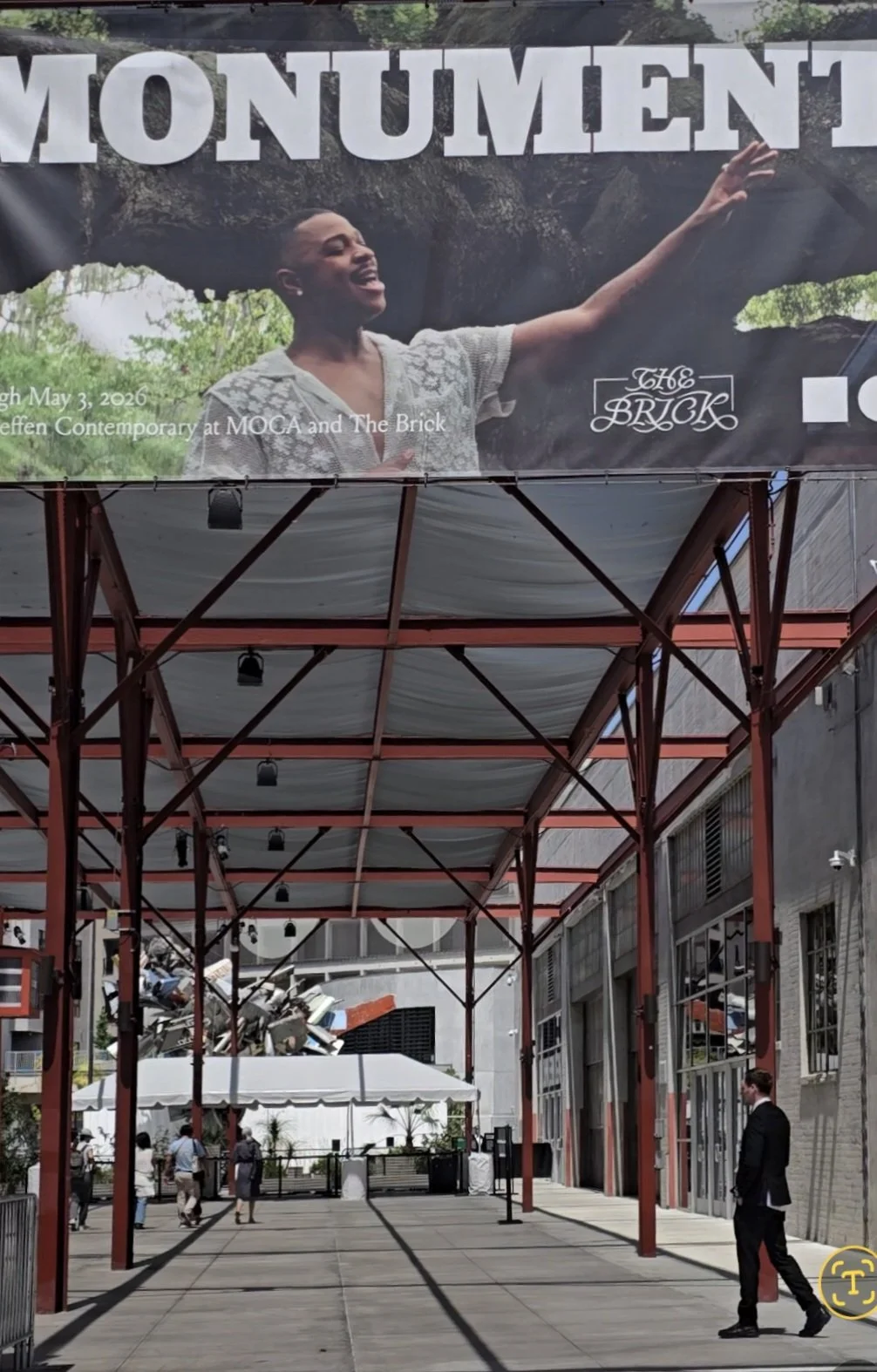
Los Angeles does not preserve history in place. It repositions it.
Across the city, objects once fixed in public life are being gathered, studied, and reconsidered. Monuments presents these works not as symbols of permanence, but as artifacts in transition—dislodged from their original intent and placed into a new cultural context.
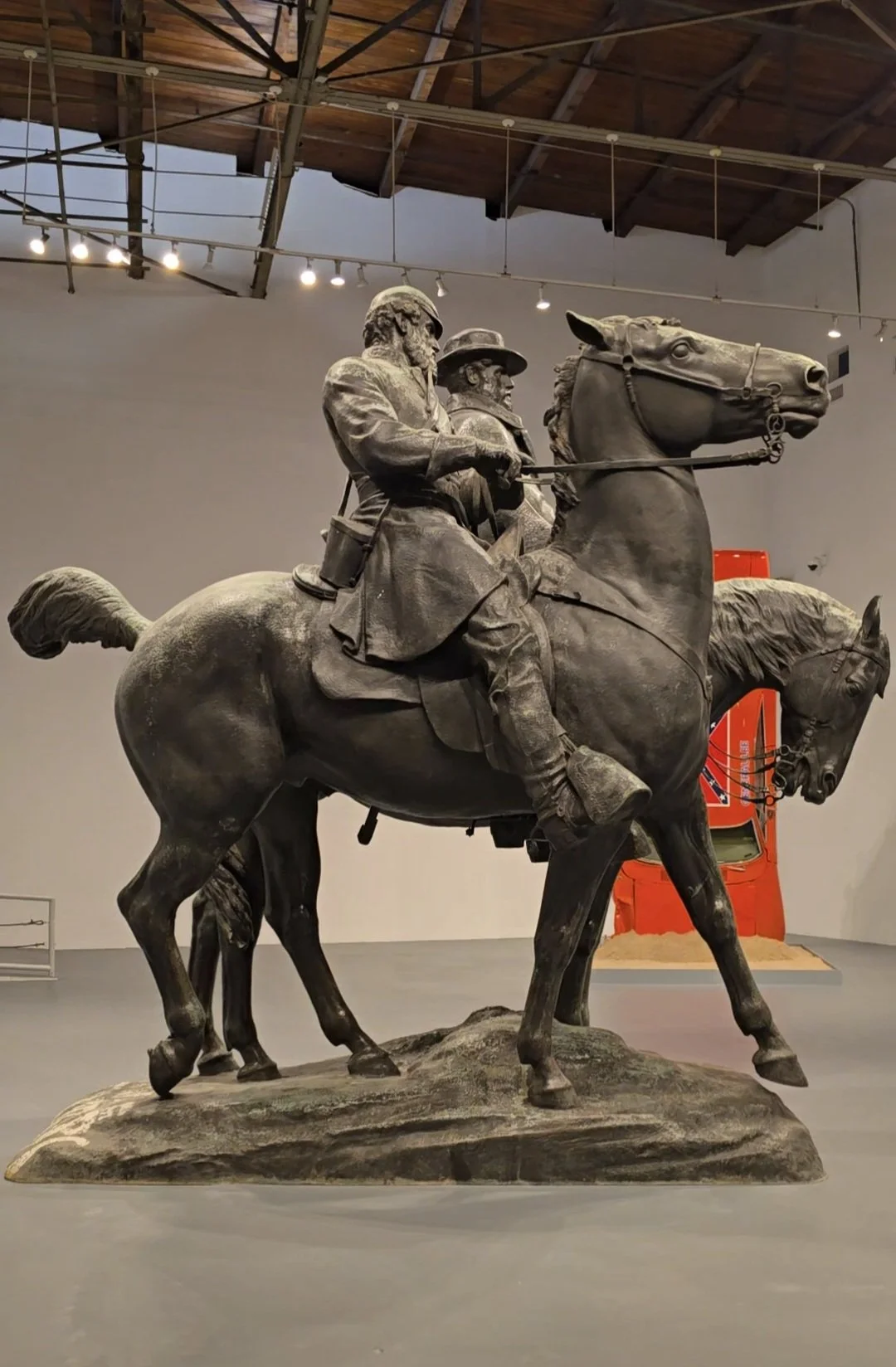
At the Geffen Contemporary at MOCA in Little Tokyo and The Brick in Downtown Los Angeles, the exhibition unfolds across two distinct environments. One expansive and industrial, the other intimate and direct—together forming a dual framework through which the work is experienced. The separation is not incidental; it allows the viewer to encounter the subject from multiple spatial and emotional registers.
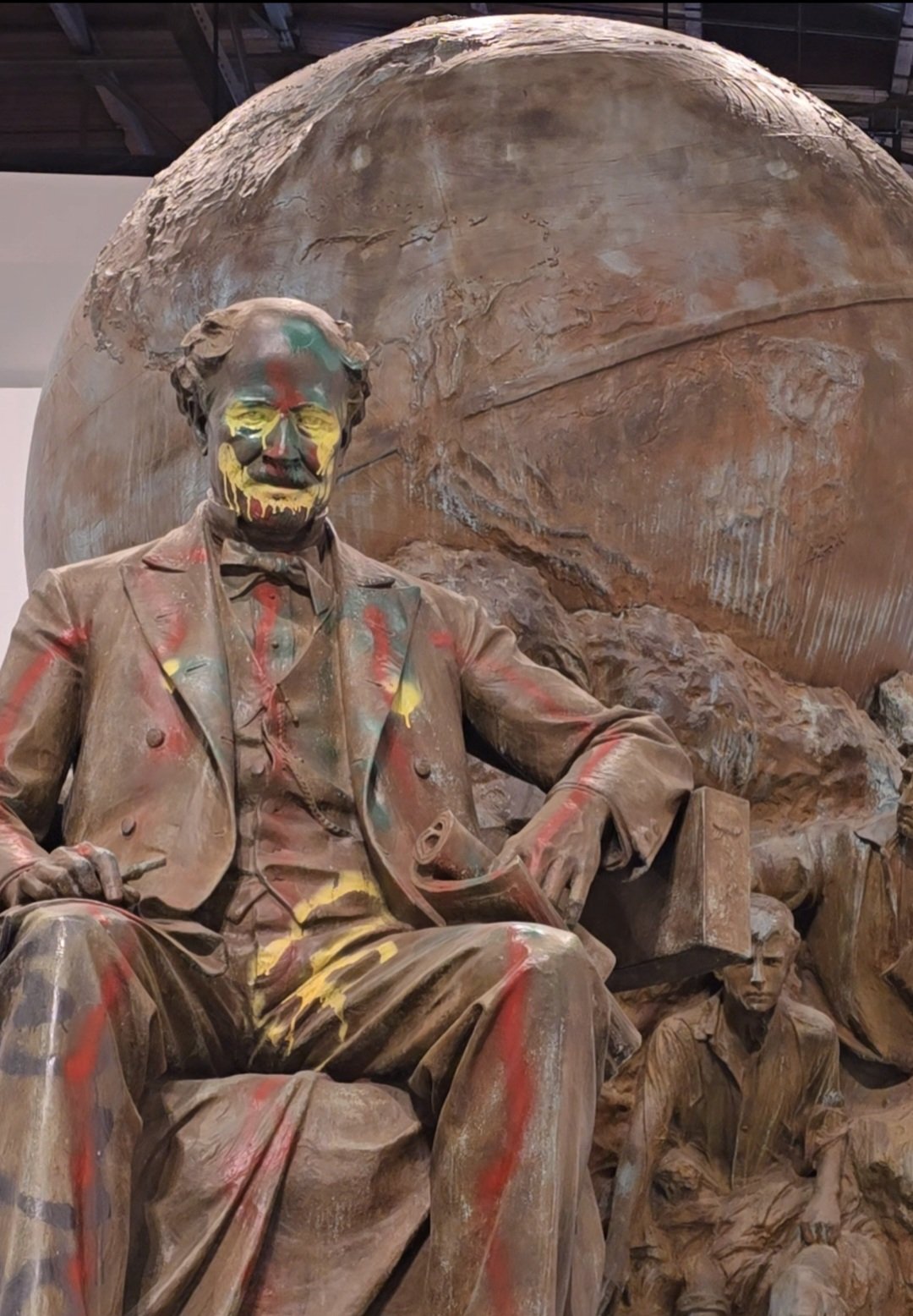
These are not reproductions.
They are the original Confederate monuments—once installed in civic spaces across the United States, now removed from public view. Weathered surfaces, fractured forms, and altered compositions reveal their passage through time and conflict. What remains is not just material, but evidence.
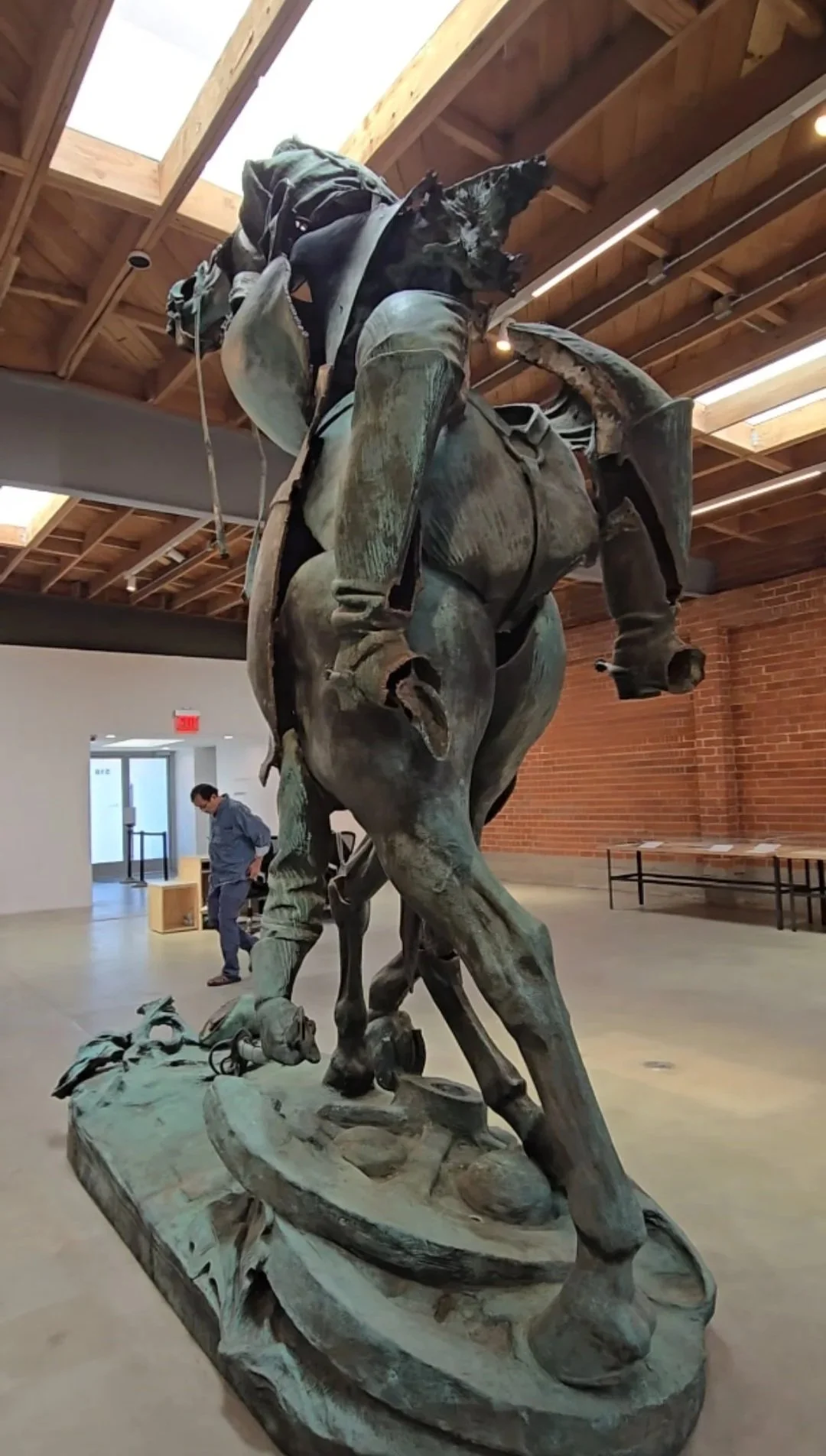
At The Brick, Kara Walker extends this dialogue through direct intervention. Elements are disassembled and repositioned—fronts moved to backs, symbols inverted, fragments relocated beyond recognition. The result resists reconstruction. There is no return to the original image—only a reordering that forces a new reading.
Movement through the spaces becomes part of the work itself.
At the Geffen Contemporary at MOCA, scale dominates—the viewer walks alongside these structures, absorbing their weight and presence. At The Brick, proximity sharpens perception—details emerge, relationships between fragments become immediate. The contrast between distance and closeness defines the experience.
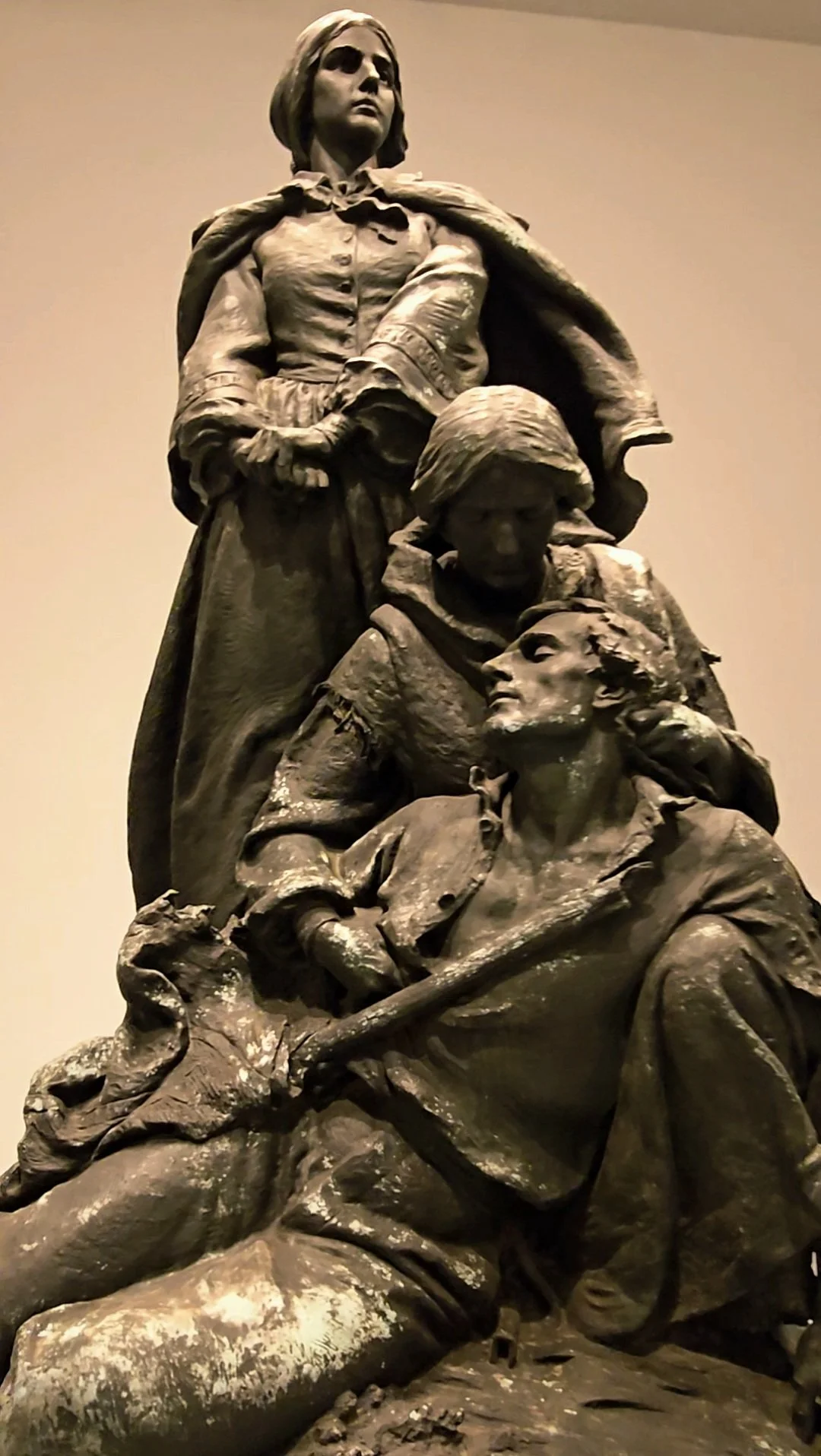
Removed from their original settings, these monuments no longer instruct—they are examined.
What once stood as declarations of power now exists as material to be interpreted. In Los Angeles, far from their points of origin, they are not erased, but reframed—held in suspension between past intention and present understanding.
In this city, history is not static.
It is placed, observed, and, when necessary, redefined.
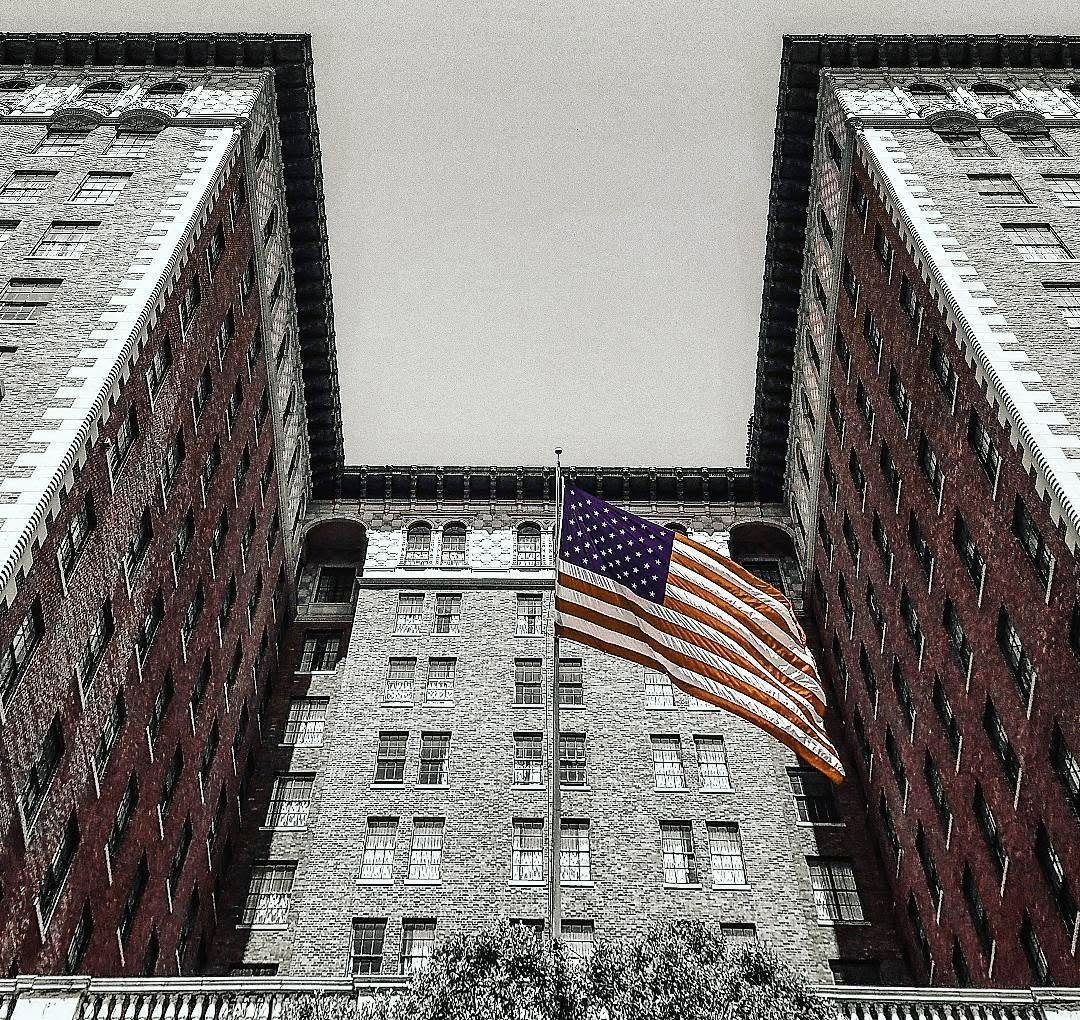
The Millennium Biltmore Hotel: Where Los Angeles Learned to Be Grand
In the center of downtown Los Angeles stands a building that quietly witnessed the city become a world capital.
The Millennium Biltmore Hotel opened in 1923, during a moment when Los Angeles was transforming from a frontier boomtown into a cultural metropolis. Oil fortunes were rising, Hollywood was exploding, and civic leaders wanted a place that reflected the city’s new confidence.
The answer was the Biltmore.
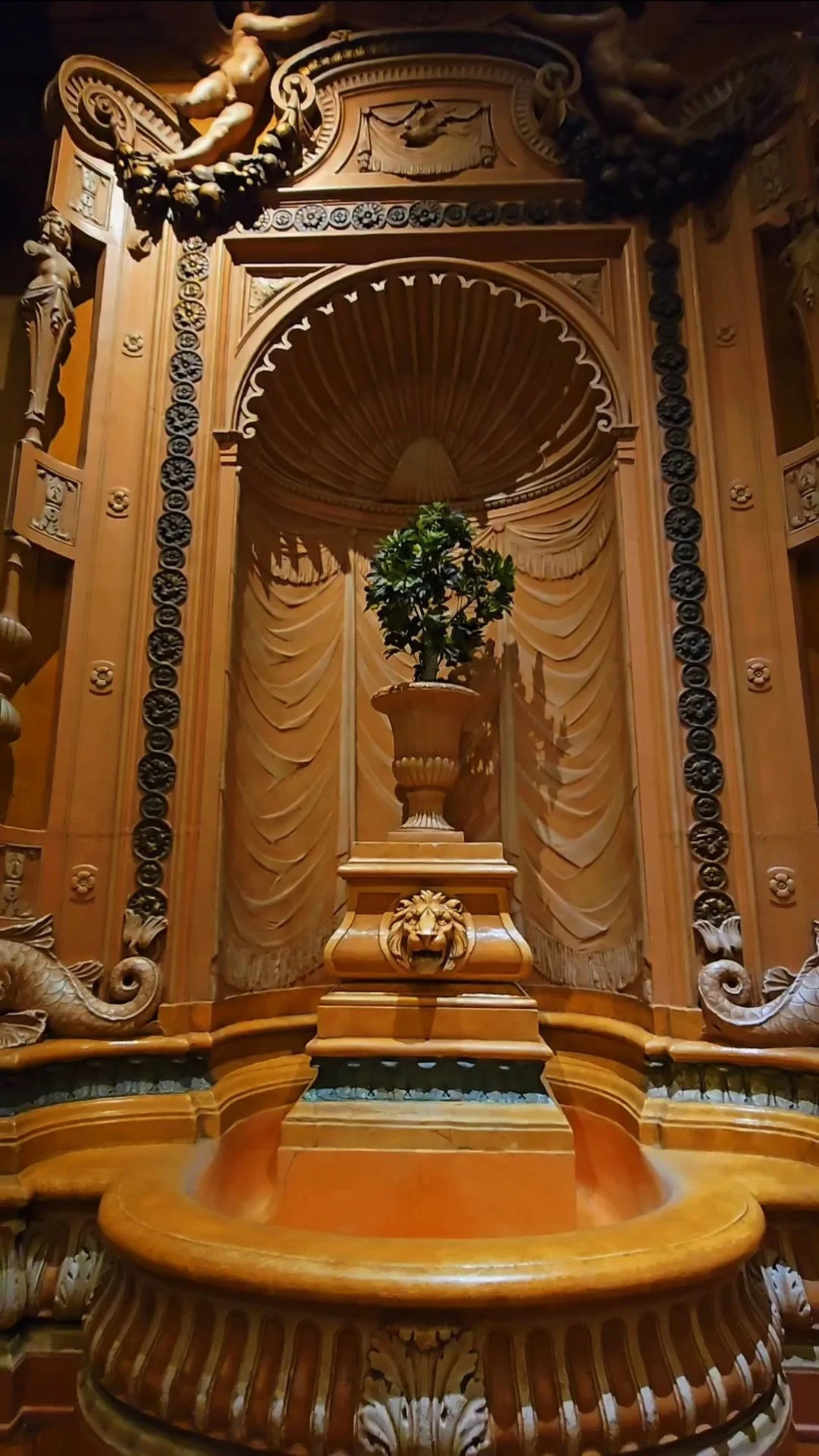
Designed in a Beaux-Arts and Italian Renaissance style, the hotel brought a level of European grandeur that Los Angeles had never seen before. marble columns, hand-painted ceilings, carved wood paneling, and crystal chandeliers turned the interior into something closer to a palace than a hotel.
For decades, this was the social and political living room of Los Angeles.
Governors spoke here. Presidents stayed here. The early Academy Awards ceremonies were hosted within these walls. Deals that shaped the city were negotiated beneath its chandeliers.
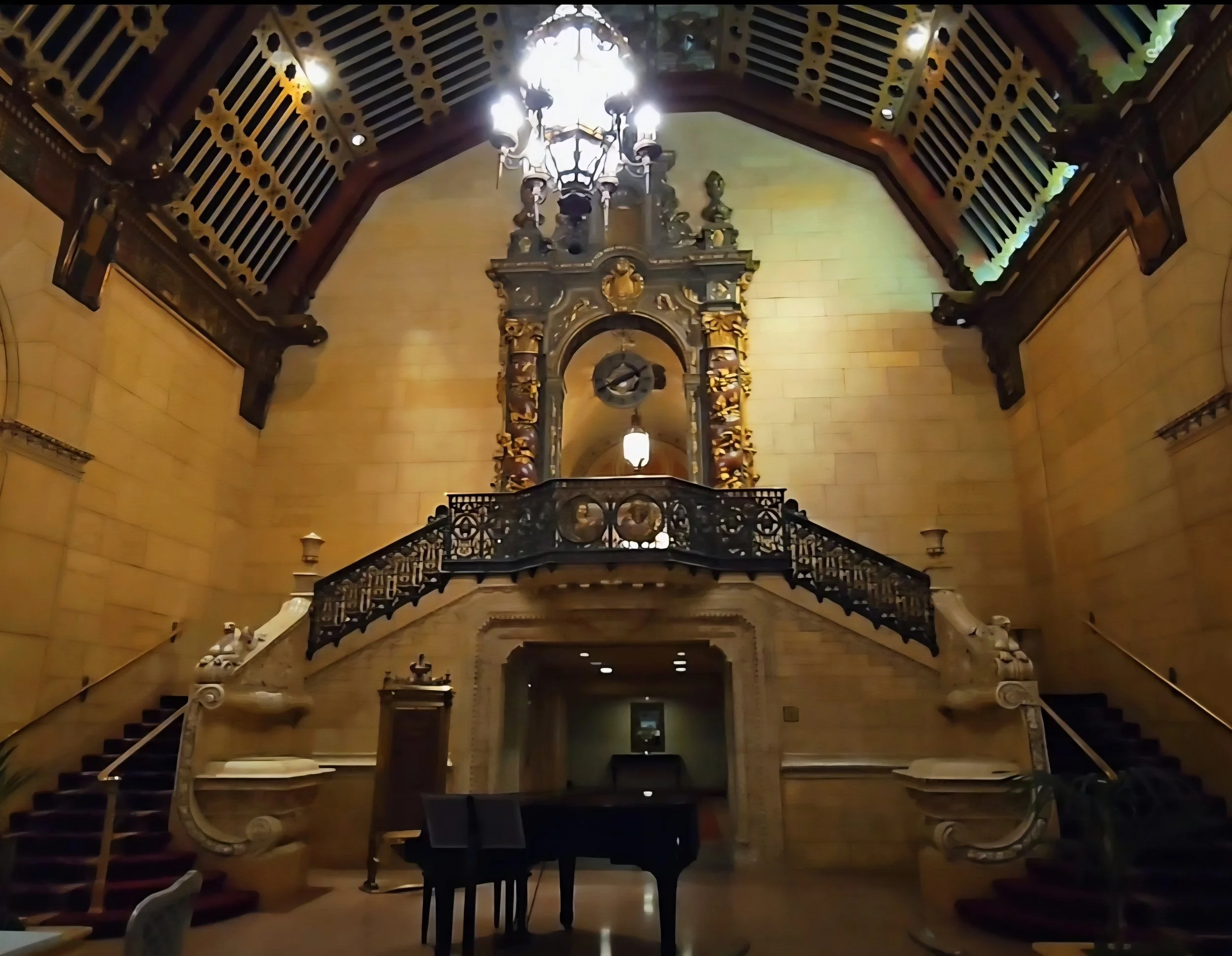
Step into the Rendezvous Court, and the architecture alone tells the story. The vaulted ceiling rises above carved balconies, and the room carries the quiet echo of a thousand conversations that helped shape Los Angeles culture.
Then there is the Crystal Ballroom, one of the most ornaye spaces in the city. it’s enormous chandeliers and detailed plasterwork were designed for a time when elegance was not subtle-it was meant to be experienced.
What makes the Biltmore remarkable today is not simply its age.
Los Angeles constantly reinvents itself. Buildings come and go. Entire districts evolve within a generation. Yet the Biltmore remains, still operating as a hotel more than a century after it opened.
It is a living artifact of the city’s ambition.
Guest who walk through its doors today share the same halls once occupied by film stars of Hollywood’s golden era, international diplomats, and generations of travelers discovering Los Angeles for the first time.
In a city defined by motion, the Biltmore is a rare point of continuity.
It reminds us that long before Los Angeles became a global center of culture, art, and entertainment, the vision for that future was already gathering beneath these chandeliers.
And in many ways, it still is.
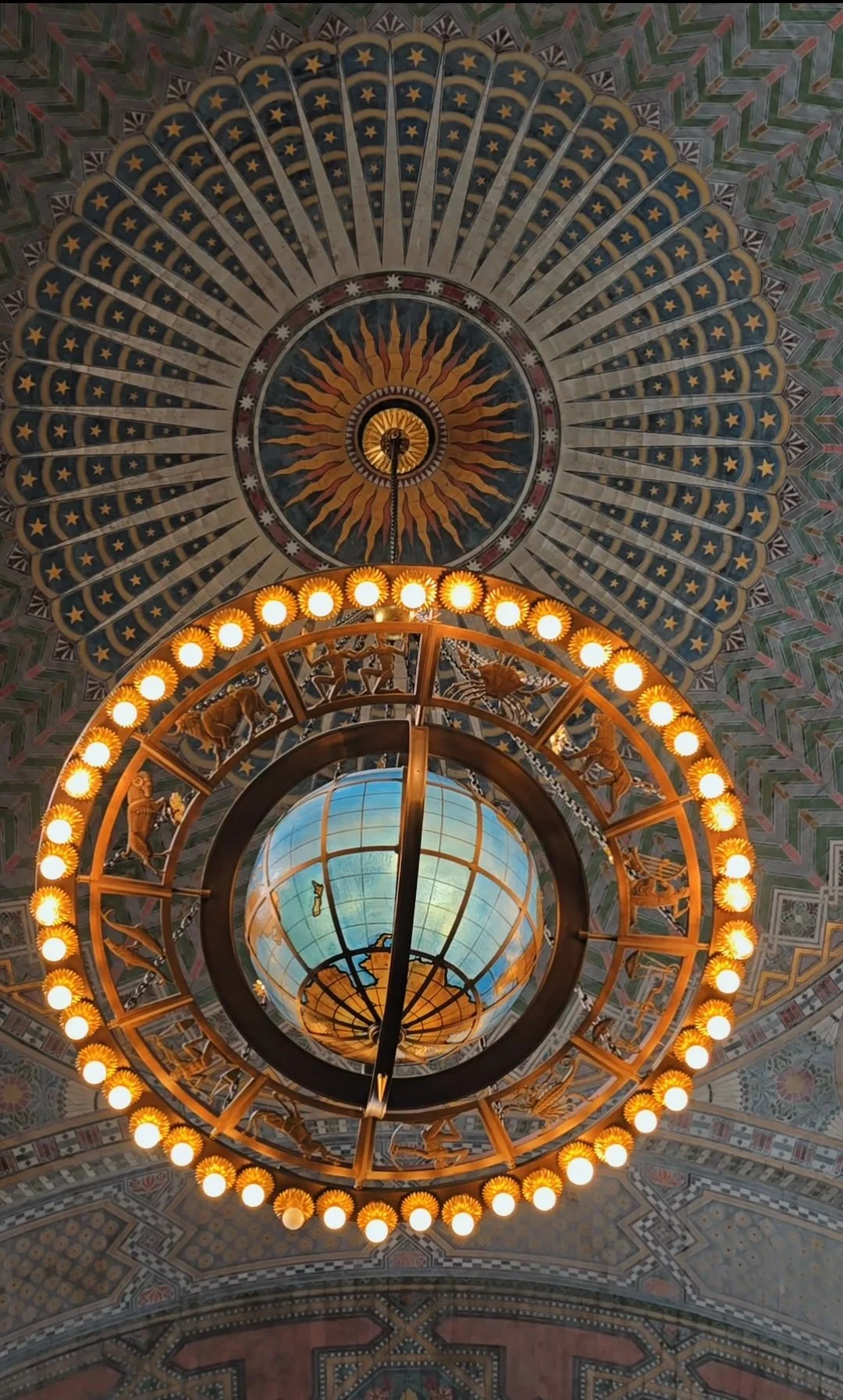
Los Angeles Central Library
The Los Angeles Central Library has served 100 years of knowledge, books, and culture. A destination of; visitors, tourist, and locals for downtown Los Angeles tours.
Los Angeles Central Library 100 years of Knowledge and Culture.
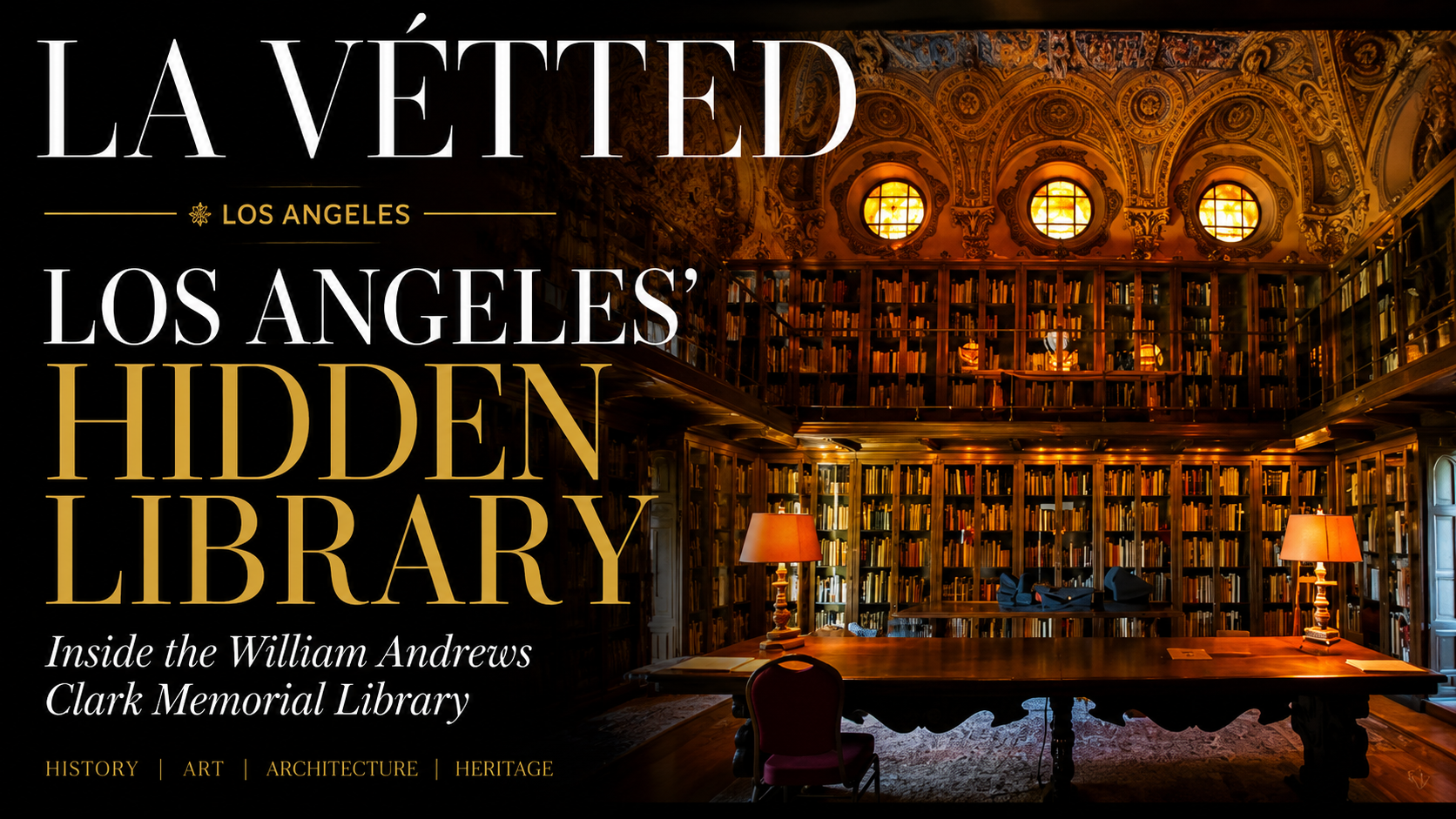
The William Andrews Clark Library
Discover the William Andrews Clark Memerial Library. Explore rare book, remarkable architecture, and one of Los Angeles’ greatest landmarks.
Hidden in Los Angeles is one the world’s great literary treasures. Experience the story below.
For more than a century, the William Andrews Clark Memorial Library has served as one of Los Angels’ most distinguished centers for rare books, manuscrpts, and literary scholarship. operated by UCLA, it’s collections include one of the world’s foremost holdings devoted to Oscar Wilde, alongside works spanning literature, history, science, and the arts.
Beyond it’s collections, the library is itself a work of art. Its beaux-Arts architecture, elegant reading rooms, Grand Salon, and meticulously crafted interiors remind visitors that knowledge has long been celebrated through beauty as well as scholarship.
Whether arriving for a guided tour,, a concert, an exhibition, or simply to appreciate one of los Angeles’ great cultural landmarks, the William Andres Clark Memeorial Library offers an experience unlike any other.
Editorial Transparency
This multimedia editorial combined original photography, videography, narration, and editorial research with AI-assisted tools used for select music, visual enhancements, and production elements. all historic information has been researched and reviewed by LA VÉTTED prior to publication.
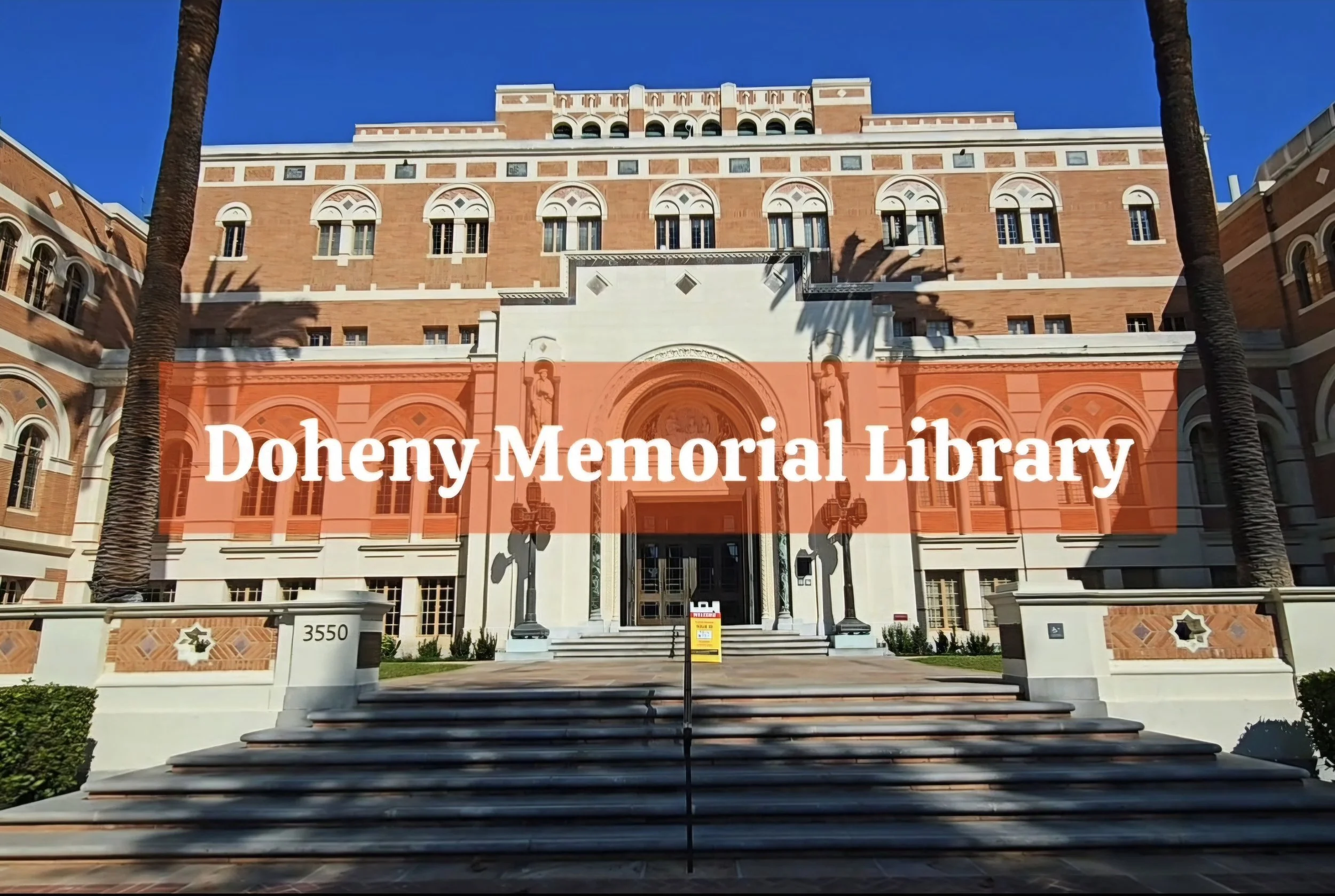
The Doheny Memorial Library:
Before you encounter a single book at the Doheny Memorial Library, the building begins its work on you.
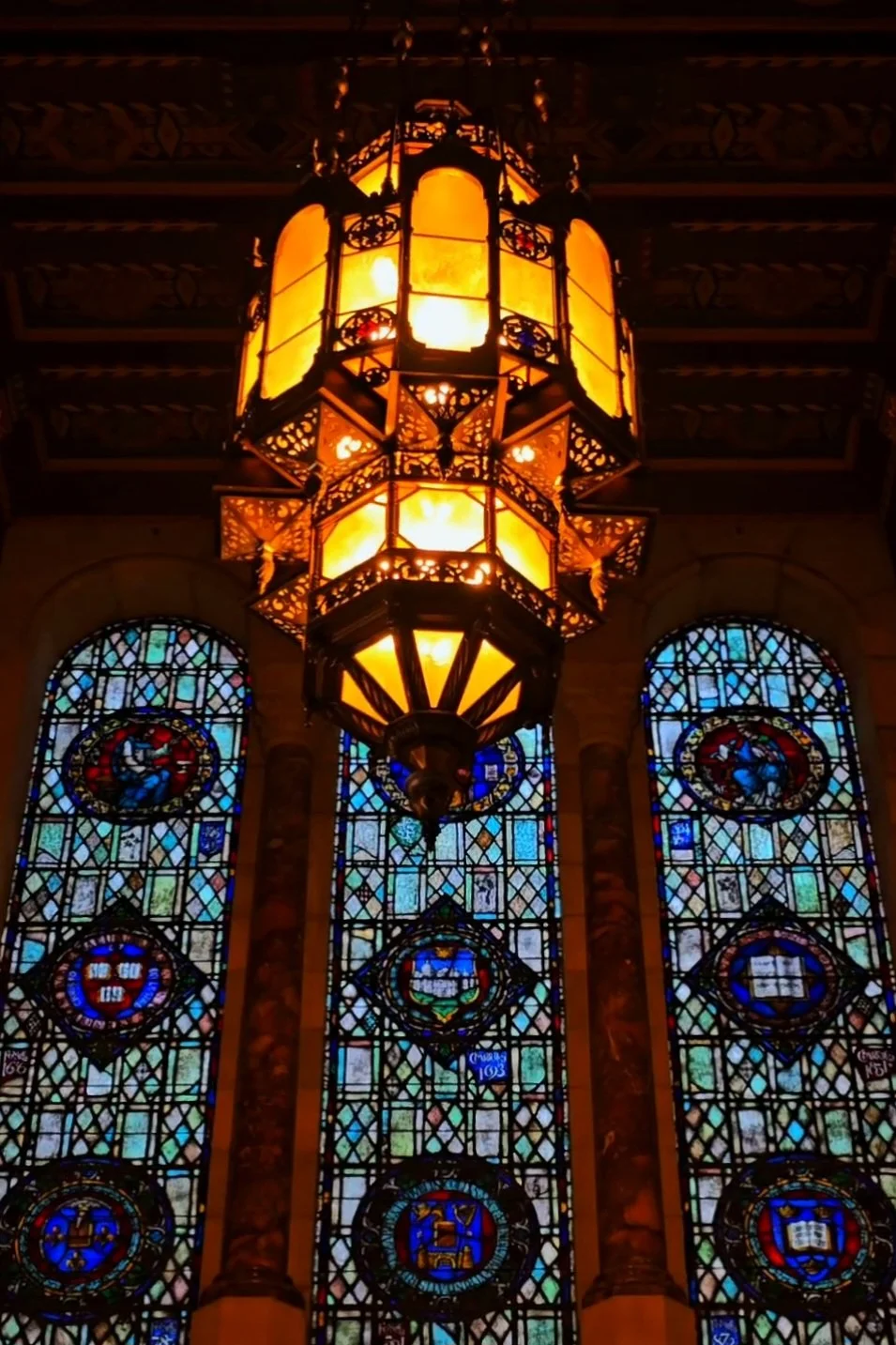
Stepping through its Romanesque arches, I wasn't thinking about architecture. I was wondering why a university library felt so much like entering a cathedral. Stained-glass windows filtered the California light. Bronze lanterns glowed overhead. Massive stone walls muted the noise of Los Angeles beyond the doors.
Almost instinctively, I slowed my pace.
At first, the comparison seemed unusual. Libraries are places to store books, not spaces that resemble houses of worship. Yet the feeling was unmistakable. The architecture seemed designed to quiet the mind before inviting it to learn.
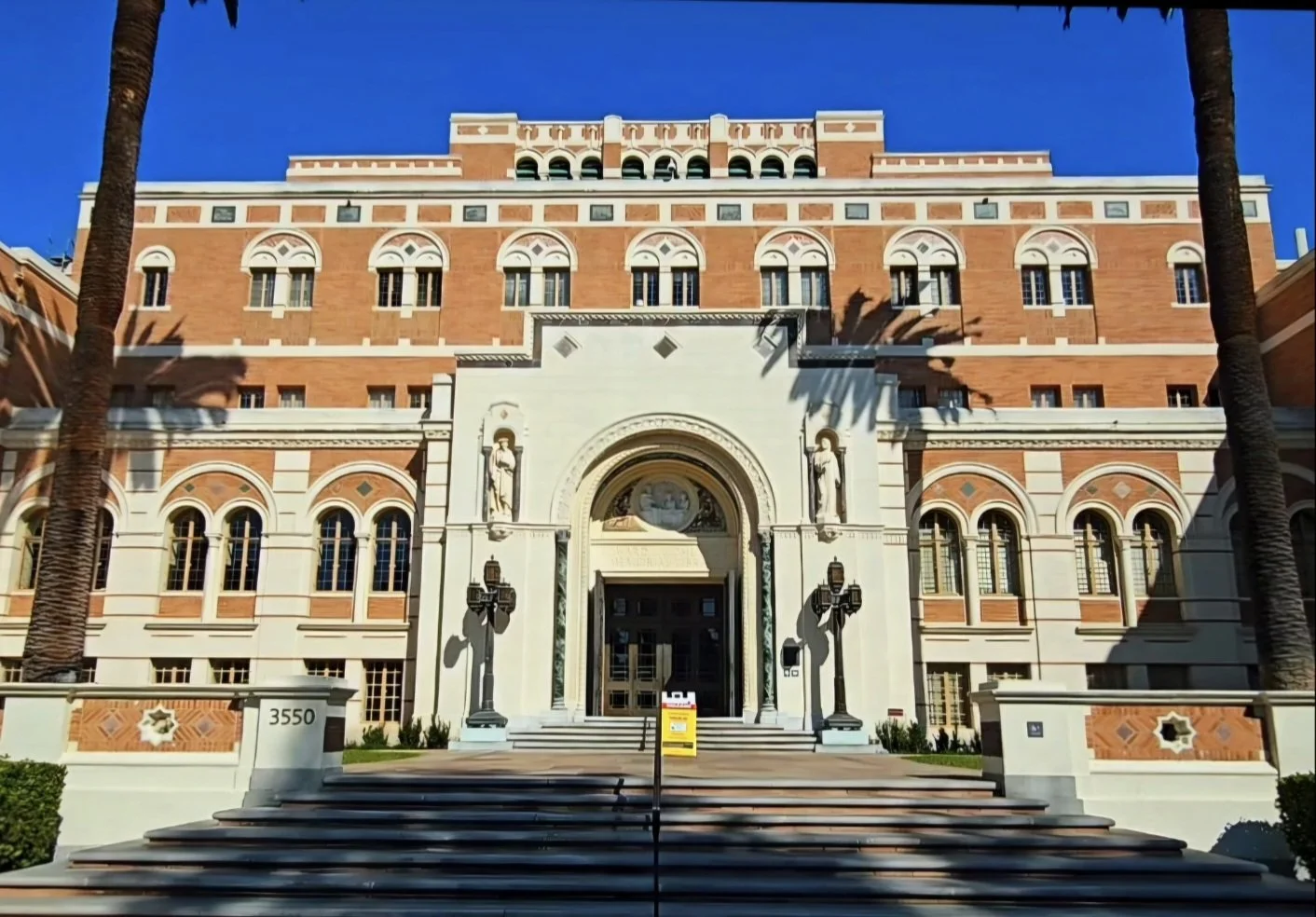
Later, the reason became clear.
The building's exterior was designed by Ralph Adams Cram, America's foremost Gothic church architect. Rather than borrowing sacred architecture for religious purposes, Doheny Memorial Library adapts its language to honor another pursuit: knowledge itself.
Suddenly, every detail made sense.
The stained-glass windows don't depict saints. They celebrate universities and scholars. At the entrance, visitors are welcomed not by religious figures but by William Shakespeare and Dante Alighieri. Above the doorway, sculpted reliefs celebrate teachers, students, and the enduring pursuit of wisdom.
The building asks for reverence—but not toward a creed.
Toward learning.
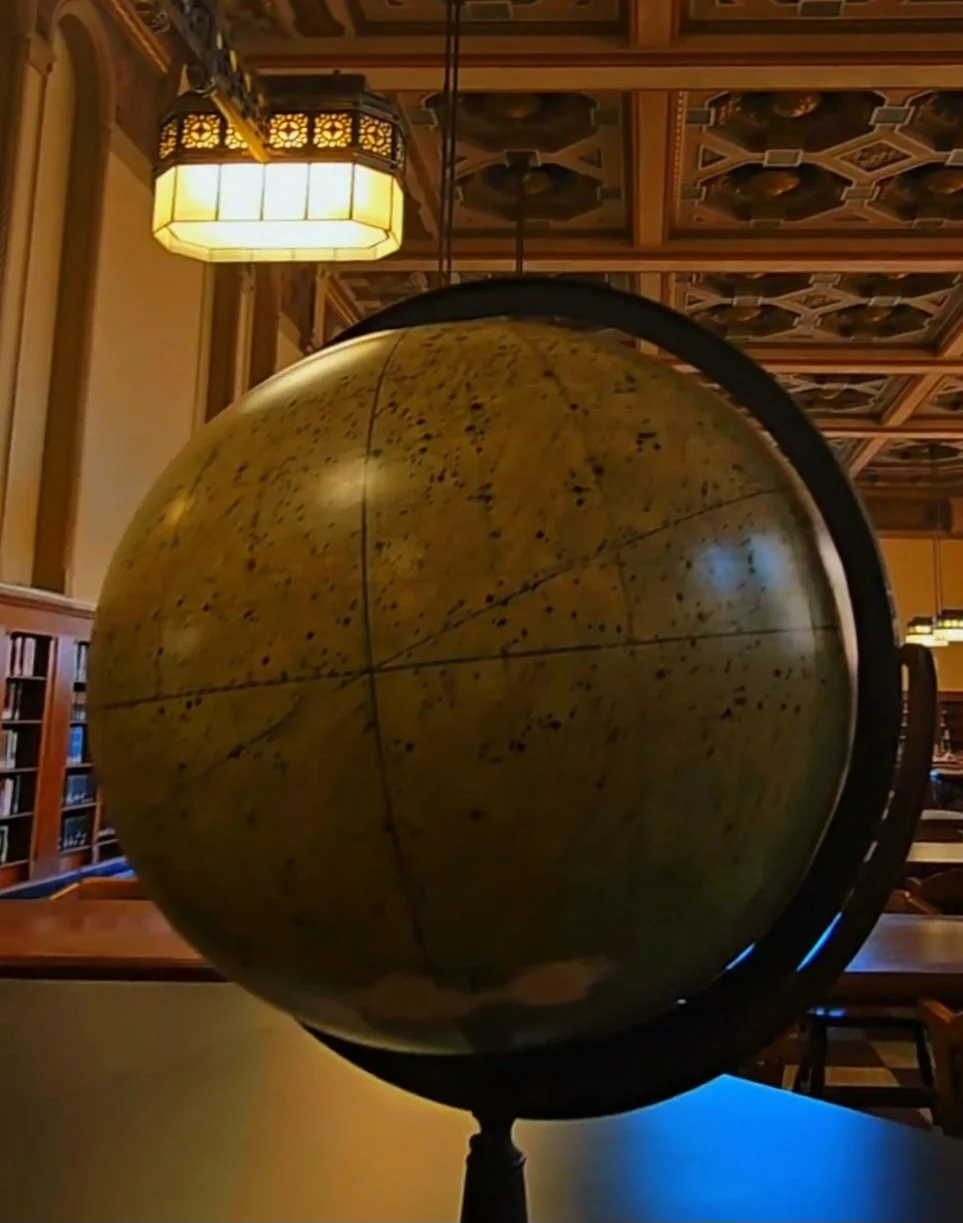
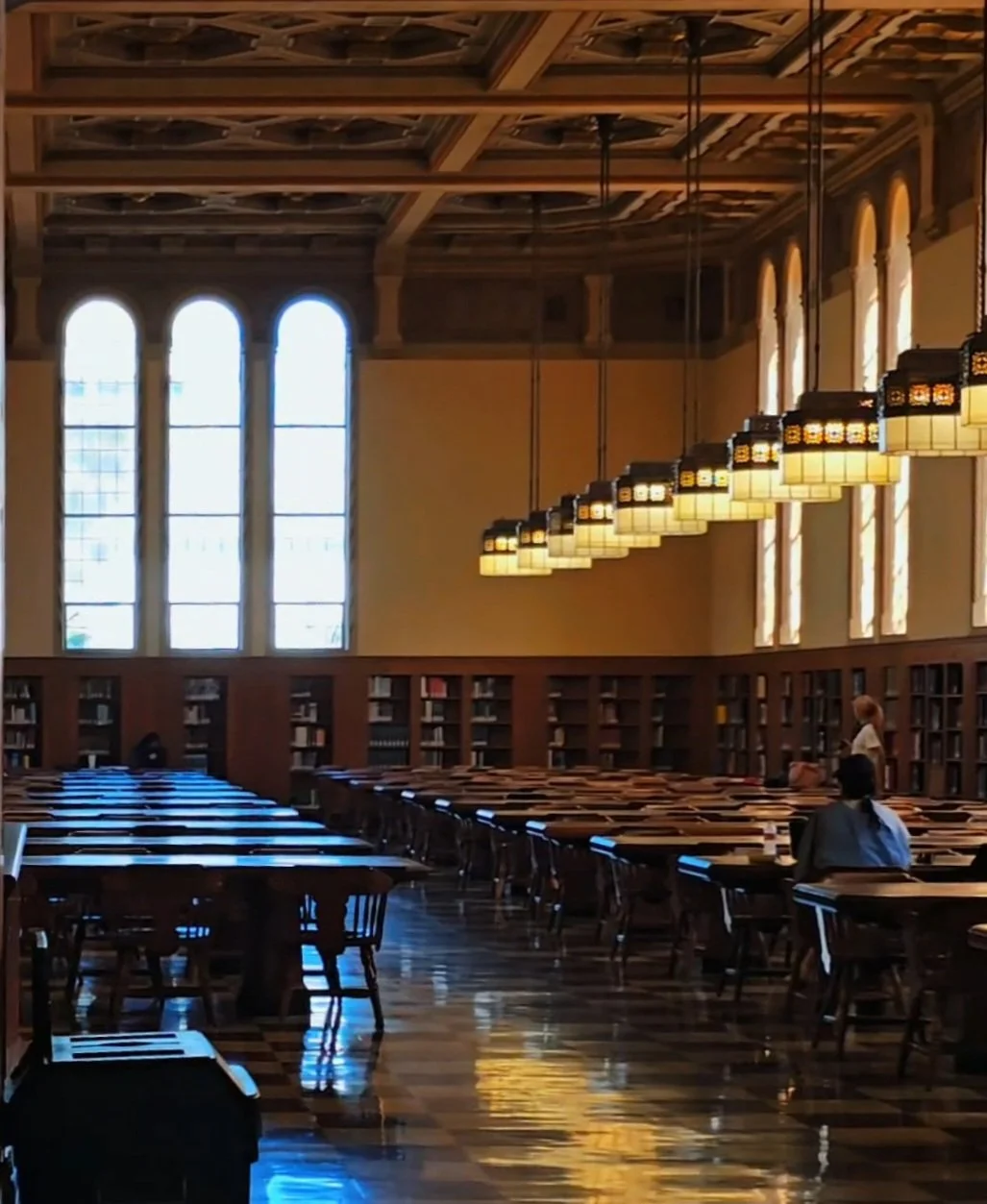
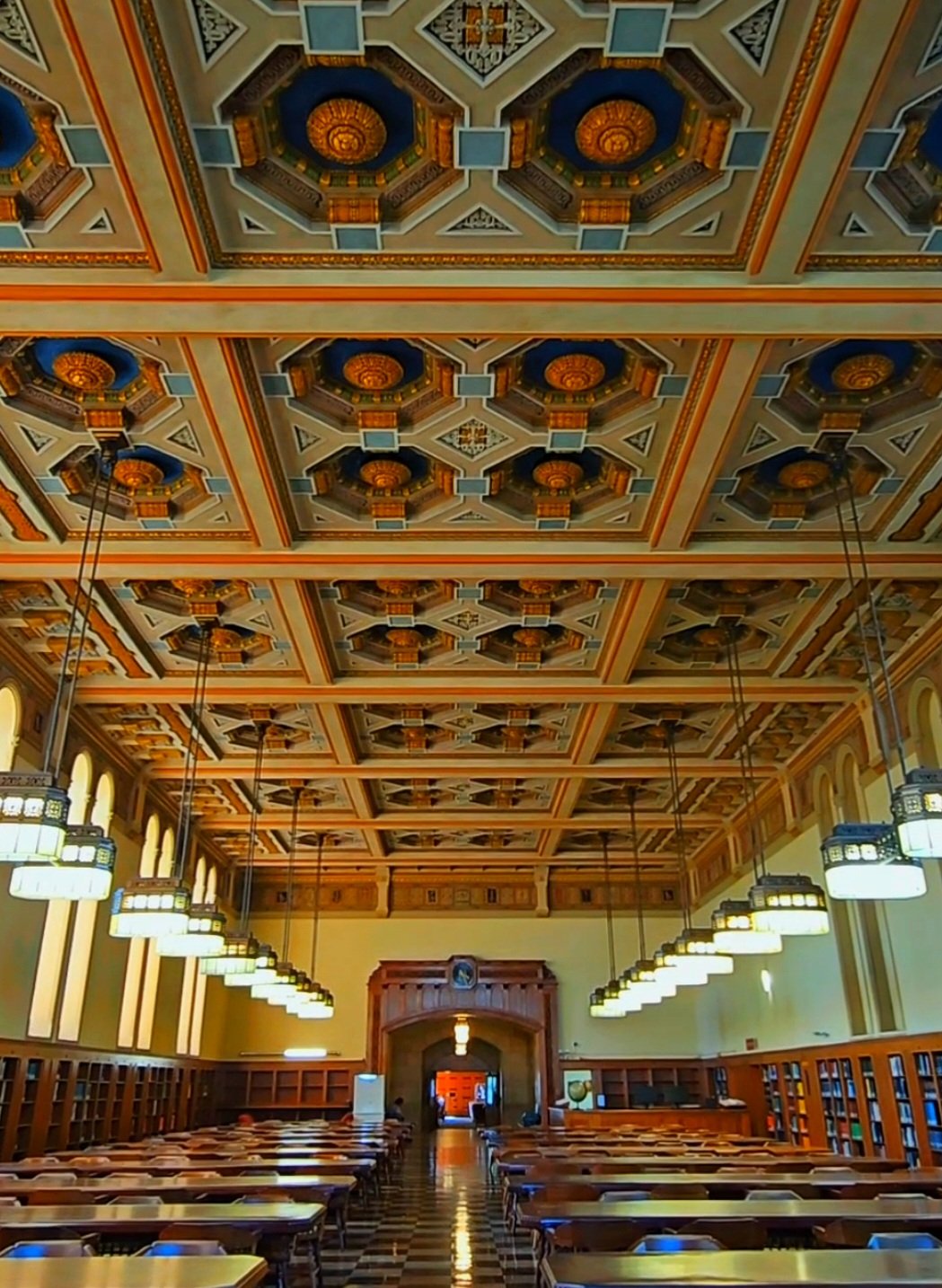
That philosophy reaches its highest expression in the Los Angeles Times Mirror Reference Room. Beneath Giovanni Smeraldi's extraordinary gold-and-blue coffered ceiling, rows of reading tables stretch quietly into the distance beneath a procession of suspended lanterns. There is no grand focal point demanding your attention. The destination is the empty chair waiting for the next reader.
Perhaps that is the library's greatest lesson.
Great architecture doesn't simply shelter an activity; it prepares us for it. Before a single page is turned, the Doheny Memorial Library gently asks visitors to leave distraction behind and enter a state of curiosity.
In a city celebrated for movement, ambition, and reinvention, this remarkable library offers something increasingly rare.
Permission to become still.
And in that stillness, to discover that knowledge is not merely collected—it is experienced.
The Bradbury Building
The City Within
Standing on the corner of Third Street and Broadway, the Bradbury Building gives little indication of what waits beyond its front doors. Its sandstone façade is restrained, almost anonymous among the historic architecture of Downtown Los Angeles.
Then you step inside.
The city disappears.
Or rather, it reveals itself in another form.
The Bradbury Building was never conceived as a collection of offices connected by corridors. It was imagined as something far more ambitious—a vertical civic space where commerce, conversation, movement, and daylight could coexist beneath a single roof. More than a building, it was an experiment in creating a city within a building.
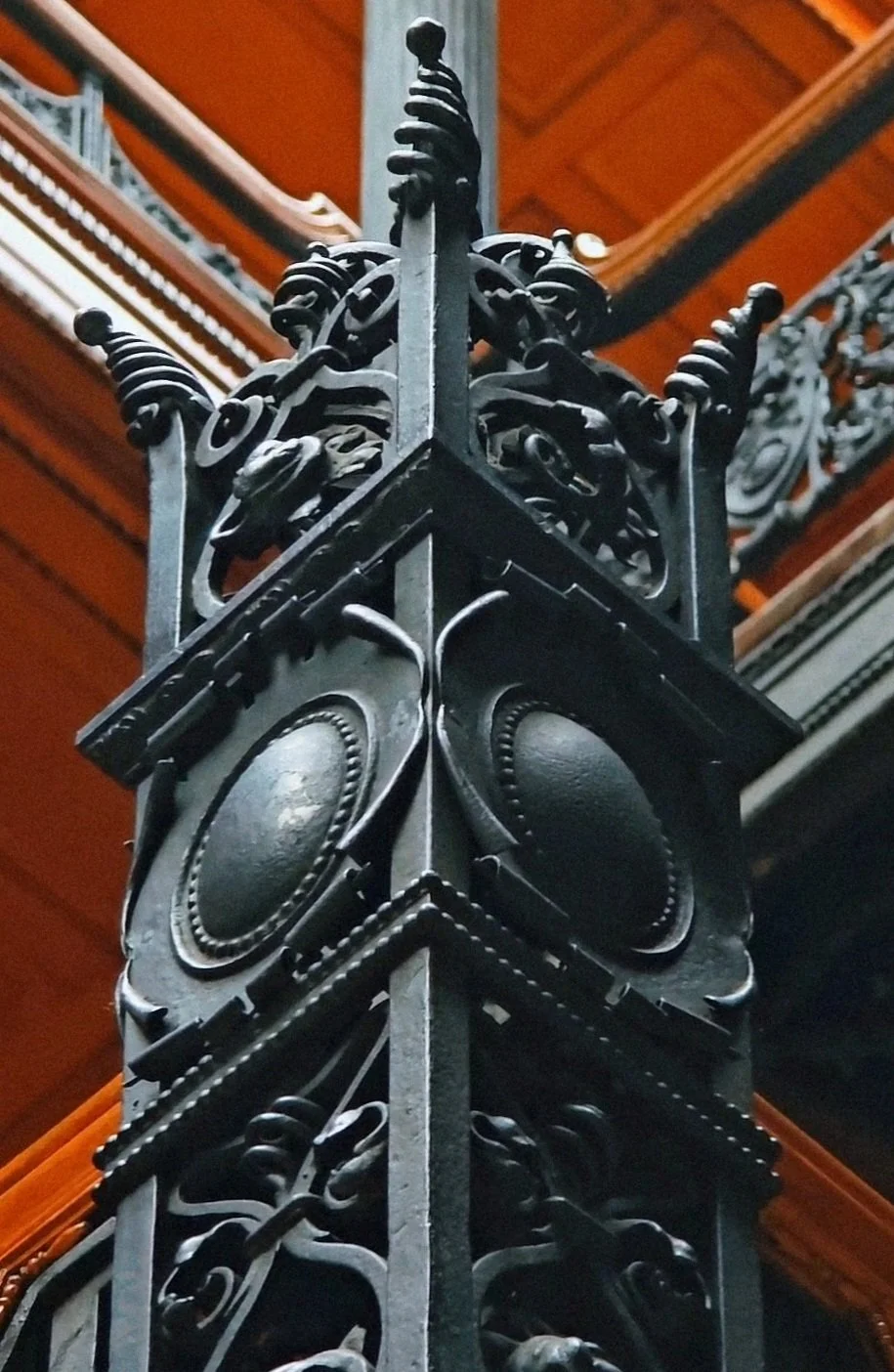
The building's genius lies not simply in its beauty, but in the way it organizes human life.
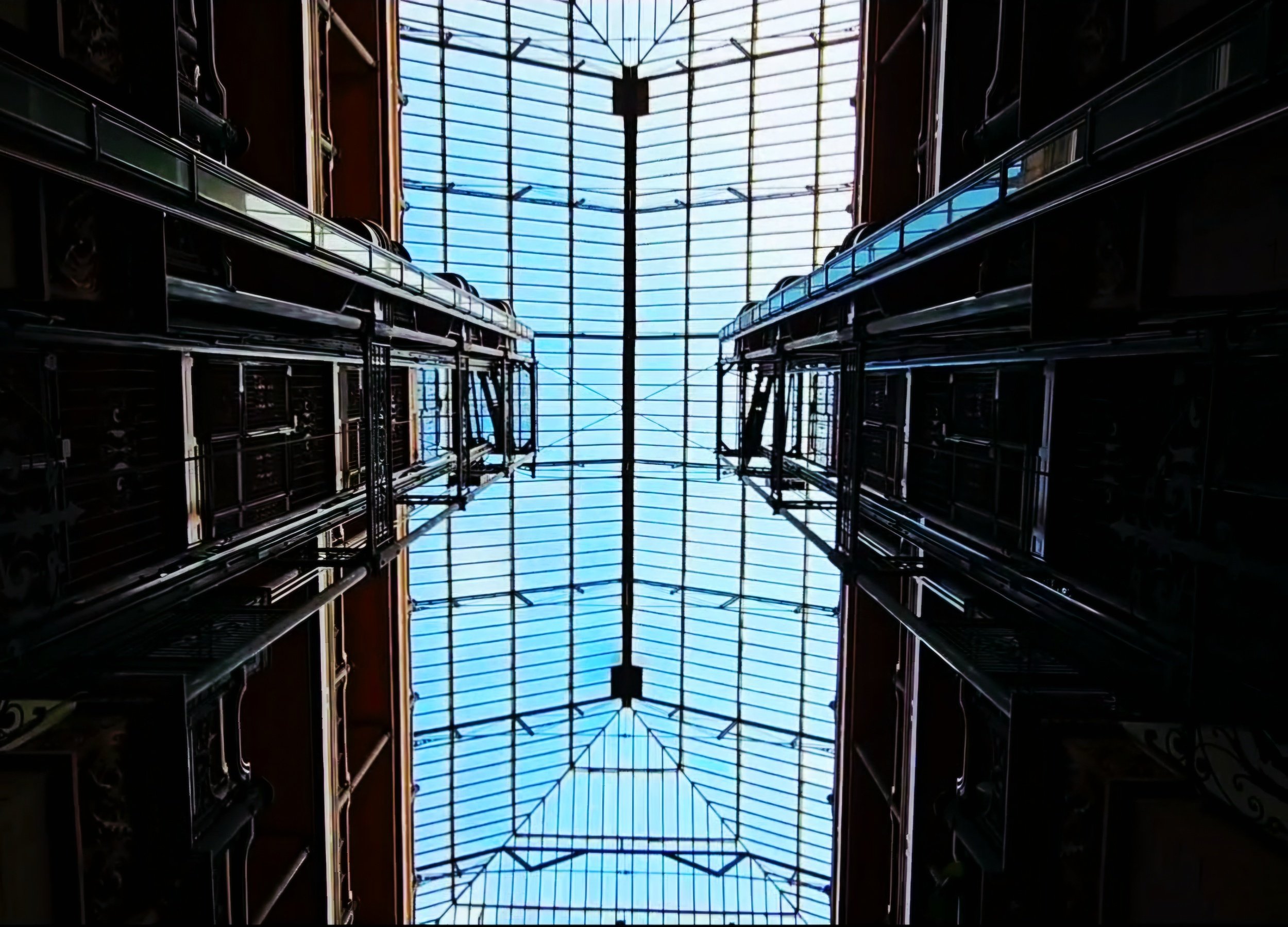
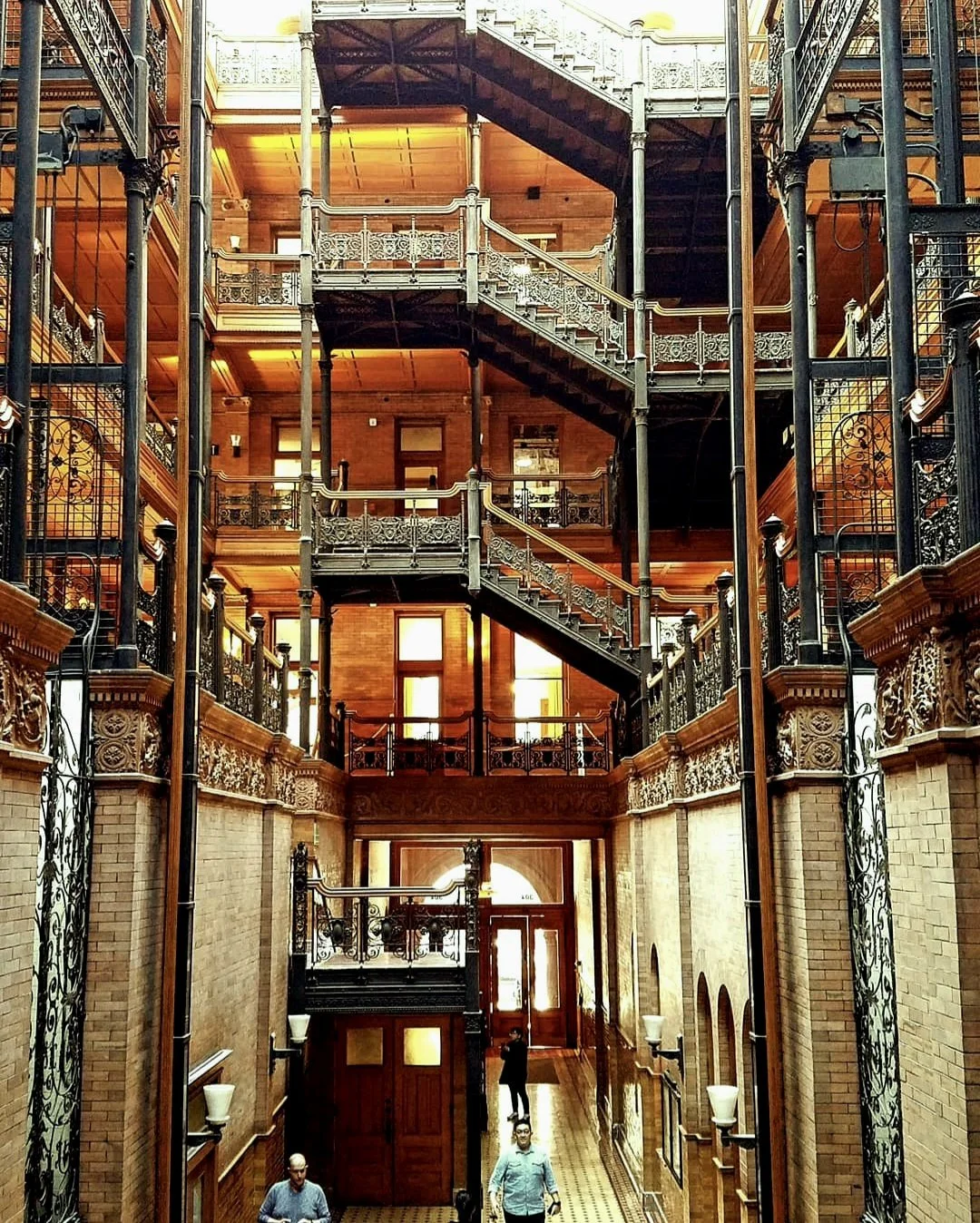
Rather than arranging offices along enclosed hallways, architect George Wyman conceived a soaring central atrium where every destination remained visually connected to every other. Wrought-iron staircases crisscross the open space. Suspended walkways stitch together five levels. Twin hydraulic elevators rise slowly through the center like the heartbeat of the building itself.
Nothing feels hidden.
From almost any vantage point, you can see people arriving, ascending, descending, pausing in conversation, or crossing one of the iron bridges overhead. Daylight pours through the immense glass skylight, binding every floor into a single civic room.
It is an extraordinary idea, especially for 1893.
The Bradbury was designed not merely as a place to work, but as a place where the life of a city could unfold beneath one roof.
A Vision Before Its Time
Buildings like the Bradbury do not emerge by accident. They begin as ideas long before they become stone, iron, and glass.
George Wyman found inspiration in an unlikely place: Edward Bellamy's 1888 novel Looking Backward. The enormously popular book imagined a future society where architecture encouraged openness, dignity, and shared civic life rather than isolation and hierarchy.
Whether or not every detail of Bellamy's vision found its way into the Bradbury, its spirit unmistakably did.
The building rejects the dark, compartmentalized office blocks of the nineteenth century. Instead, it celebrates visibility. Light replaces shadow. Movement replaces confinement. Every staircase, balcony, and elevator participates in a single architectural conversation.
More than a workplace, the Bradbury became a physical expression of optimism—an argument that the places where we work could also elevate the human spirit.
A Living City
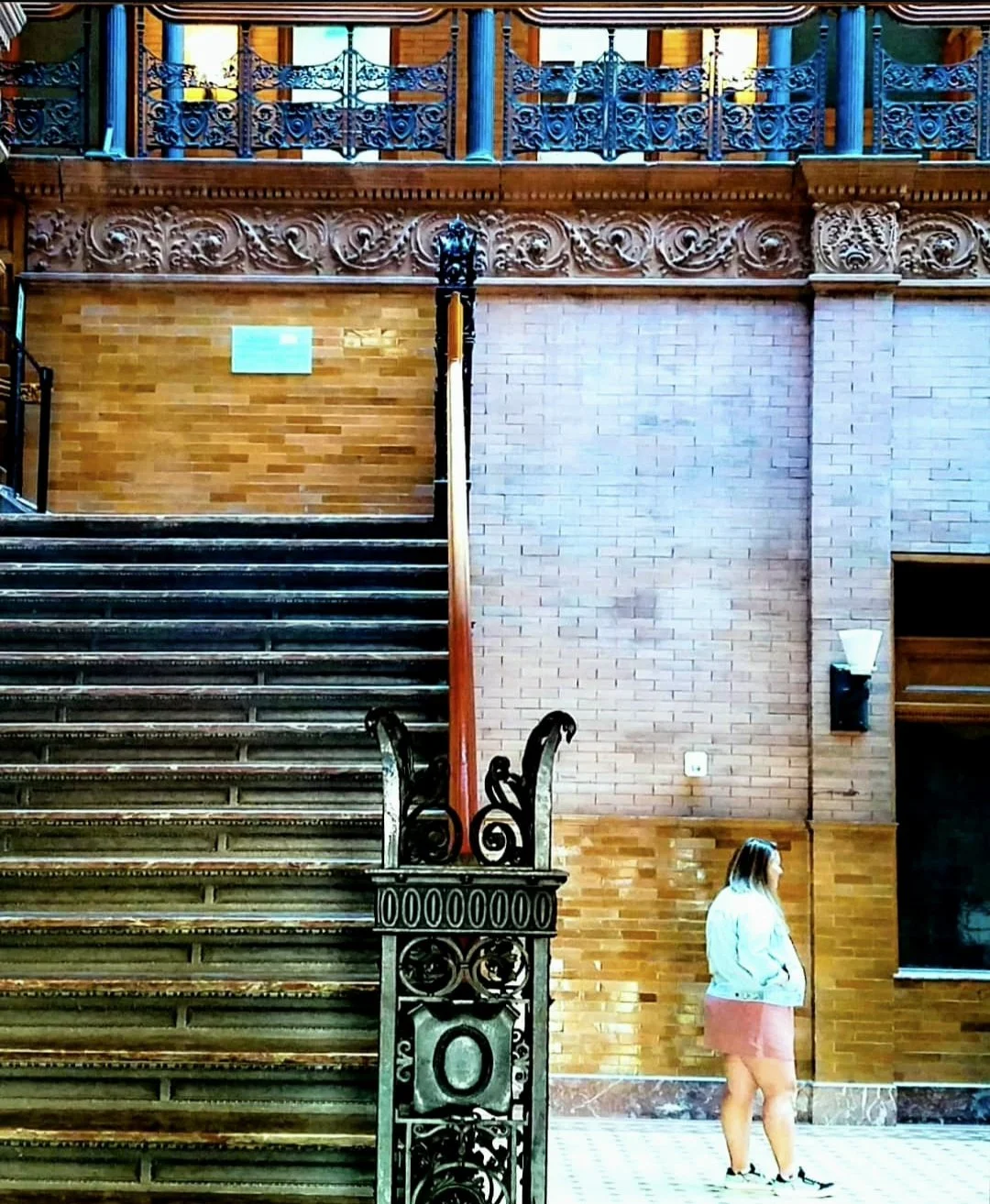
More than a century after it opened, the Bradbury Building continues to fulfill the purpose for which it was imagined.
Its elevators still climb. Its staircases still connect. Architects, desianers, artists filmmakers, and entrepreneurs still pass beneath the same glass roof that first transformed daylight into architecture in 1893
Perhaps that is the building's greatest achievement.
It has survived changing fashions, changing technologies, and changing cities without surrendering the idea that inspired it. The Bradbury was never simply an office building. It was-and remains-a place where architecture encourages people to see one another, to move together, and to participate in a shared civic life.
For Los Angeles, that idea has become one of its quietest masterpieces.
The Bradbury Building is not merely a landmark.
It's a city within a city.
Several Eternities in A Day:
Hammer Museum
Several Eternities in a Day
What if the natural world wasn't simply the subject of art, but its collaborator?
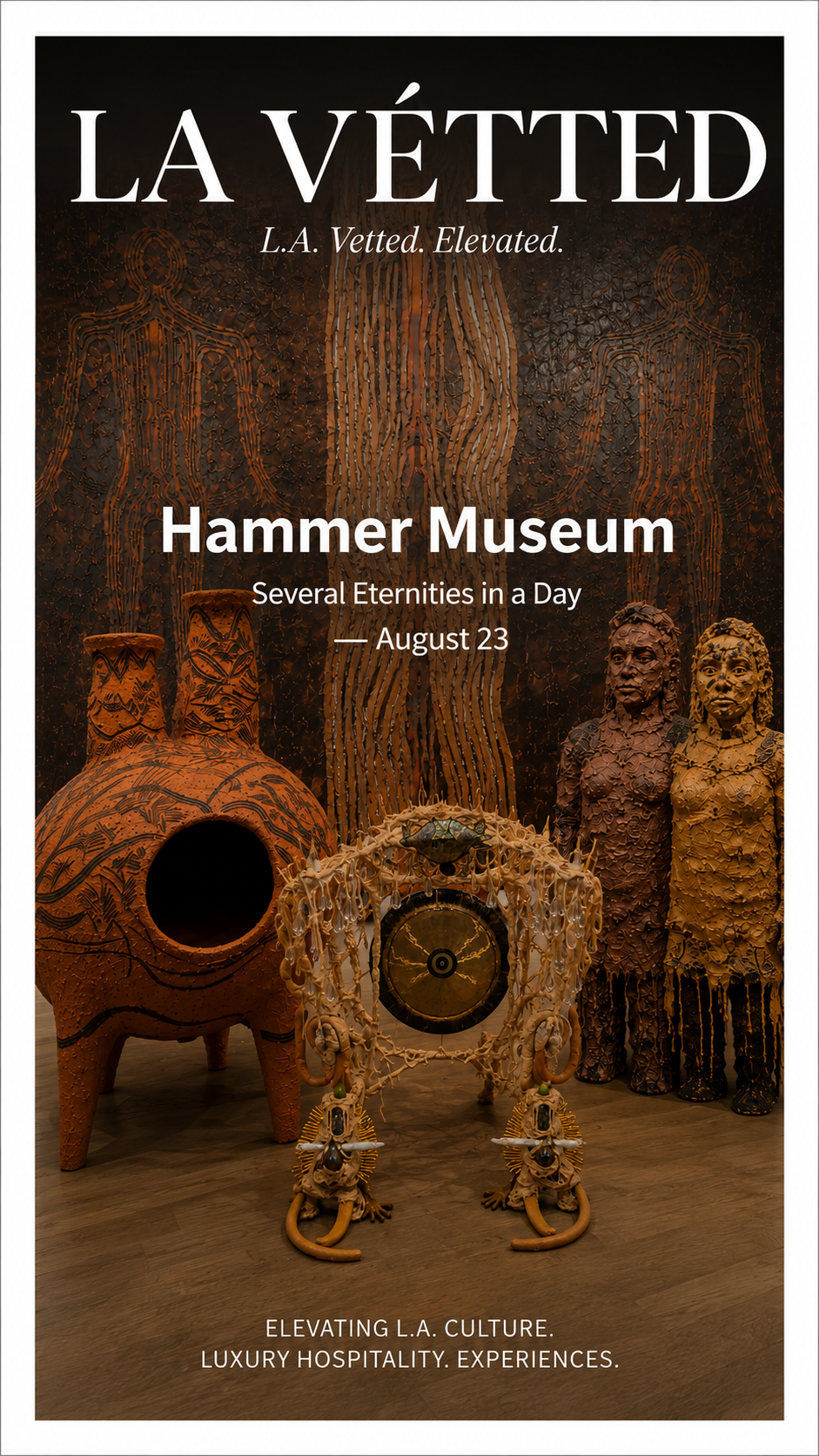
For centuries, artists have transformed stone into sculpture, pigments into paintings, and clay into vessels. Several Eternities in a Day invites us to reconsider that relationship. Here, earth is not merely represented—it is present. Soil, clay, cacao, avocado, stone, water, and sound become active participants in works that blur the boundary between culture and nature.
Spanning three thematic acts, the exhibition brings together artists from across the Americas whose practices draw from ancestral knowledge while speaking unmistakably to the present. Rather than presenting nature as something separate from humanity, these works suggest that our histories, our materials, and even our identities remain inseparable from the living world.
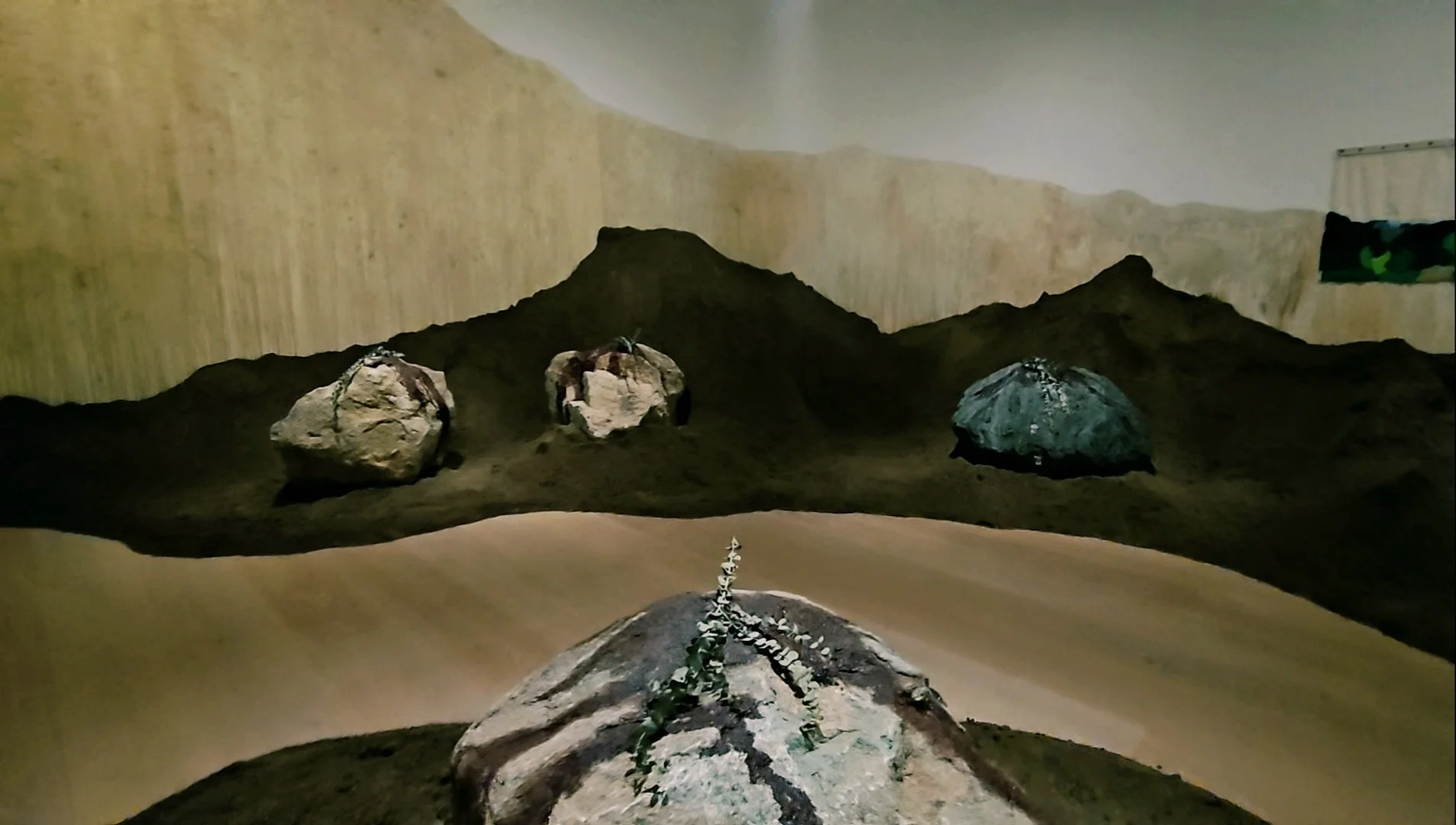
The Materials Remember
One of the exhibition's most compelling ideas is that materials are never neutral. Clay remembers the earth from which it came. Stone carries geological time. Plant fibers continue the story of living organisms long after they have been harvested.
For Los Angeles artist Carmen Argote, even the pigments themselves become part of that conversation. Rather than relying solely on manufactured paints, she incorporates cochineal insects, lemon juice, and mashed avocado into her work. Materials associated with nourishment and daily life become instruments of artistic expression, dissolving the familiar boundary between nature and culture.
The gesture is quietly profound. Instead of depicting the natural world, these works allow it to participate in their making.
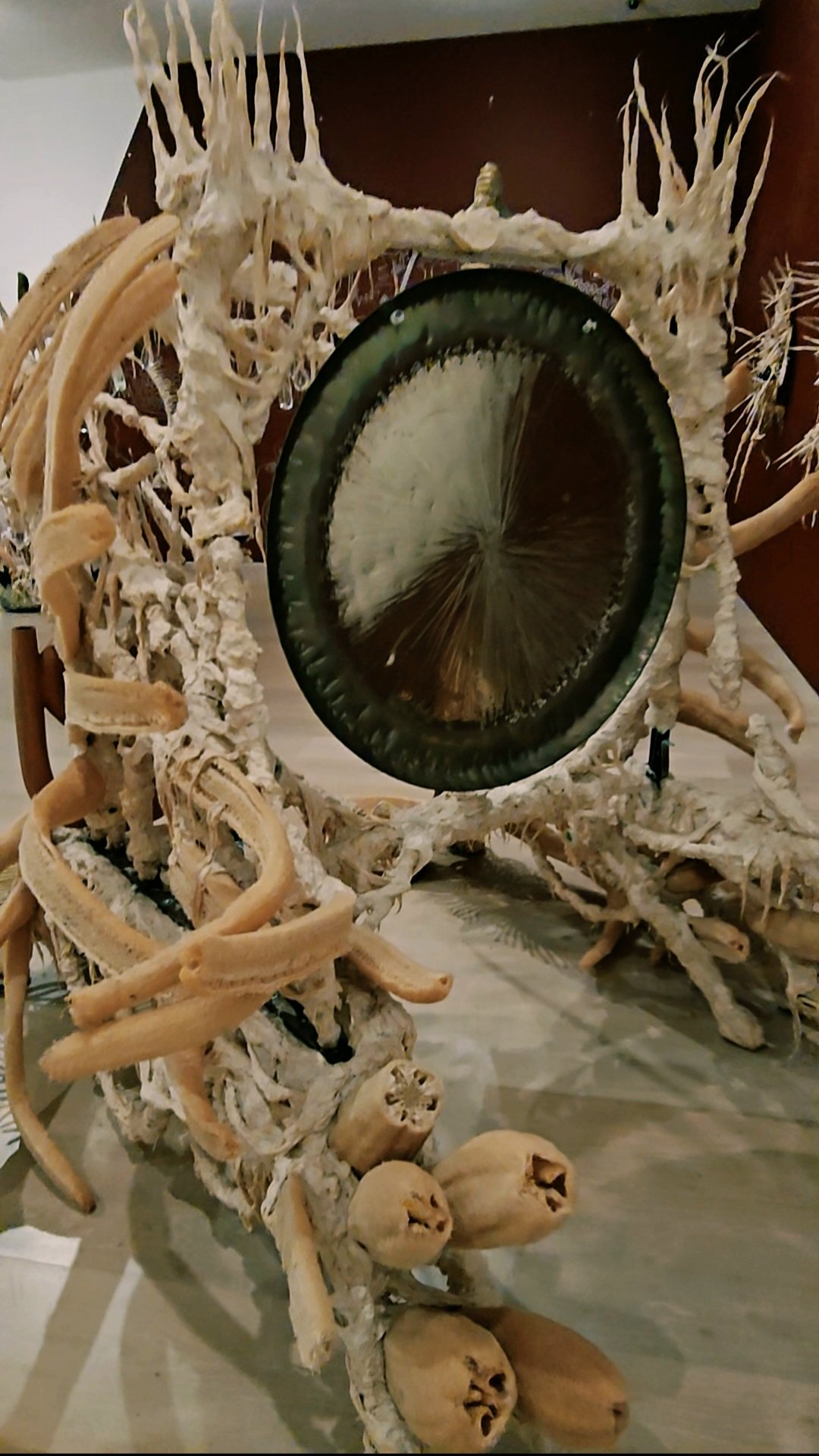
Time Made Visible
Most exhibitions are organized around chronology, style, or geography. Several Eternities in a Day organizes itself around something less tangible: time itself.
Ancient ceramic traditions stand beside contemporary video installations. Geological materials measured in millions of years share the gallery with living organisms that continue to grow, decay, and transform. Rather than collapsing these timelines into a single narrative, the exhibition allows them to coexist, suggesting that the past is not behind us but continually shaping the present.
Walking through the galleries, time begins to feel less like a straight line and more like layers of earth exposed in a canyon wall. Every material carries its own history, every object its own rhythm, reminding us that culture is not separate from nature but another expression of it.
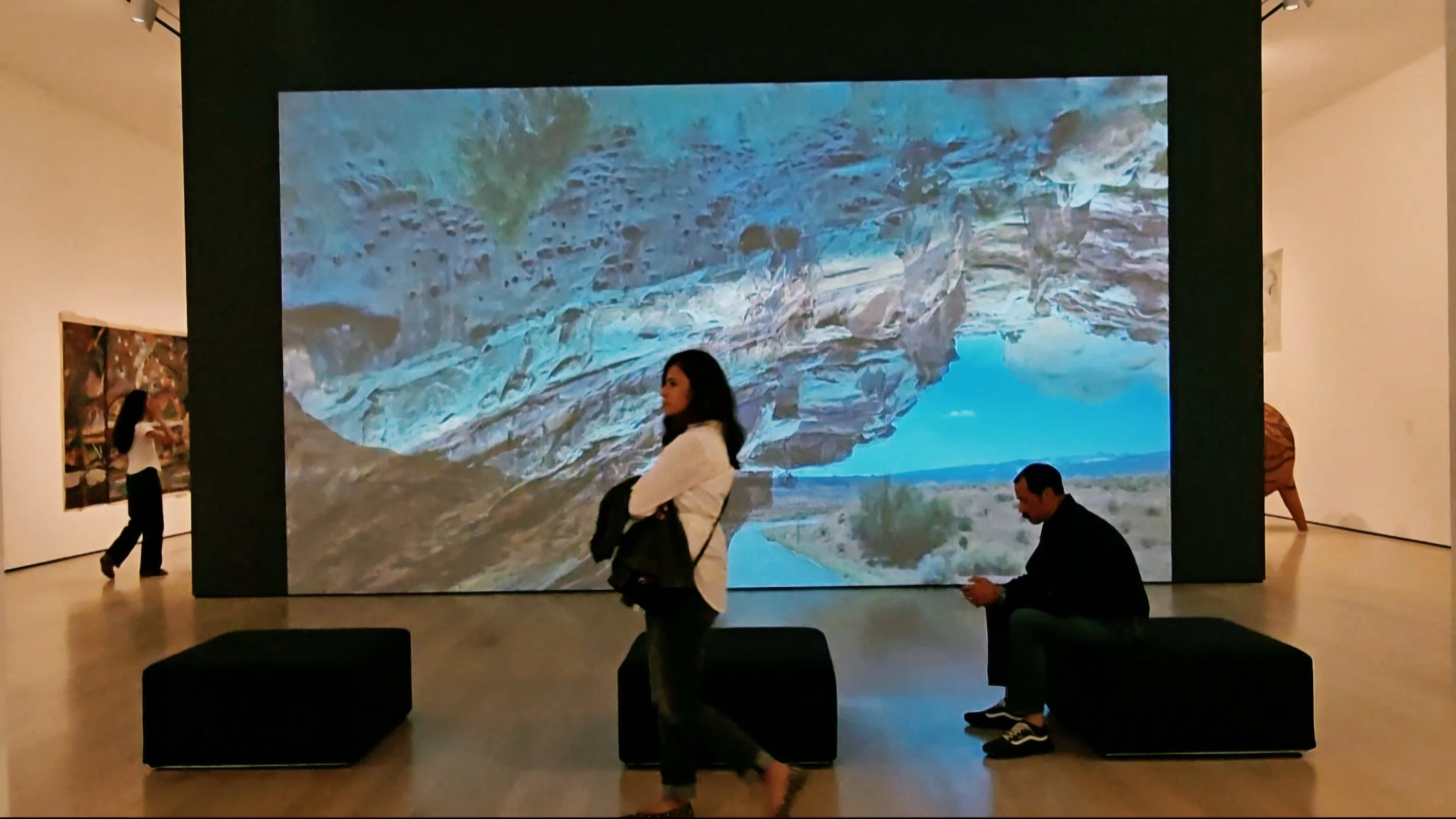
Los Angeles has long been a meeting place of cultures, languages, and traditions, making it uniquely suited to host an exhibition like Several Eternities in a Day. Rather than presenting the Americas as separate histories, the Hammer Museum reveals the deep connections that have always existed between people, materials, and wavs of understanding the world.
The exhibition reminds us that contemporary art is not onlv about invention-it is also about remembrance. Ancient knowledge survives in present-day practices, while artists continue to reinterpret inherited traditions through new materials and new auestions. In doing so, they demonstrate that culture is something continually renewed rather than simply preserved.
For visitors, the experience offers more than an afternoon in a museum. It becomes an invitation to see Los Angeles itself as part of a larger cultural conversation-one that stretches across continents, generations, and civilizations, yet unfolds here, today.
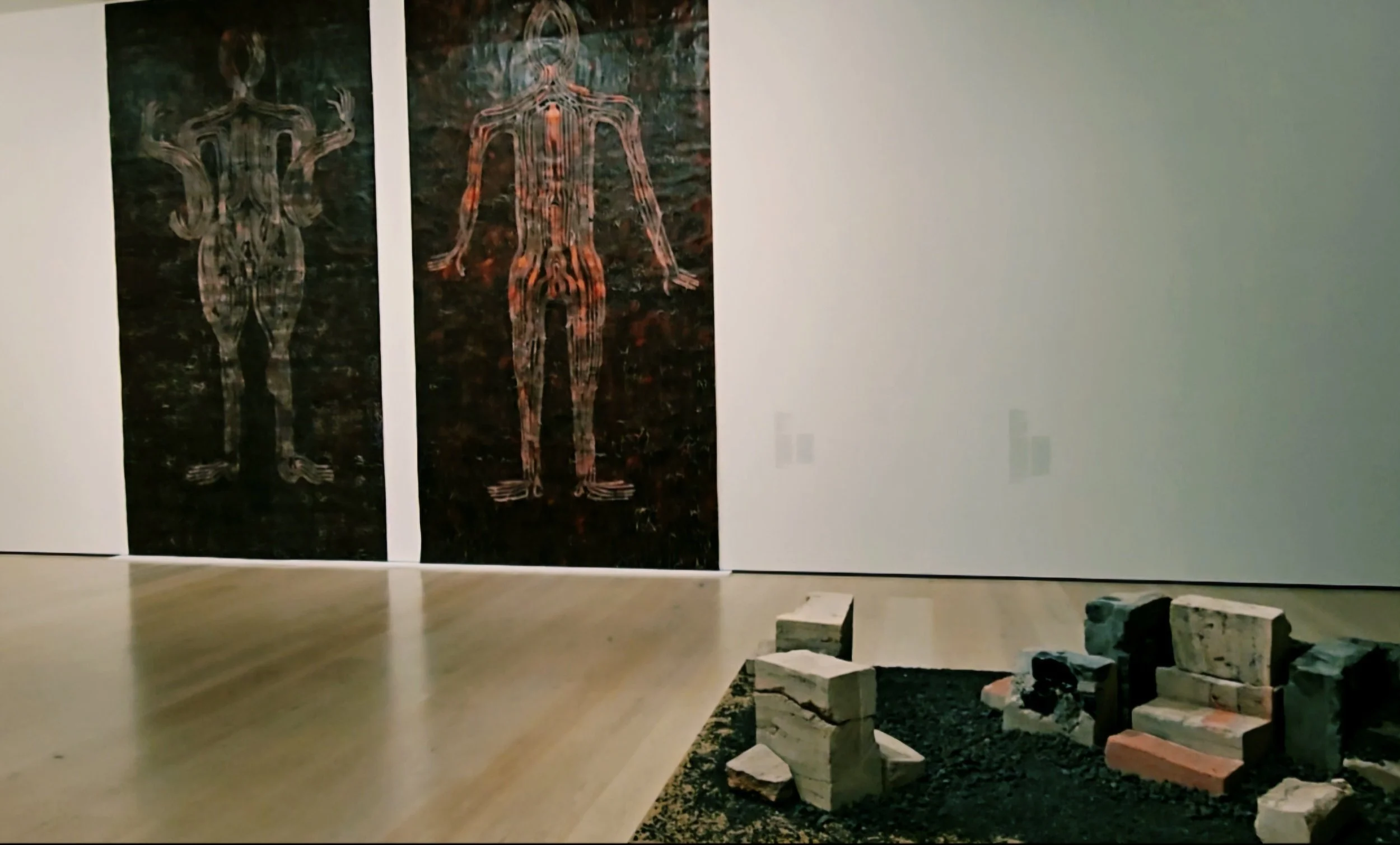
Great exhibitions don't simply display objects; they reshape the questions we ask when we leave. Several Eternities in a Day reminds us that the natural world is not a backdrop to human culture, but one of its oldest collaborators. In Los Angeles, that conversation continues-one exhibition at a time.
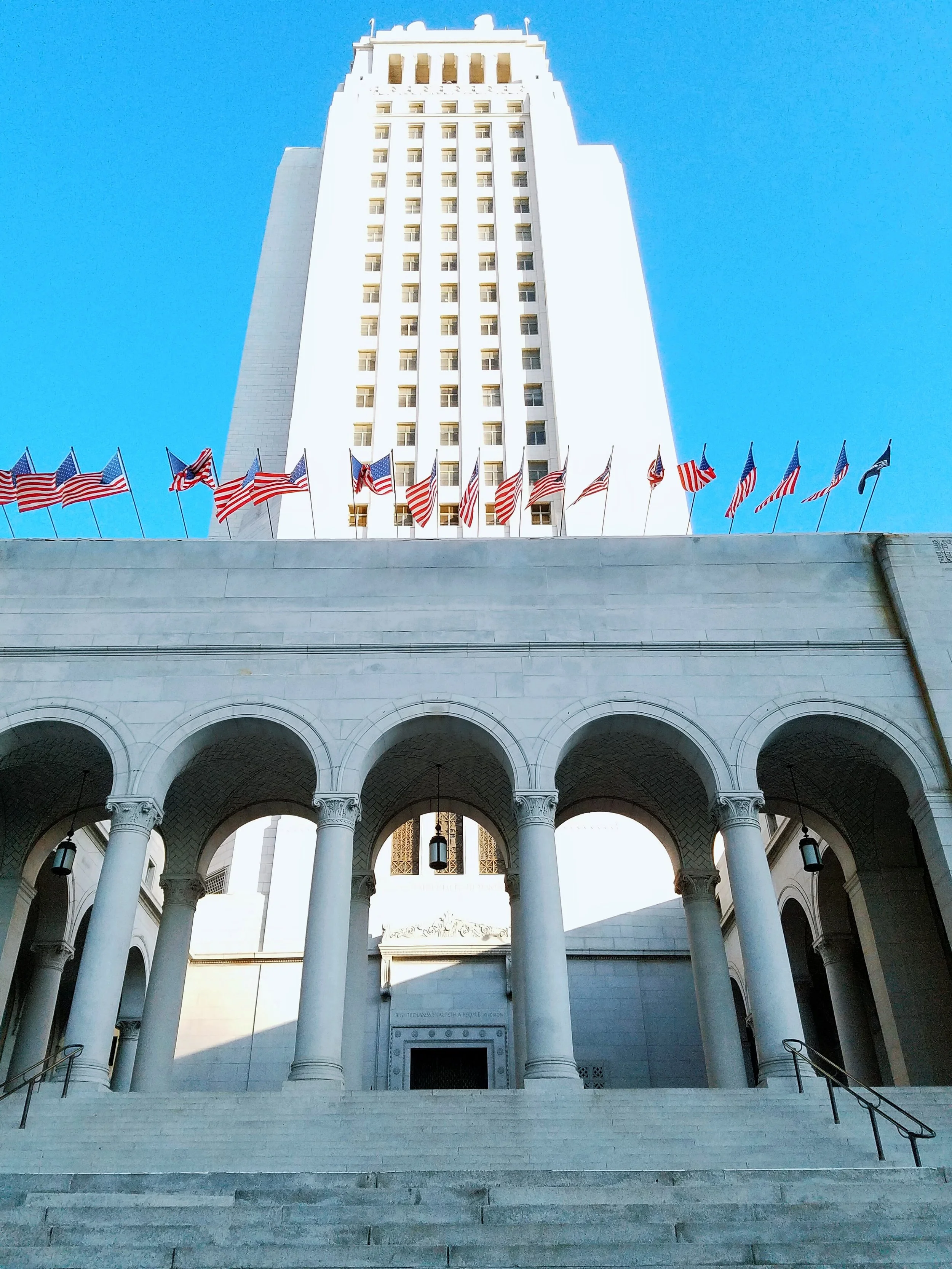
Los Angeles City Hall: Where the City Learned How to Grow
A civic tower designed not just to govern Los Angeles-but to shape how the city would grow, expand, and understand itself.
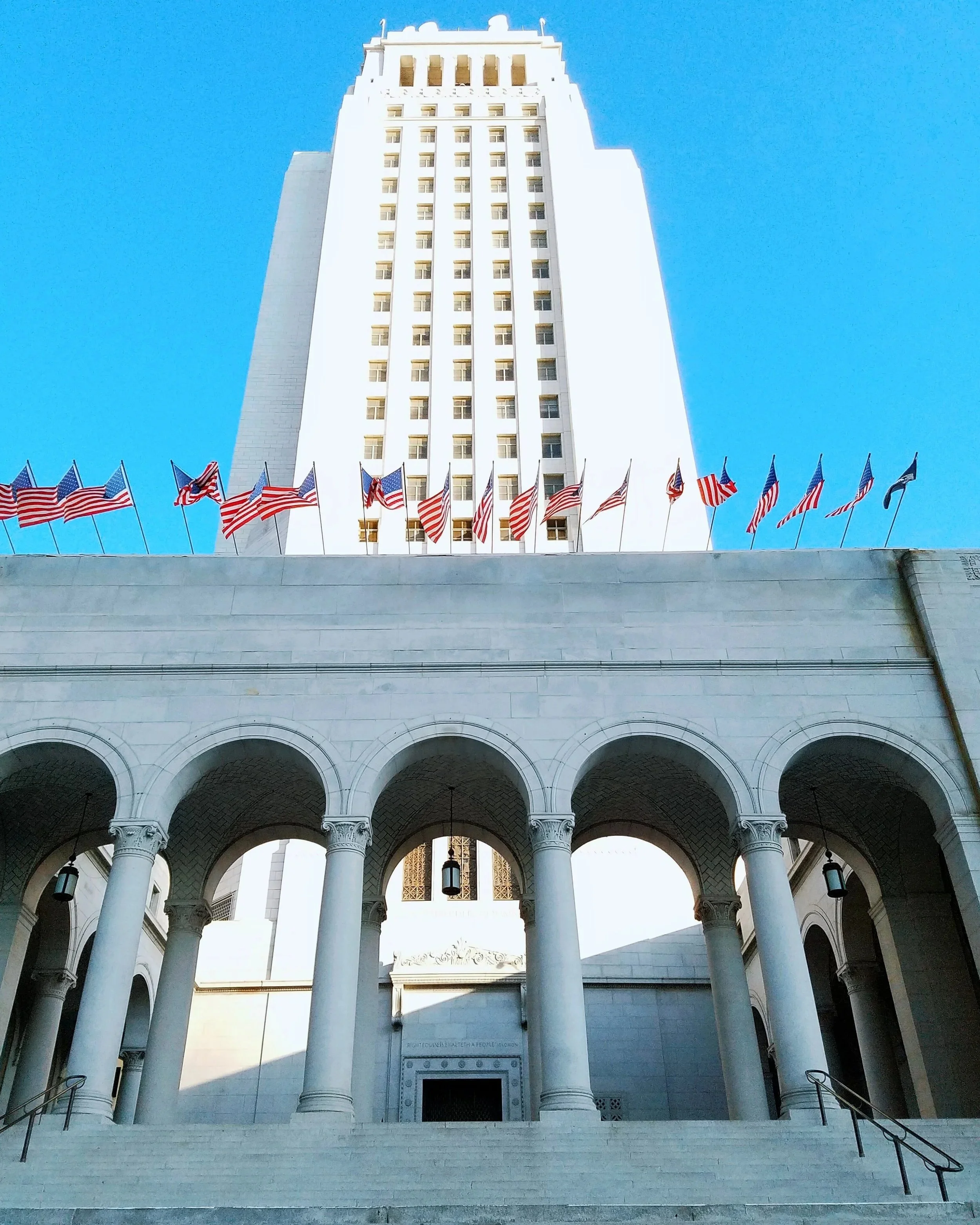
Los Angeles City Hall opened in 1928 as the civic anchor of a city in the midst of defining itself. Designed by John Parkinson, John C. Austin, and Albert C. Martin, the building was constructed with materials sourced from all 58 California counties, including sand from each—an intentional gesture of statewide unity set into its foundations. Rising 454 feet, City Hall was made deliberately taller than any structure in Los Angeles at the time, not as a commercial statement but as an act of civic reverence, reinforced by early height limits that preserved its dominance for decades. Its first mayoral occupant, George E. Cryer, governed from these halls as Los Angeles began its transformation from a regional city into a global one.
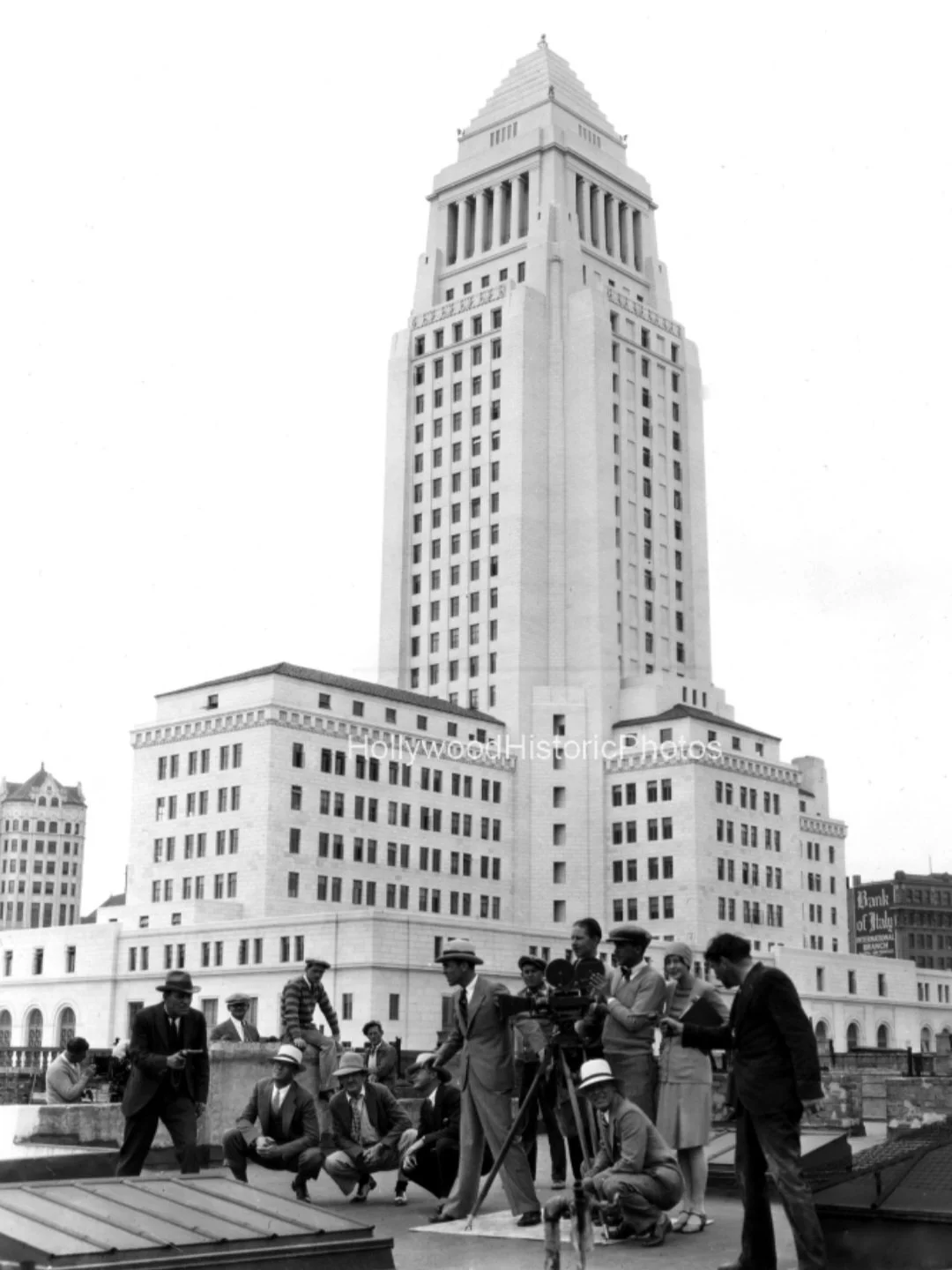
City Hall’s design was not merely architectural—it was philosophical. At a time when American cities like New York and Chicago were consolidating power through density and verticality, Los Angeles chose a different expression. The tower rose as a singular civic marker governing a city that would expand outward rather than stack upward. This contrast—vertical authority overseeing horizontal growth—quietly encoded a planning ethos that favored reach over compression, movement over proximity. From its earliest years, the building signaled that Los Angeles would not organize itself around a single, compact center, but around a constellation of districts bound together by infrastructure, zoning, and scale.
In the decades following its opening, City Hall became the administrative center where Los Angeles’s growth was formalized through zoning, land-use codes, and municipal governance. Rather than announcing a singular vision, the city implemented a framework that prioritized separation of uses, low-rise neighborhoods, and expansive districts—decisions that would shape everything from housing patterns to transportation networks. It was here that areas such as Hollywood, Downtown, and Culver City were not invented, but institutionally defined and governed as distinct parts of a larger system. Through ordinance, planning, and enforcement, Los Angeles was quietly structured to grow outward, embedding scale and distance into the city’s daily life.
City Hall remains an active site of power rather than a preserved relic. Mayoral addresses, council sessions, and civic decisions continue to unfold within its chambers, while its steps and corridors have long served as a public forum for protest, dissent, and collective voice. The same building that once structured the city’s early growth now absorbs its pressures, negotiations, and demands for change. In this way, City Hall operates as a living institution—one where governance, public expression, and the shaping of Los Angeles’s future continue to intersect in real time.
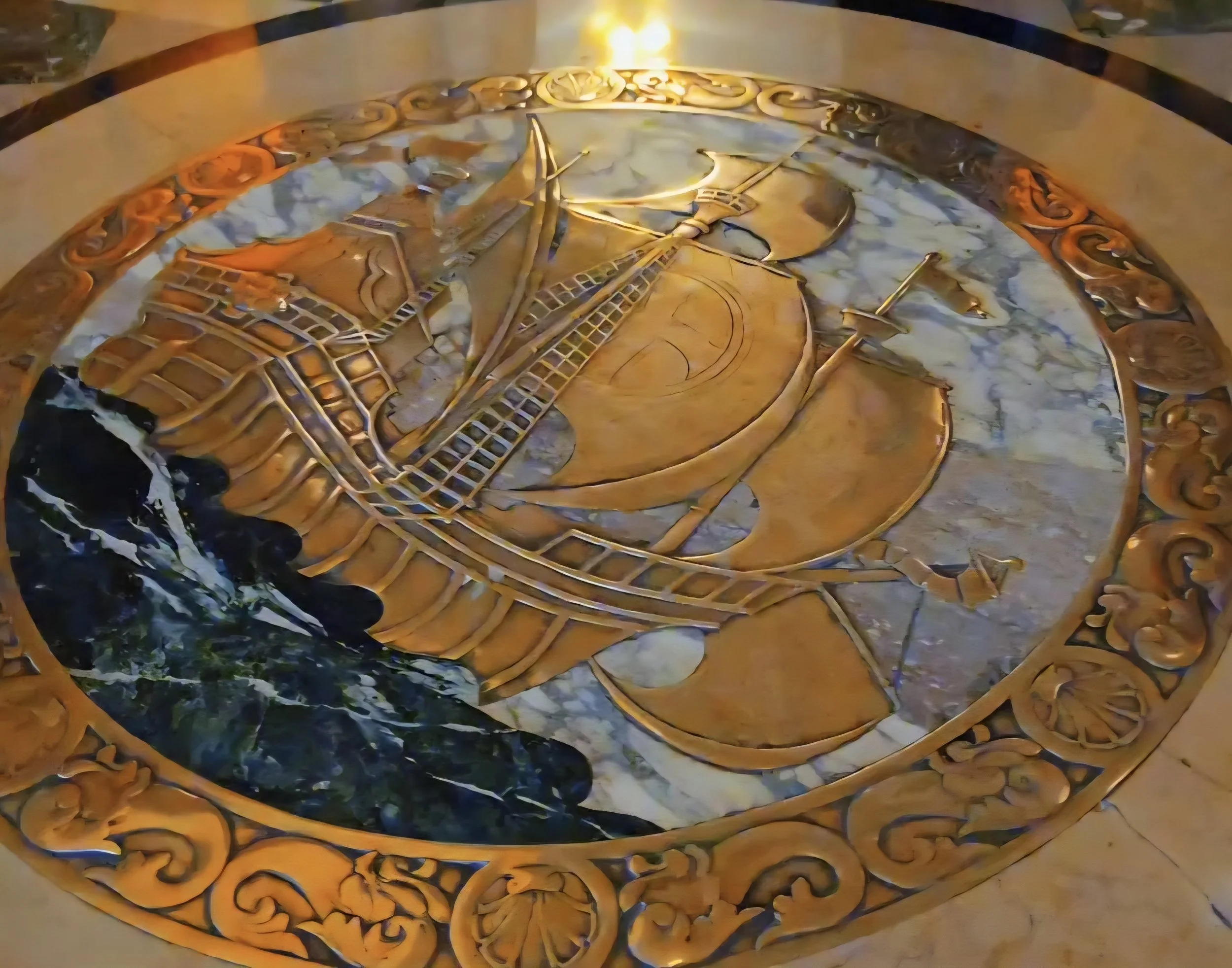
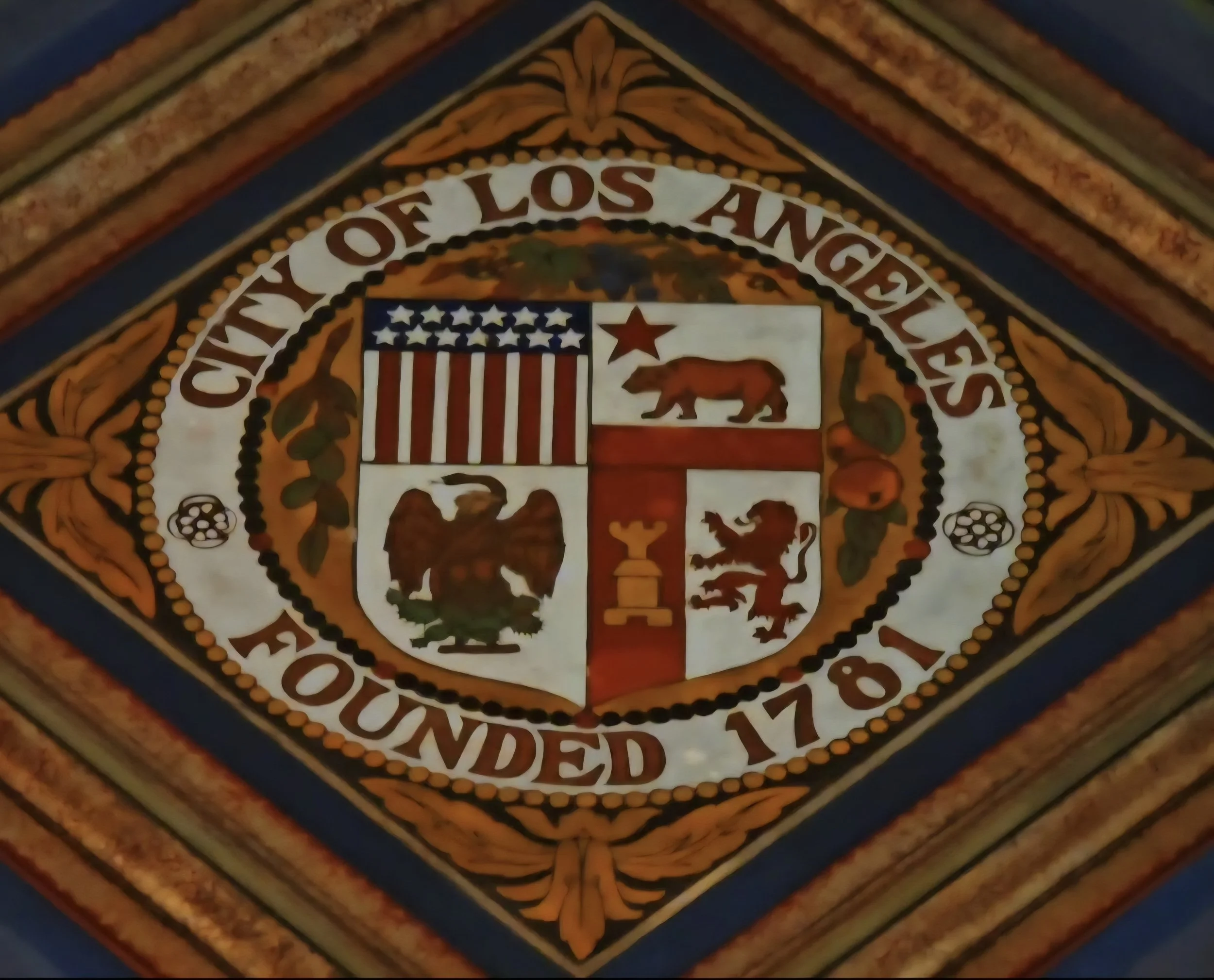
At the center of City Hall, the city’s seal is set into stone, not displayed above it. The placement is deliberate: governance stands on history, not above it. Administrations change, policies evolve, and the city continues to expand and adapt, but the foundation remains. Nearly a century after it opened, Los Angeles City Hall endures as both witness and instrument—anchoring a city that moves outward, forward, and continuously rewrites itself, from the same halls where it first learned how to grow.
Grand Central Market: A Century Inside Los Angeles
By LA VÉTTED
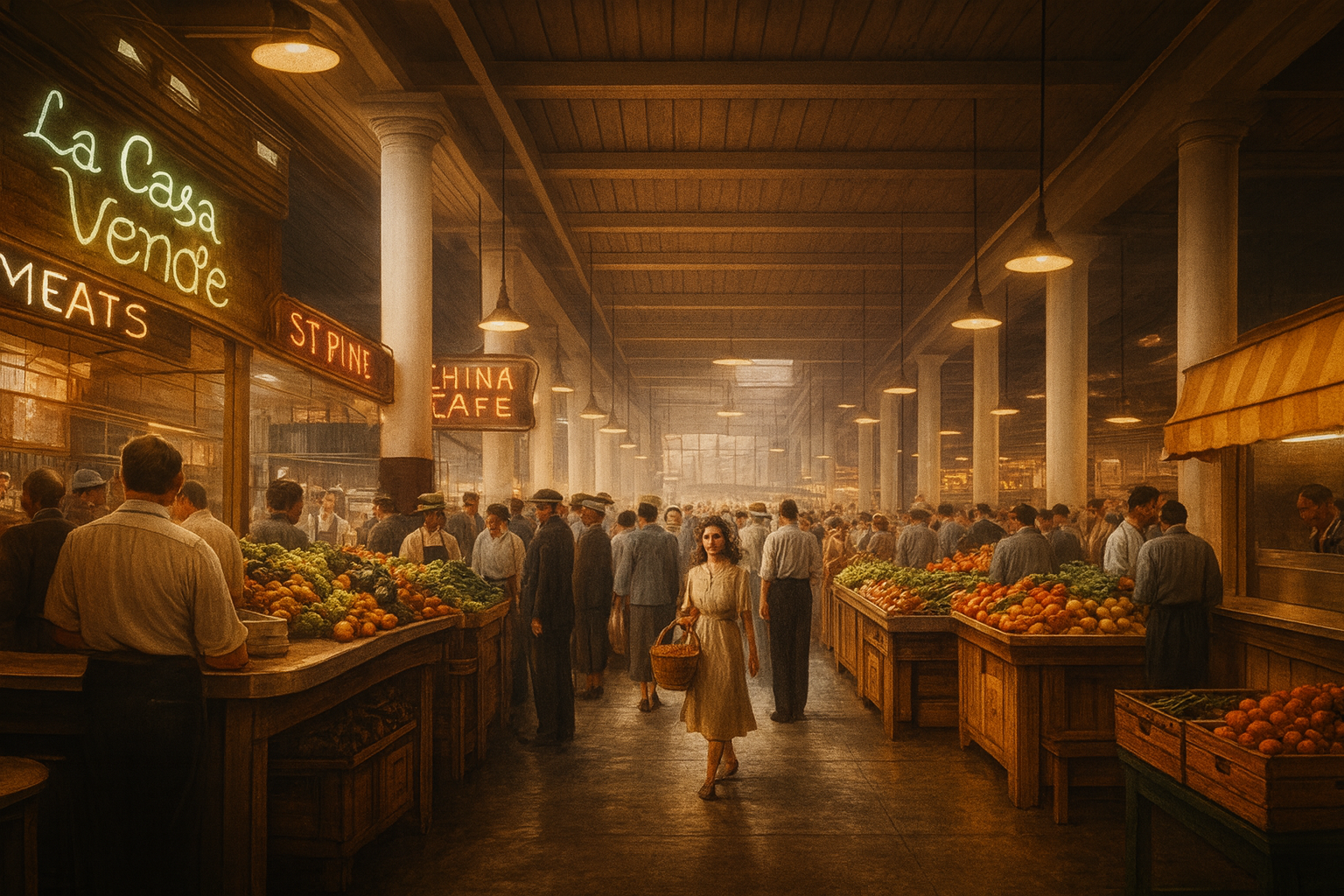
For more than a hundred years, Grand Central Market has been the place where Los Angels meets itself.
Cultures cross. Taste shift. Generations come and go - but the ritual of walking into this market never changes.
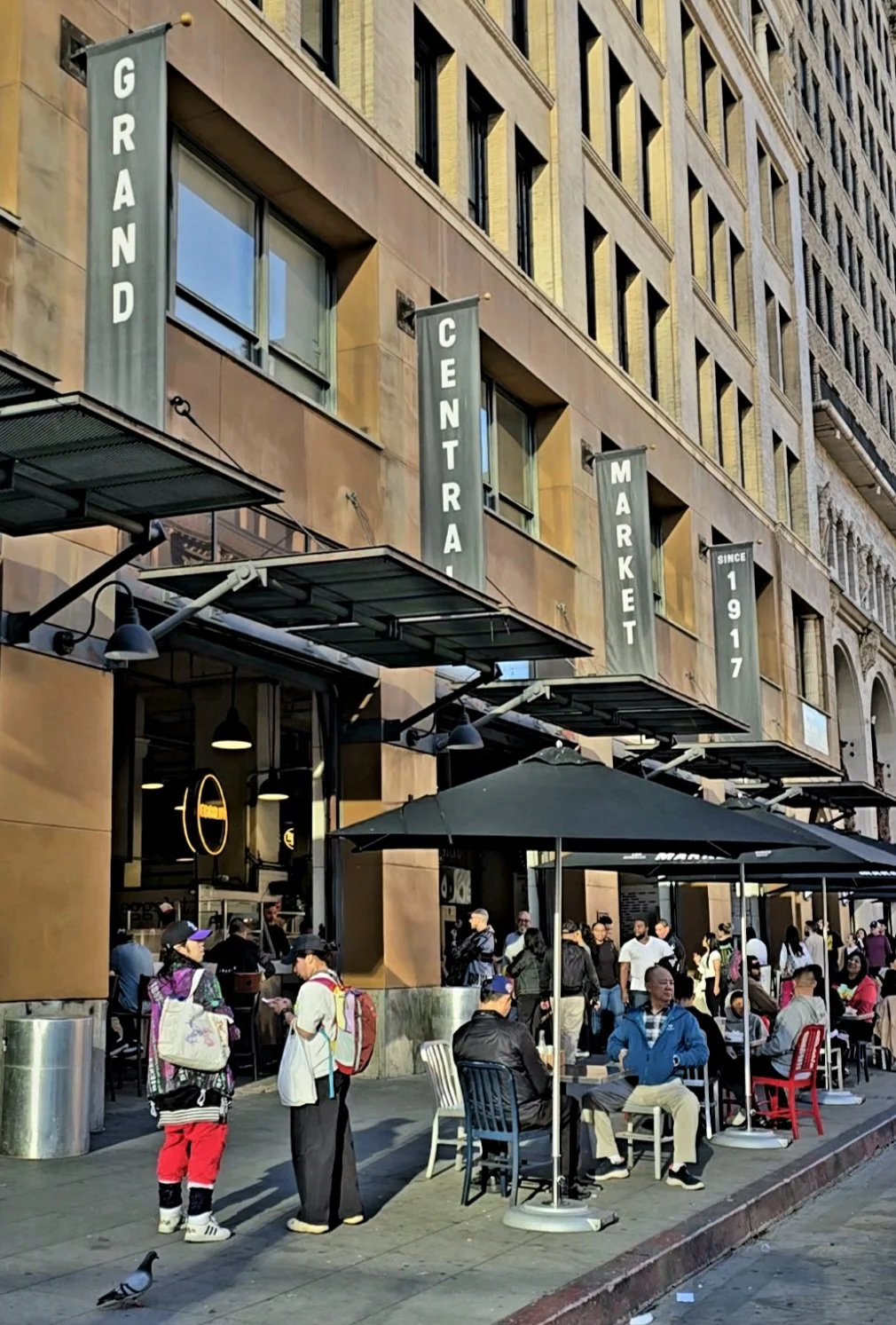
Built in the Homer Laughlin Building and opened in 1917, the market arrived when Los Angeles was transforming from a frontier town into a modern Western city.
At the time, “modern” meant something different: electric signage was new, food lived in the openair, and prices were written in chalk. Fresh chickens, lard, mixed nuts, and Lebanon bologna filled the aisles - all for a few cents a pound.
before supermarkets… before anyone coined the term food hall… people came here.
The First Modern Market in the West
In its early decades, Grand Central Market wasn’t just convenient - it was revolutionary.
Light poured in through iron-supported skylights, illuminating long rows of produce and counters staffed by butchers, bakers, fishermen, and grocers. The layout rejected the future supermarket model entirely.
You didn’t grab a cart and disappear. You walked. You talked. You participated in the public rhythm of Los Angeles.
A Living Timeline
Walk the central aisle today and you’ll feel it instantly - the market is aging and moderation at the same time.
The vendors have changed, now representing cuisines from around the globe, but the bones of the place remain identical.
The skyline above you are the same ones that lit the aisles in 1917. The cadence of footsteps is familiar. The bustle, the crowds, the clashing aromas - they echo a century of motion.
More than 50 vendors now call the market home, forming one of ciyt’s most democratic culinary spaces. Wealth dissolves here. People still crowd the aisled. Tourist still takes their pictures. Culture still meet at every counter.
Grand Central Market doesn’t survive because people romanticize it. It survives because Los Angeles still needs it.
Angels Flight: A Companion to the Market
Across Hill Street, Angeles Flight rises and descends the slope of Bunker Hill with the same orange-and-black charm it carried when it opened. It was once the hillside elevator for market shoppers. Today, it stands as a symbolic bridge connecting the city’s past and present.
A century apart - yet part of the same ongoing story.
A Place the City Never Outgrows
Grand Central Market is more than a landmark. More than a food hall. More than a historic building.
It is a living archive - a place Los Angeles returns to in order to remember what it is, and imagine what it might become next.
This is a special place. A place the city never outgrows.
Curated by LA VÉTTED
Los Angeles’ High Culture Studio - capturing the past, present, and future of the world’s Super City.
Robert Therrien: Scale, Silence and the Architecture of memory.
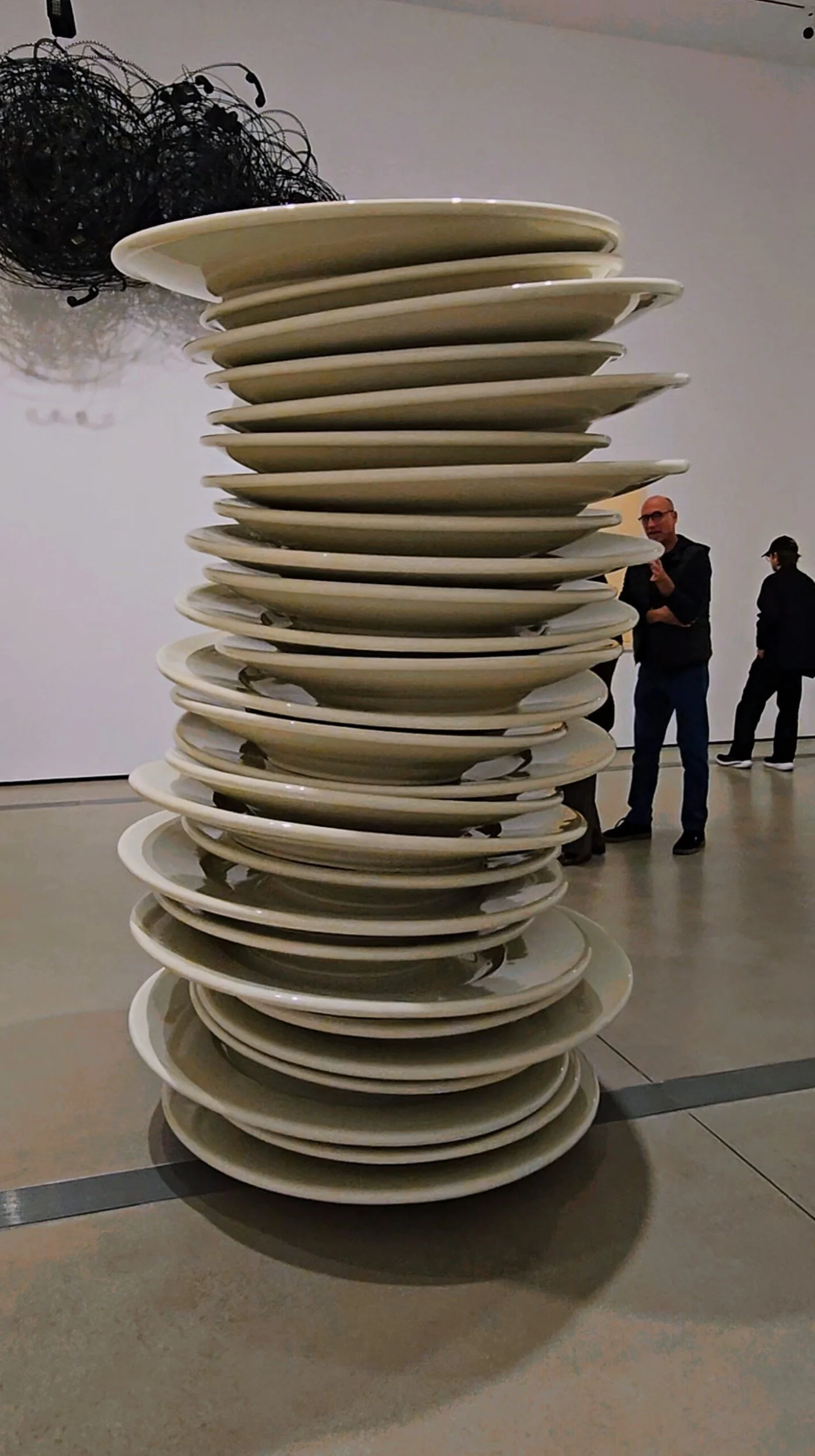
Robert Therrien, The Broad Museum, Los Angeles.
Robert Therrien does not enlarge objects to impress.
He enlarges them to unsettle perception — turning the ordinary into something architectural, and forcing memory to operate at a bodily scale.
A chair becomes a room.
A table becomes a landscape.
Familiar domestic forms, once trusted for their intimacy, are stripped of comfort and reintroduced as monuments. In that shift, Therrien reveals how deeply scale governs the way we understand space, authority, and ourselves within it.
His work does not shout.
It stands still, allowing the viewer to feel small, present, and quietly aware.
When the Everyday Becomes Architecture
Therrien’s practice lives at the intersection of sculpture and architecture. By exaggerating scale rather than altering form, he preserves recognition while dismantling function. What remains is not usefulness, but presence.
At monumental proportions, the everyday loses its role and gains weight. A table is no longer a place to gather — it becomes a structure to navigate. The body must adjust. Movement slows. Perspective shifts. The viewer is no longer in control of the object; the object commands the room.
This inversion is where Therrien’s work operates most powerfully — not as spectacle, but as spatial psychology.
Therrien’s work is currently on exhibit at The Broad Museum located at 221 S. Grand Ave, Downtown Los Angeles.
Explore more Los Angeles museums in our > City Guide